The phrase infinite growth can sound like a slogan, but it points to a precise dispute. Can economic output keep rising while energy use, material extraction, pollution, and habitat loss fall fast enough to remain within ecological limits? Eco-socialists answer by separating useful development from endless expansion and by asking who receives the gains. The result is not a claim that every improvement must stop. It is an argument that prosperity needs a better purpose and a different measure.
A: No. Monetary value can rise through care, repair, education, or efficiency, but aggregate expansion has historically remained connected to significant physical demands.
A: It means treating recurring increases in total economic output as a permanent objective rather than a temporary phase of development.
A: Some pressures can decline while output rises, but the scale, speed, global coverage, and rebound effects of absolute decoupling remain disputed.
A: Impact per unit may fall while total impact keeps rising, and ecological thresholds respond to the total.
A: It could under current institutions, which is why eco-socialists pair lower throughput with working-time reduction, guarantees, planning, and redistribution.
A: Many need substantial expansion of housing, energy access, sanitation, health, and transport; the argument assigns faster contraction to affluent high-consuming economies.
A: GDP helps track marketed production and income, but it cannot by itself measure wellbeing, distribution, unpaid work, depletion, or ecological safety.
A: Efficiency lowers the cost of a service, potentially increasing its use or freeing money for other resource-consuming activity.
A: Ecological budgets, rights, public planning, workplace knowledge, and democratic debate would rank activities by need and impact.
A: Finite limits do not forbid improvement; they require prosperity to come from better provision and fairer distribution rather than endless material expansion.
Growth Combines Money With Physical Activity
Gross domestic product adds the monetary value of final goods and services. Its abstraction is useful because a haircut, a turbine, and a legal consultation can enter the same account. Yet those transactions sit on physical systems. Workers travel, buildings consume energy, servers require electricity and minerals, and households use income to buy material goods.
An economy could in theory raise value while shrinking its physical base. In practice, observers must measure whether this separation is happening across all important pressures and at the required pace. A changing ratio alone does not answer the planetary question.
Relative Improvement Can Accompany Total Damage
Suppose factories use ten percent less energy per product while sales grow twenty percent. Efficiency improves, but total energy use rises. Economists call the first result relative decoupling; ecological stability generally requires absolute reductions in the total pressure. The distinction prevents good engineering news from being mistaken for a completed transition.
Climate Is Only One Boundary
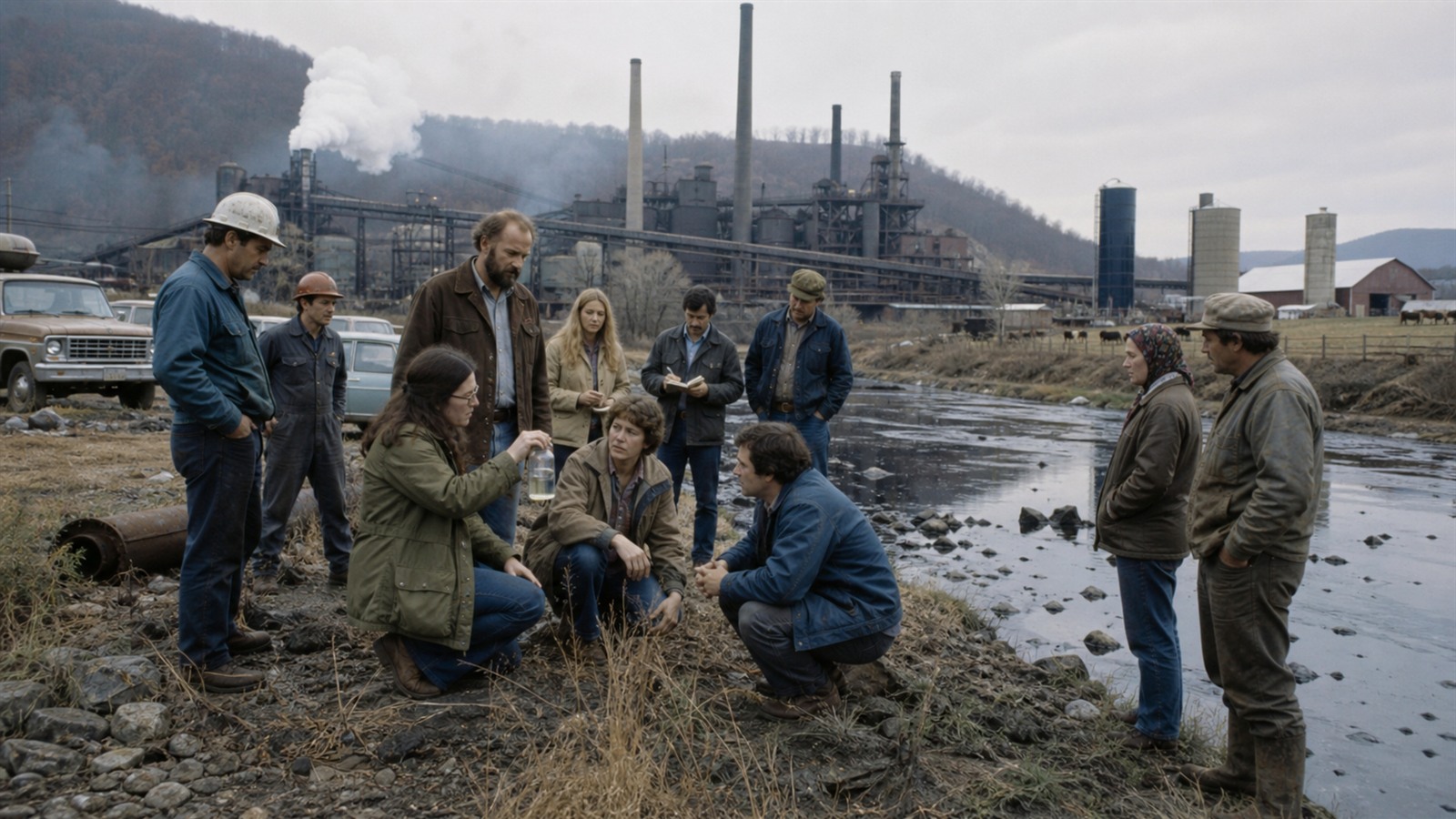
Replacing fossil electricity is essential, but a renewable system still uses land, metals, concrete, transport, and industrial capacity. Meanwhile agriculture affects soils and nutrient cycles, cities alter watersheds, and extraction fragments habitat. A growth strategy that solves carbon while intensifying other pressures merely moves the crisis.
Eco-socialists therefore resist a single-metric transition. They favor coordinated budgets for emissions, materials, land, and restoration, adjusted to local conditions and scientific uncertainty.
Trade Can Export the Apparent Footprint
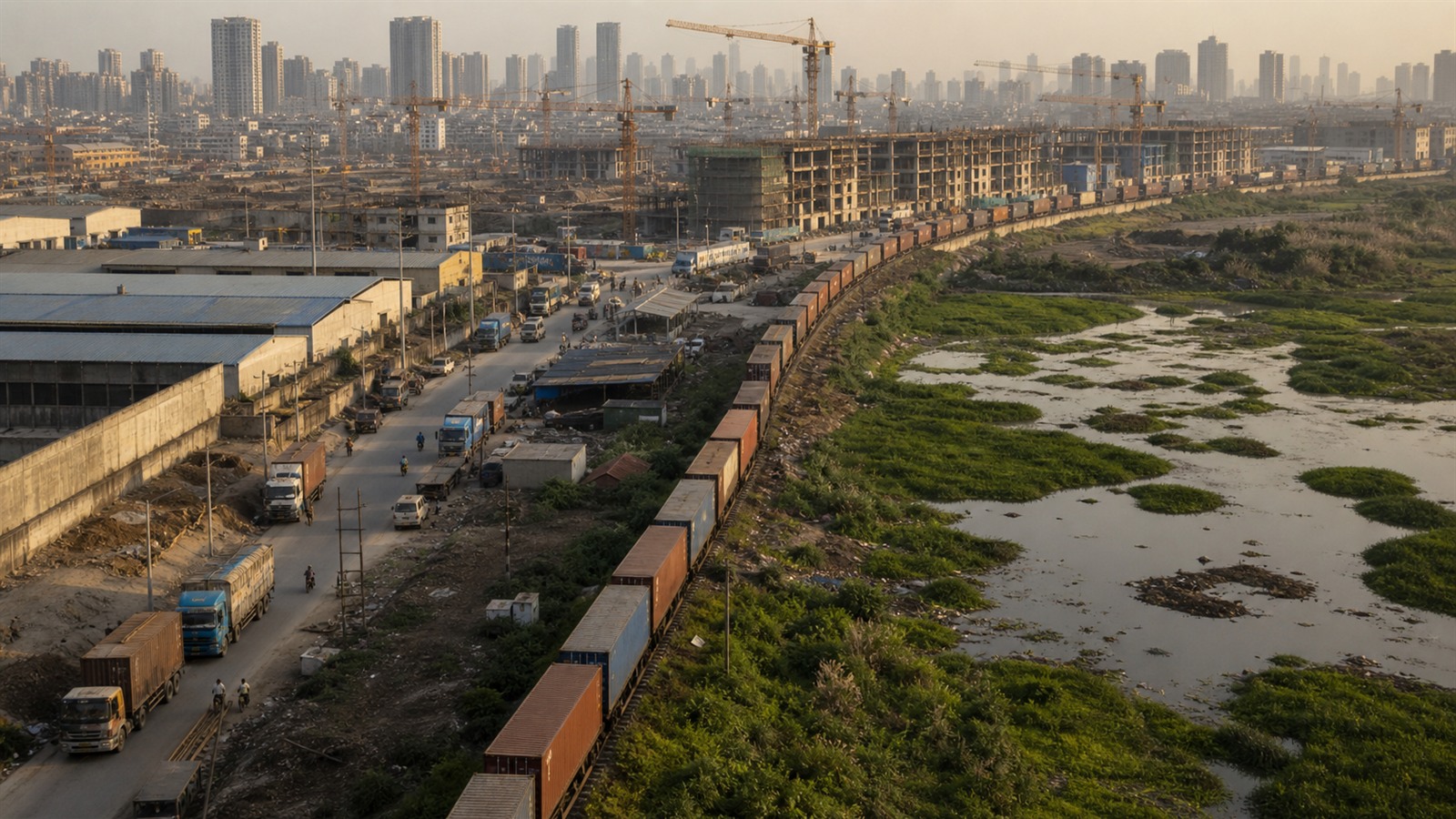
Wealthy economies increasingly buy manufactured goods from abroad. Territorial accounts assign the factory emissions to the producing country even when foreign consumers create the demand. A domestic decline can therefore reflect deindustrialization rather than a smaller global footprint. Consumption accounting is harder, but it supplies a necessary check.
Rebound Turns Savings Into New Demand
A more efficient engine makes each mile cheaper. Drivers may travel farther, buy larger vehicles, or spend the savings on another resource-intensive activity. Firms can use lower costs to expand markets. Rebound does not erase every efficiency gain, but it means engineering must be paired with limits on totals.
This is why an ecological program includes public transport, compact settlement, durability rules, and carbon budgets. The surrounding system determines whether efficiency retires extraction or finances more of it.
Infrastructure Creates Long Commitments
A road, suburb, airport, or gas network shapes behavior for decades after its construction. Once households and firms depend on it, closing it becomes politically difficult and financially costly. Growth decisions are therefore path decisions. Present investment can narrow the options available to a future government facing tighter limits.
Nature Does Not Behave Like a Smooth Price Curve
Markets often represent environmental harm as a marginal cost that rises gradually. Ecosystems can instead cross thresholds: a fishery collapses, a wetland loses its flood function, or warming triggers self-reinforcing change. Exact tipping points may be uncertain, which strengthens the case for precaution rather than waiting for perfect prices.
Political judgment is unavoidable because people must decide how much risk to accept and whose livelihoods receive protection during restraint. A price alone cannot confer consent.
GDP Counts Repair Without Recording the Wound
A hurricane, oil spill, or wave of illness can generate construction and medical spending. The activity raises GDP even though society is repairing losses. Unpaid caregiving, intact ecosystems, leisure, and prevention may contribute more to life while entering the accounts weakly or not at all. The measure is not fraudulent; it answers a narrower question than public debate often assumes.
Distribution Changes the Meaning of Enough
Millions of people need more reliable energy, larger food security, safe homes, and accessible mobility. Others command multiple properties, frequent flights, and rapid product turnover. Treating both groups as an average consumer hides the central political choice. A just ecological ceiling must be paired with a social floor.
Progressive taxation, universal services, public housing, and limits on luxury emissions can improve wellbeing while reducing aggregate demand. Equality is not an optional reward after decarbonization; it makes constraint legitimate and effective.
Employment Currently Depends on Expansion
Businesses hire when they expect sales, governments collect more revenue in growing economies, and debts assume future income. Abrupt stagnation inside these arrangements produces layoffs and austerity. Critics are therefore right that simply pressing a stop button would cause harm.
Institutions Can Reduce the Growth Imperative
Job guarantees, shorter working weeks, universal services, public banking, and debt restructuring separate security from endlessly rising sales. Planned sector transitions move labor and equipment before closures become emergencies. These reforms do more than soften contraction; they allow society to reject harmful production without making workers pay for the decision.
Ownership matters here. Public and cooperative institutions can accept lower monetary returns when a project meets a social need or remains within a physical budget.
Poorer Regions Require Ecological Space
Countries with low historic emissions still need infrastructure and energy for dignified lives. Equal percentage cuts would preserve an unequal world. Eco-socialists argue that affluent economies should reduce luxury demand faster, finance adaptation, share technology, and create room for essential development elsewhere.
Innovation Works Better With Direction
Scientists and engineers can dramatically reduce the resources needed for many services. Direction determines whether those gains shorten work and lower extraction or simply open new markets. Public research, open standards, mission-driven investment, and durability rules focus innovation on chosen needs.
The issue is not optimism against pessimism. It is whether technological possibility will be governed by an ecological plan or by the search for the next profitable volume.
Prosperity Can Mean Capability Instead of Volume
People value health, safety, belonging, autonomy, knowledge, mobility, and time. Some of these require material foundations; none requires every commodity stream to grow forever. Good public systems can deliver capabilities through shared infrastructure and prevention rather than repeated private purchases.
Run the Question Through Three Ledgers
A practical assessment starts with three ledgers rather than one headline number. The first records domestic production: energy burned, minerals processed, land converted, waste created, and ecosystems affected inside a country. This view is useful for enforcing local law, but it can make an importing economy look cleaner when industry moves abroad.
The second ledger follows consumption. It assigns the materials and emissions embodied in imported steel, electronics, food, clothing, and construction products to the people who ultimately use them. This reveals whether apparent progress comes from genuine reduction or from shifting damage through trade.
The third ledger records distribution. It shows which households command flights, large homes, investment portfolios, and repeated purchases, and which households lack heat, mobility, or safe housing. An average footprint can conceal extreme differences in both responsibility and need.
Together, the ledgers change the policy conversation. A country may need to contract luxury aviation and oversized vehicles while expanding insulation, transit, clinics, and renewable grids. Both actions affect output, but their ecological and social value is different.
They also expose rebound. If efficient factories lower costs and the savings finance more production, the first ledger may improve per unit while the second shows rising total use. Absolute caps or budgets are needed when totals, not ratios, determine ecological safety.
No ledger is perfectly precise. Supply chains are complex, ecological thresholds vary, and some effects appear decades later. The answer is to publish ranges, revise methods, and make uncertainty visible. Imperfect accounting is still better than treating gross domestic product as a complete report on planetary health. The same method can guide public investment. Projects should state which social need they meet, the lifetime materials they require, the emissions they prevent, the habitats they disturb, and the distribution of benefits. Comparing a motorway, a rail line, and neighborhood services on these terms makes hidden tradeoffs legible. It also prevents a high monetary return from automatically winning against a low-cost project that saves time or protects health. Citizens can then decide which forms of activity deserve expansion within the ecological budget and which should decline. Growth becomes a possible result of chosen provision, not the master target that disciplines every other goal. Consider a national housing program as a final illustration. Building safe homes will increase cement, timber, glass, and energy use in the near term, especially where severe shortages exist. A simplistic anti-growth rule might reject that expansion. A conventional growth rule might approve any construction that raises investment, including luxury towers kept partly vacant. Ecological planning asks different questions: How many adequate homes are needed? Can existing buildings be renovated or converted? Where will residents have short trips and reliable transit? Which materials are recoverable, low-carbon, and responsibly sourced? Will rents remain affordable after public investment? The answers can justify substantial construction while limiting floor area, demolition, speculation, and car-dependent sprawl. Output may rise during the buildout and settle after the need is met. This pattern shows why eco-socialists distinguish development from a permanent growth imperative. Another useful test is wellbeing during a period of stable output. If a government can shorten work, reduce bills through universal services, improve health, and narrow inequality without demanding another round of sales, stability ceases to look like failure. If jobs and budgets collapse whenever growth slows, institutions remain dependent on expansion. Reform should therefore be evaluated partly by how much freedom it creates to choose a steady or contracting material path. The debate is not settled by predicting a distant technological future. Governments already make infrastructure, trade, labor, and distribution choices that affect totals. Transparent ledgers let the public revise those choices as evidence changes while refusing to wager ecological safety on an automatic separation that has not yet occurred at sufficient global scale. The strongest conclusion is conditional rather than theatrical. If total global pressures fall quickly, essential provision expands, and wealthy consumers reduce their disproportionate claims while output continues rising, growth will have become less ecologically decisive. Until that evidence exists across the full material footprint, policy should not make social stability depend on it. Ecological budgets and guarantees are prudent institutions under either outcome: they secure the reductions directly and preserve wellbeing fairly if monetary growth slows unexpectedly worldwide.
The Planetary Question Is Political
No equation determines the perfect size of an economy. Science can describe pressures and risks, while democratic institutions choose priorities within those constraints. The claim against infinite growth is ultimately modest: a finite living world cannot guarantee limitless expansion of physical claims. The ambitious task is to build institutions that improve life without needing that impossible guarantee.
Eco-socialism answers with public provision, equality, collective ownership, ecological budgets, and international repair. Whether one accepts the label or not, the test it proposes is concrete: track totals, include imports, protect the vulnerable, and judge the economy by the lives and systems it sustains.