
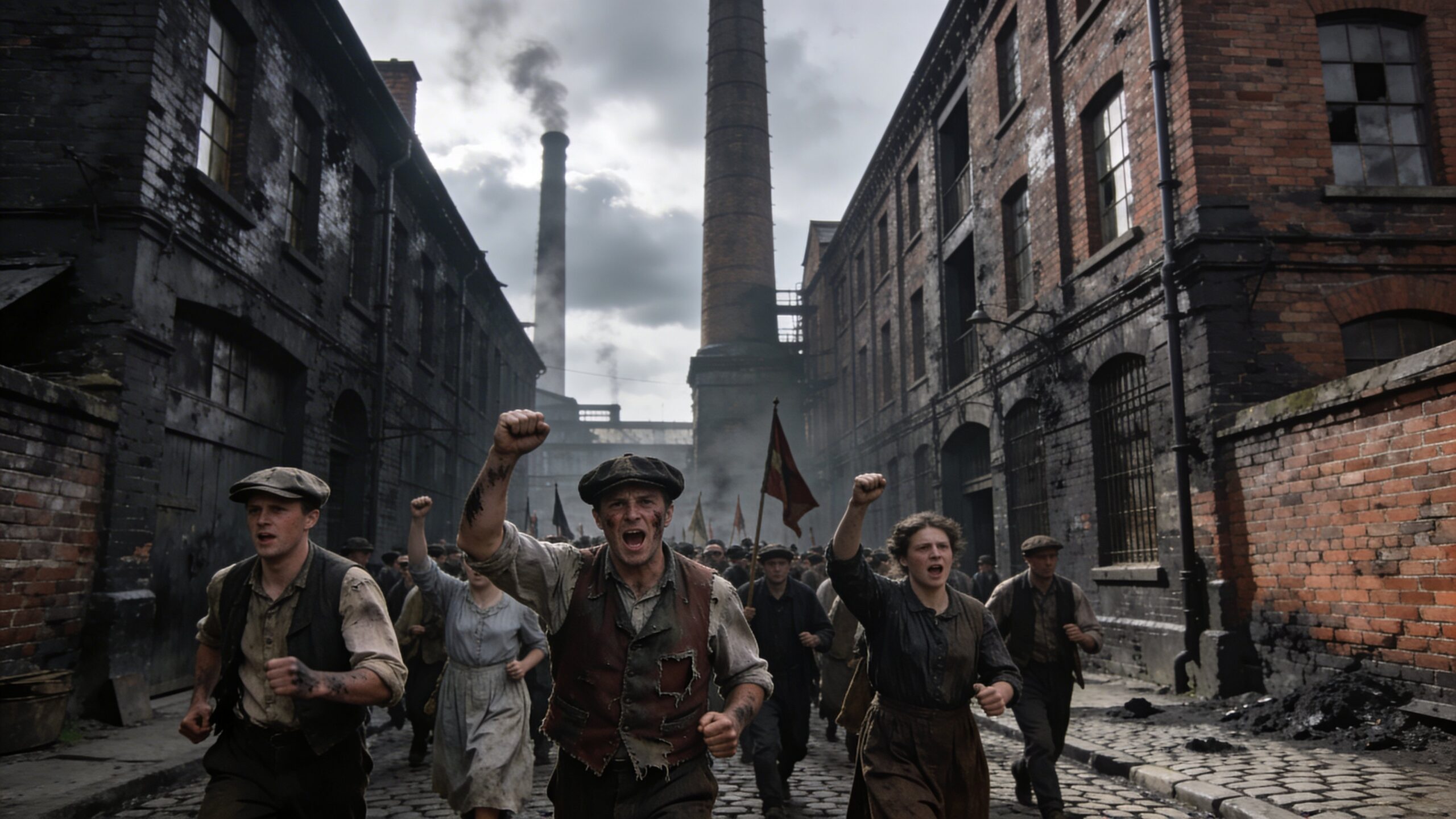
Early labor movements were born in noisy factories, dangerous mines, crowded mills, and fast-growing cities where ordinary workers began asking extraordinary questions. Why were the hours so long, the wages so low, and the risks so high? Across the nineteenth and early twentieth centuries, laborers organized to demand something radically simple: dignity on the job and a fairer share of the wealth they helped create. What began as scattered protests, walkouts, and small mutual aid efforts slowly grew into one of the most important forces in modern political and social history. This section of Left Streets explores the people, struggles, ideas, and turning points that shaped early labor movements. From strikes and union halls to sweatshop reform and the fight for the eight-hour day, these stories reveal how workers pushed back against exploitation and helped redefine the relationship between labor, industry, and power. Early labor history is not only about hardship. It is also about courage, solidarity, strategy, and the belief that collective action could change everyday life. Step inside a world where working people found their voice and helped reshape the modern age.
A: They were organized efforts by workers to improve pay, hours, safety, and dignity in rapidly industrializing economies.
A: Workers faced exhausting schedules, dangerous workplaces, low wages, and very limited power as individuals.
A: A union is an organization formed by workers to act collectively in negotiations and workplace struggles.
A: It was a major labor campaign demanding shorter working days and more humane conditions.
A: Yes. Strikes became one of the main tools workers used to pressure employers and attract public attention.
A: Absolutely. Women organized, struck, led campaigns, and pushed labor issues into broader reform politics.
A: Many fought unions through firings, blacklists, private force, court action, and anti-union messaging.
A: No. They often struggled with internal divisions based on trade, race, gender, immigration, and ideology.
A: They helped build momentum for safer jobs, shorter hours, stronger worker protections, and broader labor rights.
A: It explains the roots of modern workplace rights and ongoing debates about fairness, power, and economic justice.