


Political Philosophy
Political philosophy is where ideas about power, justice, freedom, and equality come to life. It asks the big questions that shape societies: What makes a government legitimate? How much power should the state have? What rights belong to individuals, and what responsibilities do we share with one another? For centuries, philosophers, revolutionaries, economists, and activists have wrestled with these questions, building the intellectual foundations behind modern politics. On the left side

Economic Alternatives
Economic systems shape how societies produce wealth, distribute opportunity, and organize daily life. While capitalism dominates much of the modern world, history and political theory are filled with alternative economic ideas that challenge, reform, or reimagine how economies should function. The Economic Alternatives section on Left Streets explores these possibilities—from cooperative ownership and social democracy to democratic socialism, universal basic income, and other models designed to reshape economic fairness and

Technology & the Left
Technology has never existed in a political vacuum. From the printing press to artificial intelligence, every major innovation has shaped how societies distribute power, opportunity, and information. On the political left, technology is often viewed not just as a tool for efficiency, but as a force that can reshape economic fairness, expand access to knowledge, and strengthen democratic participation. The conversation around Technology & the Left explores how digital platforms, automation,
AI, Automation & Labor
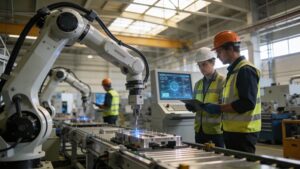
Artificial intelligence and automation are reshaping the modern economy at a breathtaking pace. Machines that once handled only repetitive factory tasks are now analyzing data, writing software, driving vehicles, and even assisting in creative work. As these technologies evolve, they are transforming not only how work is done, but also who does it—and what the future of labor might look like. On Left Streets, the conversation around AI, Automation & Labor
Climate Futures
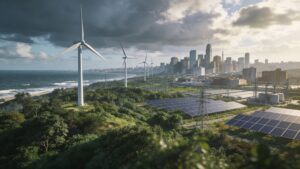
The future of Earth’s climate is not a single story—it’s a collection of possible paths shaped by science, policy, technology, and human choices. Climate Futures explores those possibilities. From shifting energy systems and evolving environmental policies to the technologies that could reshape how societies power cities and protect ecosystems, this section examines what may lie ahead in a warming world. Across these articles, you’ll discover how researchers model future climates,
Urban Futures
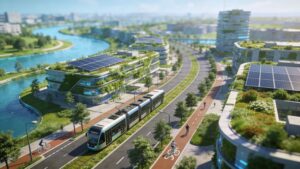
Cities have always been places where ideas collide, cultures mix, and new possibilities emerge. Today, as populations grow and technology transforms daily life, the question of how cities evolve has become one of the most important conversations of our time. Urban futures are not just about buildings and transportation systems. They are about how people live together, how communities share resources, and how societies shape spaces that are fair, sustainable,
Utopian & Post-Capitalist Thought
Utopian and post-capitalist thought explores one of the most enduring questions in political philosophy: what might society look like beyond the limits of today’s economic systems? From early visions of cooperative communities to modern debates about automation, universal basic income, and shared ownership, these ideas imagine futures where prosperity, freedom, and human flourishing are organized differently. Throughout history, thinkers, activists, and reformers have proposed alternatives to traditional capitalism. Some envisioned carefully

Critiques & Internal Debates
Political movements are rarely as unified as they appear from the outside. Within the broad landscape of left-leaning thought, debates are constant, passionate, and often deeply philosophical. The Critiques & Internal Debates section of Left Streets explores the conversations that shape progressive ideas from the inside. These discussions are not simply disagreements—they are the engines that refine policies, challenge assumptions, and push movements to evolve. Across history and modern politics, thinkers,

Left Think Tanks
Ideas shape societies long before laws ever appear on paper. In universities, policy centers, research institutes, and advocacy organizations, left-leaning think tanks explore new approaches to economic fairness, social opportunity, environmental protection, and democratic participation. These institutions gather scholars, economists, political scientists, and policy experts who study complex problems and propose solutions intended to create more equitable and inclusive systems. On Left Streets, the Left Think Tanks section explores the ideas,

Future Governance Models
The future of governance is one of the most fascinating frontiers in political thought. Around the world, societies are questioning how power should be organized, who should make decisions, and how governments can better represent the needs of modern citizens. From digital democracies and participatory budgeting to decentralized networks and new economic models, emerging governance ideas are reshaping how people imagine political systems. Future governance models often explore ways to expand