
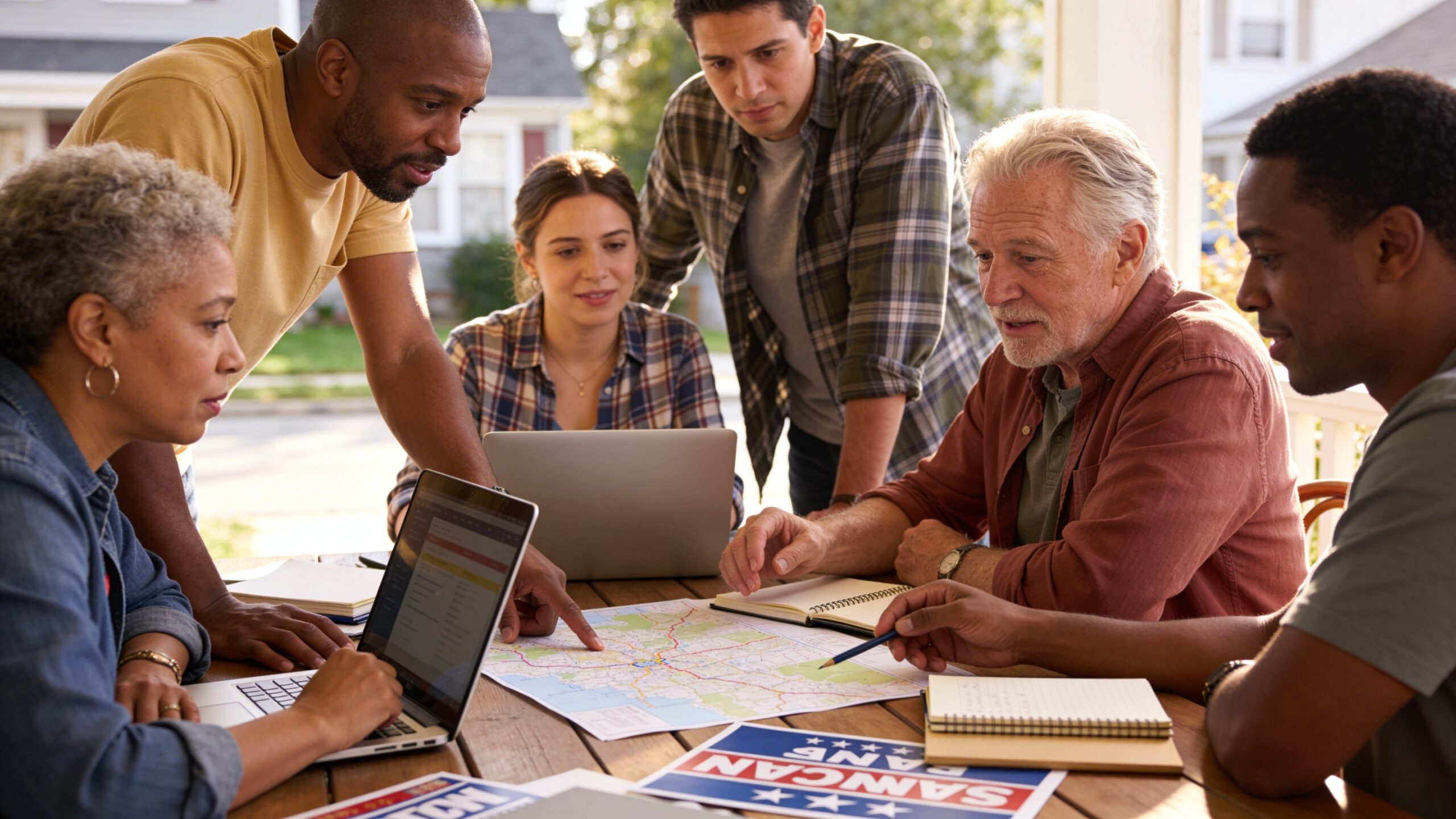
Elections are rarely won by chance. Behind every campaign victory is a network of organizers, volunteers, strategists, and community voices working together to turn ideas into action. Electoral organizing is the engine that powers democratic participation, connecting political movements to the everyday people whose votes shape the future. It blends strategy, communication, community engagement, and grassroots energy into a coordinated effort to influence elections and public policy. On Left Streets, electoral organizing is explored as both a practical skill and a political tradition. From neighborhood canvassing and voter registration drives to digital outreach and coalition building, organizers create pathways for communities to participate in the democratic process. These efforts often focus on expanding voter access, mobilizing underrepresented groups, and translating policy ideas into campaigns that resonate with real lives and real struggles. This section brings together articles that unpack the methods, history, and impact of electoral organizing. You’ll explore how movements build momentum, how campaigns connect with voters, and how organized communities can shape the direction of elections—one conversation, one neighborhood, and one vote at a time.
A: Political or social organizing led by students within universities or colleges.
A: Universities bring together young people, ideas, and debate.
A: No. Student activism has existed for generations across many countries.
A: Common topics include climate policy, social justice, education reform, and economic fairness.
A: Through meetings, social media, campus groups, and public events.
A: Yes, student movements sometimes shape public debates and policies.
A: No, activism also includes advocacy, education campaigns, and community organizing.
A: Most campuses have policies governing demonstrations and gatherings.
A: Social media allows movements to organize and spread messages quickly.
A: Young people often drive cultural change and future political leadership.