
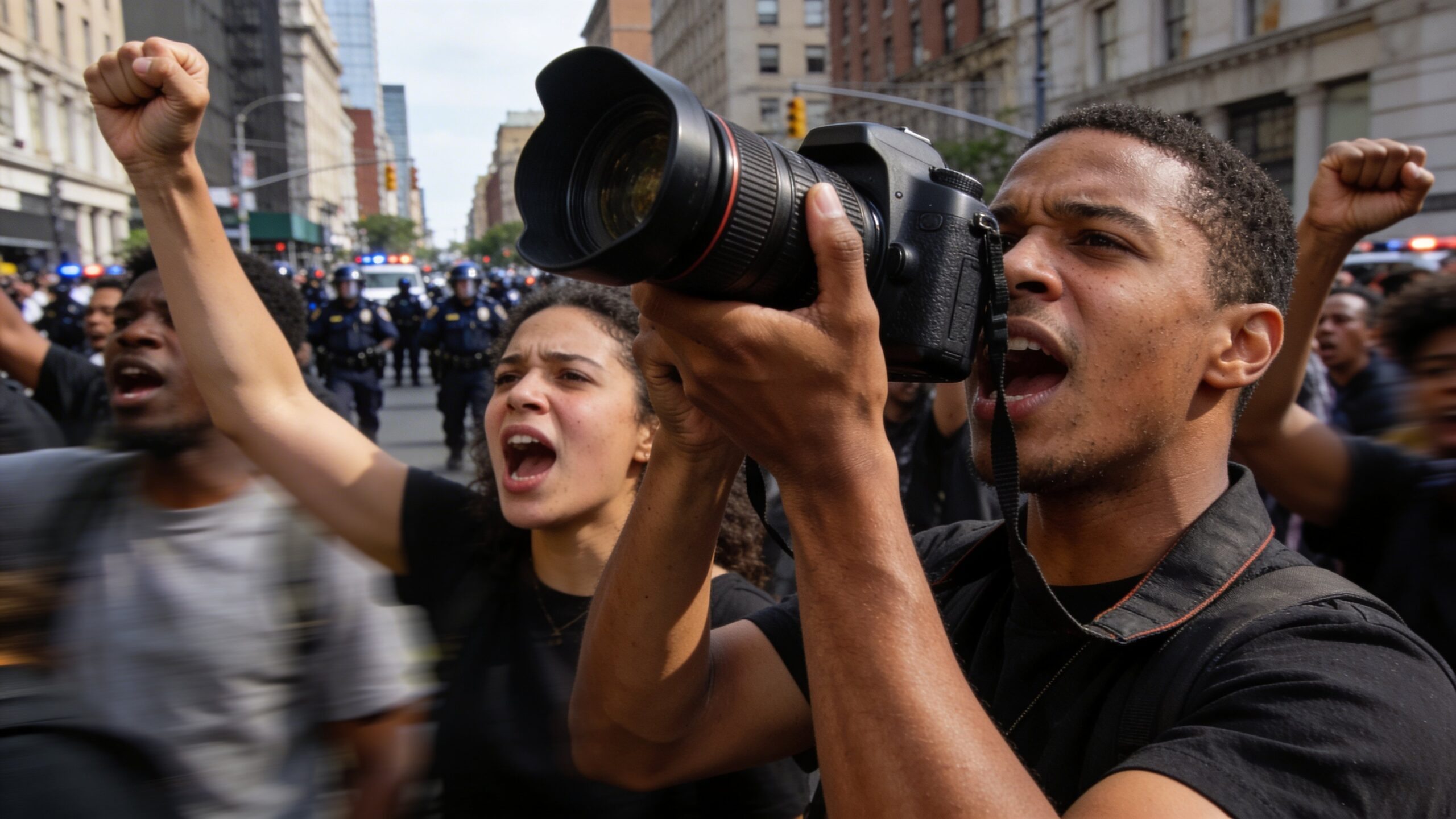
Protest photography is where history, emotion, and public life collide in a single frame. It captures the urgency of people gathering, speaking out, resisting, mourning, demanding, and refusing to be ignored. More than documentation, it is a visual record of tension, courage, symbolism, and human presence in moments that often shape political memory. A photograph from a protest can reveal scale, intimacy, conflict, solidarity, and the atmosphere of a movement in ways that words alone rarely can. On Left Streets, this protest photography page explores the images, ideas, ethics, and visual language behind photographs made in moments of public resistance. Some stories focus on composition, timing, and symbolism. Others look at the role of the photographer, the meaning of the crowd, and the way certain images become defining cultural documents. From signs and gestures to streets filled with movement and emotion, protest photography turns fleeting events into enduring visual evidence. It is not only about what happened, but how it felt, what it signified, and why the image still matters long after the crowd has gone home.
A: It is photography that documents demonstrations, marches, rallies, acts of resistance, and moments of public dissent.
A: It preserves visual evidence, communicates emotion, and helps shape how movements are remembered.
A: No. It also captures solidarity, mourning, celebration, care, and collective identity.
A: Strong timing, emotional clarity, symbolic detail, and meaningful context often make an image stand out.
A: Yes. They bring viewers closer to the people and emotions within a larger public event.
A: Absolutely. One image can become the lasting symbol of an entire demonstration or movement.
A: They communicate cause, identity, mood, and message while strengthening visual storytelling.
A: No. Every image reflects choices in framing, timing, distance, and selection.
A: They capture people in moments of urgency, conviction, vulnerability, and public expression.
A: They can explore the meaning, symbolism, ethics, history, and visual power behind protest photography.