
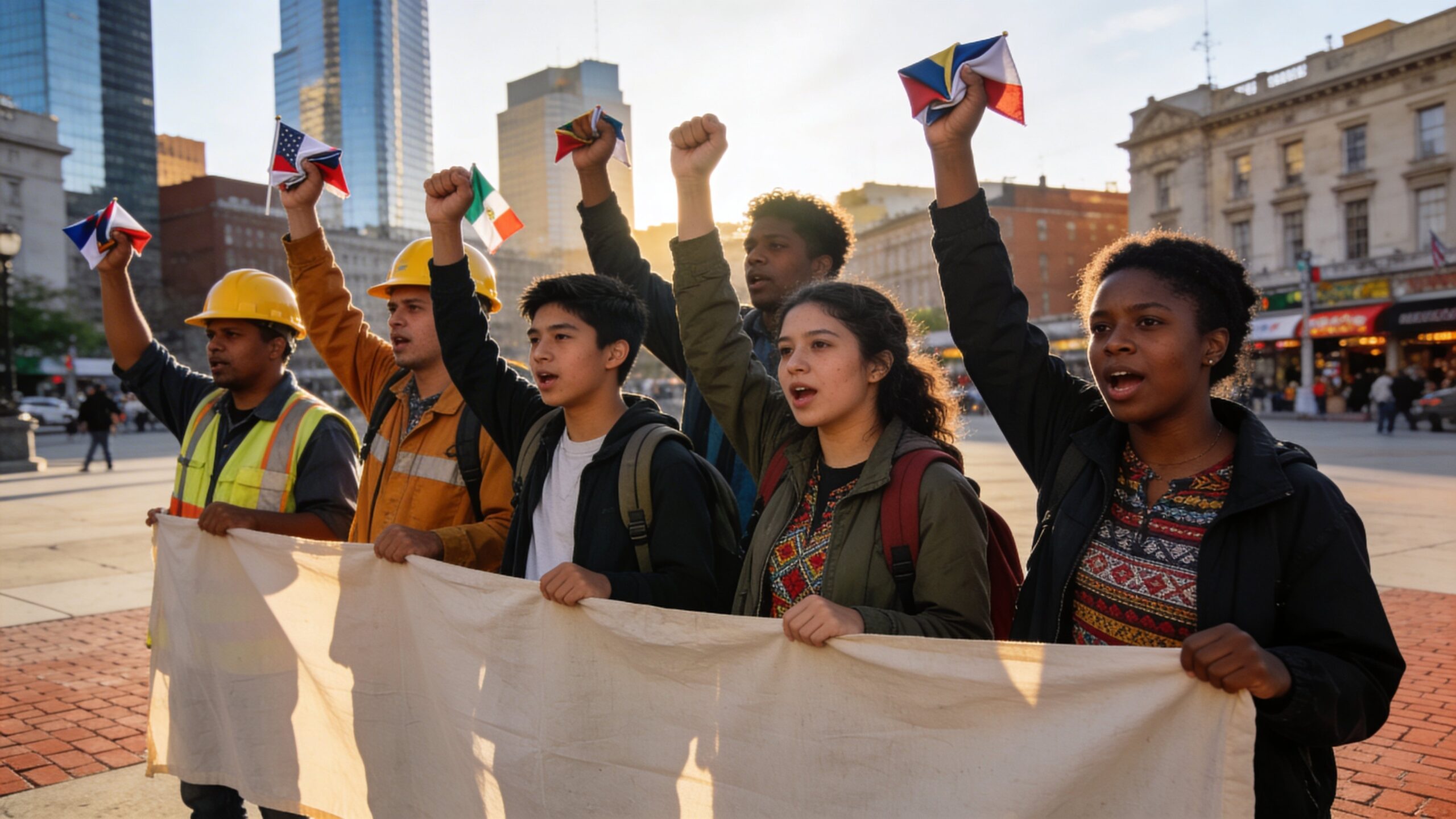
International Solidarity Networks reveal how people across borders have joined together to challenge injustice, support liberation movements, defend workers, and imagine fairer futures. This section of Left Streets explores the organizations, campaigns, alliances, and moments that connect local struggles to global politics. From labor unions backing strikes abroad to anti-colonial movements inspiring activists on other continents, solidarity networks show that political change is rarely isolated. Ideas, resources, strategies, and hope travel, and when they do, they can reshape history. Here, readers can explore how international solidarity has taken many forms: protest, mutual aid, cultural exchange, boycott campaigns, underground organizing, refugee support, and transnational advocacy. Some networks were formal and highly organized, while others grew through friendships, shared principles, and urgent moral action. What unites them is a belief that oppression in one place matters everywhere. Whether you are curious about historical alliances, modern grassroots movements, or the symbols that have come to define collective resistance, this page opens the door to the stories, structures, and lasting influence of international solidarity in action.
A: It is a cross-border alliance of people or groups supporting shared struggles for justice, rights, and liberation.
A: No. Solidarity emphasizes mutual political commitment, while charity often focuses on one-way aid.
A: Workers, students, unions, artists, faith groups, community organizations, migrants, and activists all can play a role.
A: Fundraising, public campaigns, boycotts, education, direct aid, legal advocacy, and media amplification.
A: They help local struggles gain protection, visibility, resources, and a broader political voice.
A: It can help, but it is strongest when connected to material support, organizing, and accountability.
A: Listening to affected communities, sharing resources, staying consistent, and avoiding symbolic-only support.
A: Surveillance, unequal power, weak coordination, limited resources, and misunderstanding across cultures.
A: No. They continue today in labor, climate, migrant justice, anti-war, and human rights movements.
A: That struggles for dignity and justice become stronger when people refuse to treat borders as moral limits.