
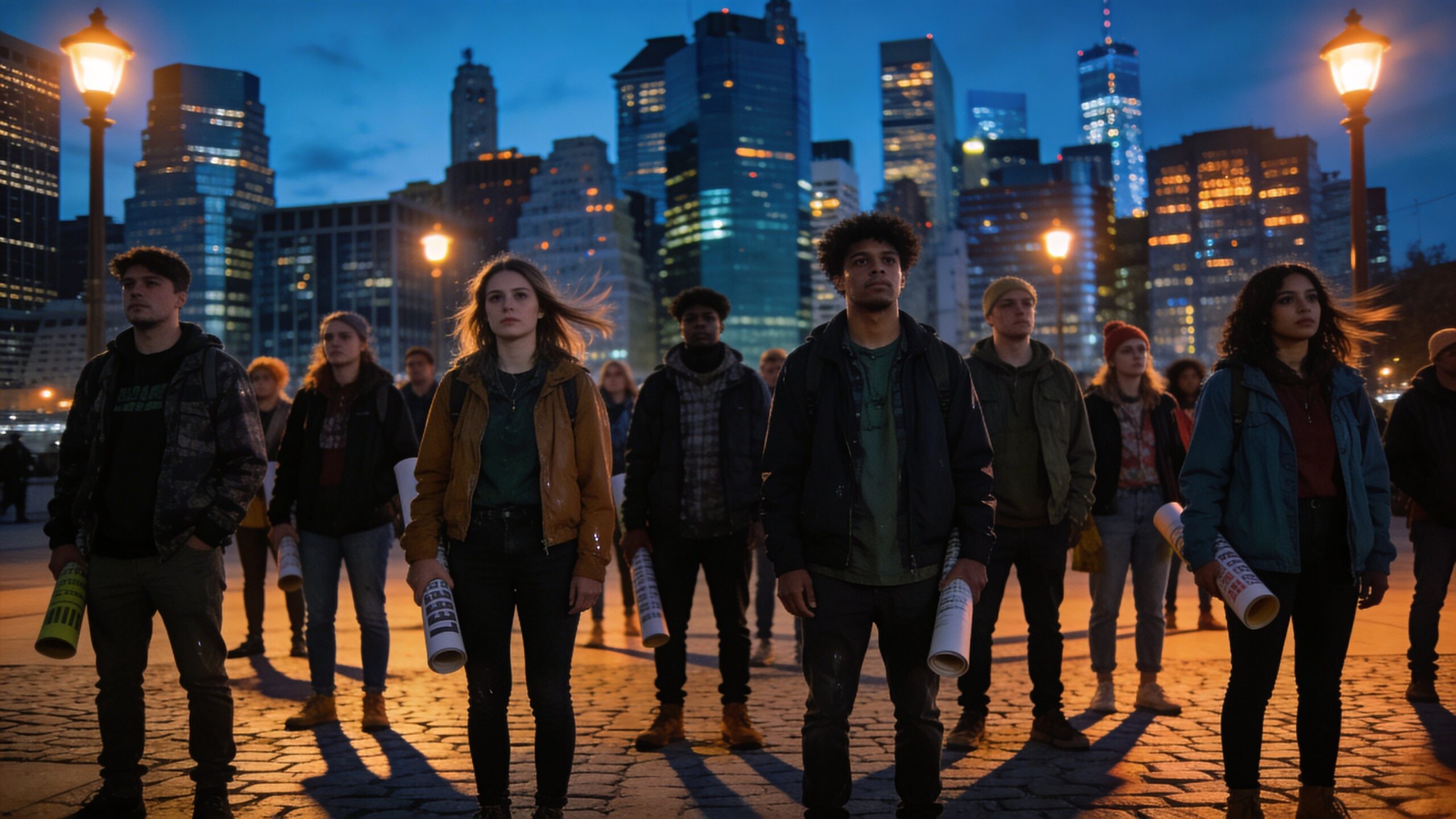
The story of the Post-Cold War Left is a story of reinvention. When the Cold War ended, old political maps no longer explained a rapidly changing world. Globalization accelerated, markets expanded, old party loyalties weakened, and new debates emerged around inequality, identity, democracy, labor, climate, culture, and the power of global institutions. Across Europe, the Americas, and beyond, left-leaning movements were forced to rethink what solidarity, justice, and reform meant in an age no longer defined by the old East-West divide. On Left Streets, this section explores the ideas, tensions, victories, and contradictions that shaped left politics after 1991. From the rise of Third Way politics and anti-globalization protests to democratic socialism’s revival, culture-war battles, labor realignment, and climate-driven activism, the Post-Cold War Left became anything but simple. It is a world of policy fights, protest movements, intellectual shifts, and moral arguments over what a fair society should look like in a new century. These articles dive into the turning points, symbols, and debates that continue to shape the modern left today.
A: It refers to left-wing politics after the Cold War, especially after 1991, when older ideological divides were reshaped.
A: Not exactly; it includes social democracy, democratic socialism, green politics, labor activism, and progressive reform movements.
A: It is often the main target of left critique, especially around deregulation, privatization, and market-centered policymaking.
A: A center-left approach that accepted markets while promoting social investment, public services, and moderate reform.
A: Because rising wealth concentration exposed the limits of growth that did not broadly benefit workers and communities.
A: It links the environment to jobs, public investment, inequality, and intergenerational fairness.
A: Yes; even as economies changed, wages, unions, bargaining power, and workplace dignity stayed central.
A: Because it contains different priorities, including class politics, cultural issues, electoral pragmatism, and systemic critique.
A: Yes; its debates appear across many democracies, though each country has its own history and political language.
A: Because many current battles over democracy, inequality, climate, and identity grew directly from this era.