
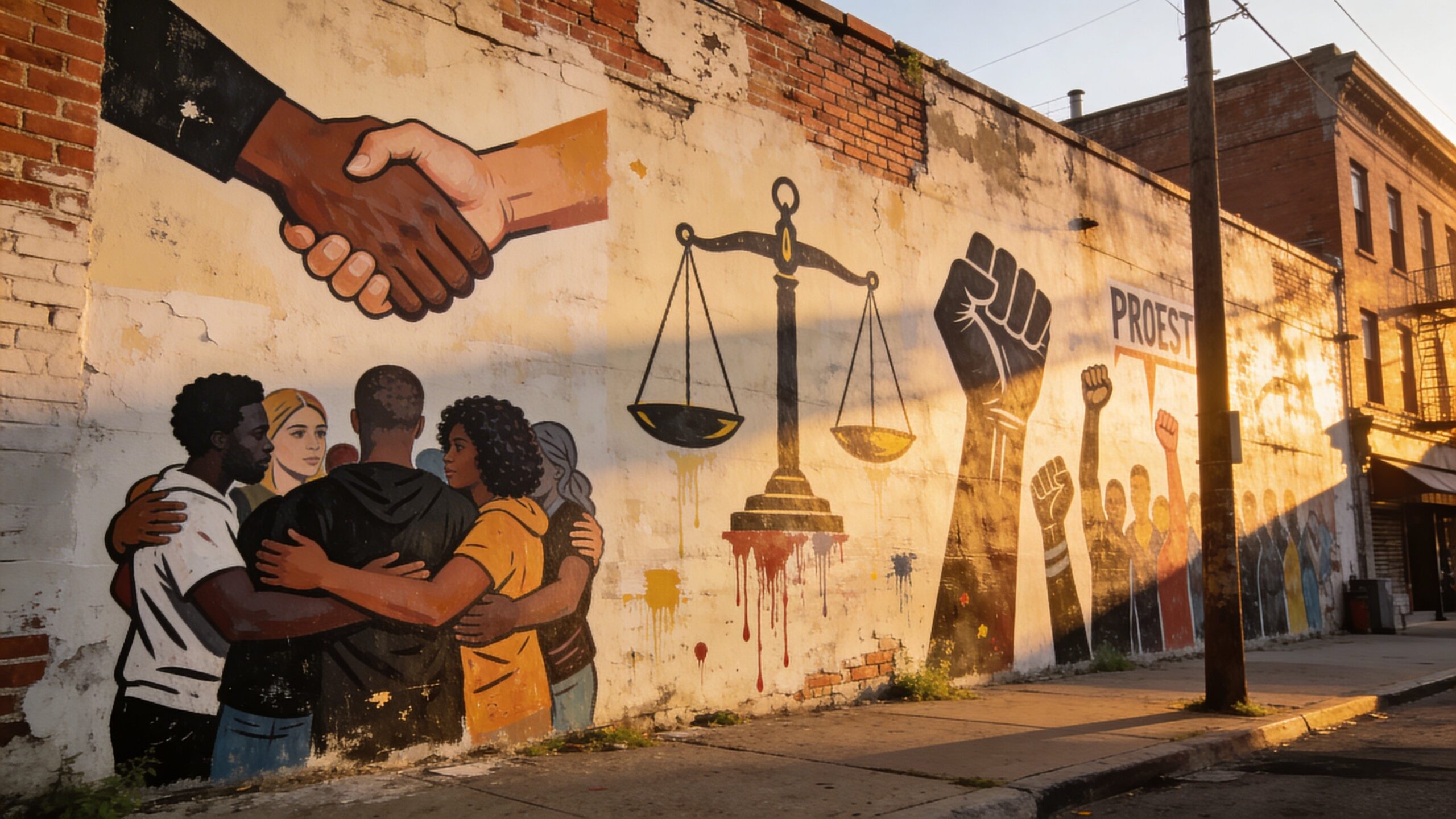
Political Art & Murals turn walls into living conversations. They bring history, protest, hope, memory, and identity out of museums and into the streets, where color and scale can stop people in their tracks. On Left Streets, this section explores how murals do more than decorate a surface—they frame public space as a stage for dissent, solidarity, and social imagination. A painted wall can honor workers, uplift movements, challenge power, remember injustice, or envision a fairer future, all in a single sweeping image. This page gathers articles that look at political murals from multiple angles, including symbolism, technique, public meaning, neighborhood impact, and the stories behind iconic visual language. Some pieces focus on the art itself, while others dig into the ideas, conflicts, and communities that shape it. Whether bold and confrontational or layered and poetic, political murals reveal how art can speak across generations, transform city blocks, and keep urgent ideas visible in everyday life. Explore the articles below to see how painted walls become visual arguments, cultural archives, and lasting acts of public expression.
A: It engages public ideas such as power, justice, labor, protest, identity, memory, or rights.
A: No; they can critique systems, highlight struggles, or express broader social values without party branding.
A: They use scale, visibility, and symbolism to communicate with people in shared public space.
A: No; they can also commemorate, educate, mourn, celebrate, or imagine better futures.
A: Because murals often reflect local history, local struggles, and the identities of the people who live there.
A: Yes; many powerful murals use metaphor, color, and recurring icons rather than direct scenes.
A: Often yes; community murals usually emphasize participation and shared ownership of the message.
A: No; they appear in small towns, campuses, rural areas, and anywhere public walls invite expression.
A: Public art lives in public debate, so questions of memory, representation, and power can become intense.
A: Start with scale, subject, symbols, and location—those often reveal the mural’s core message.