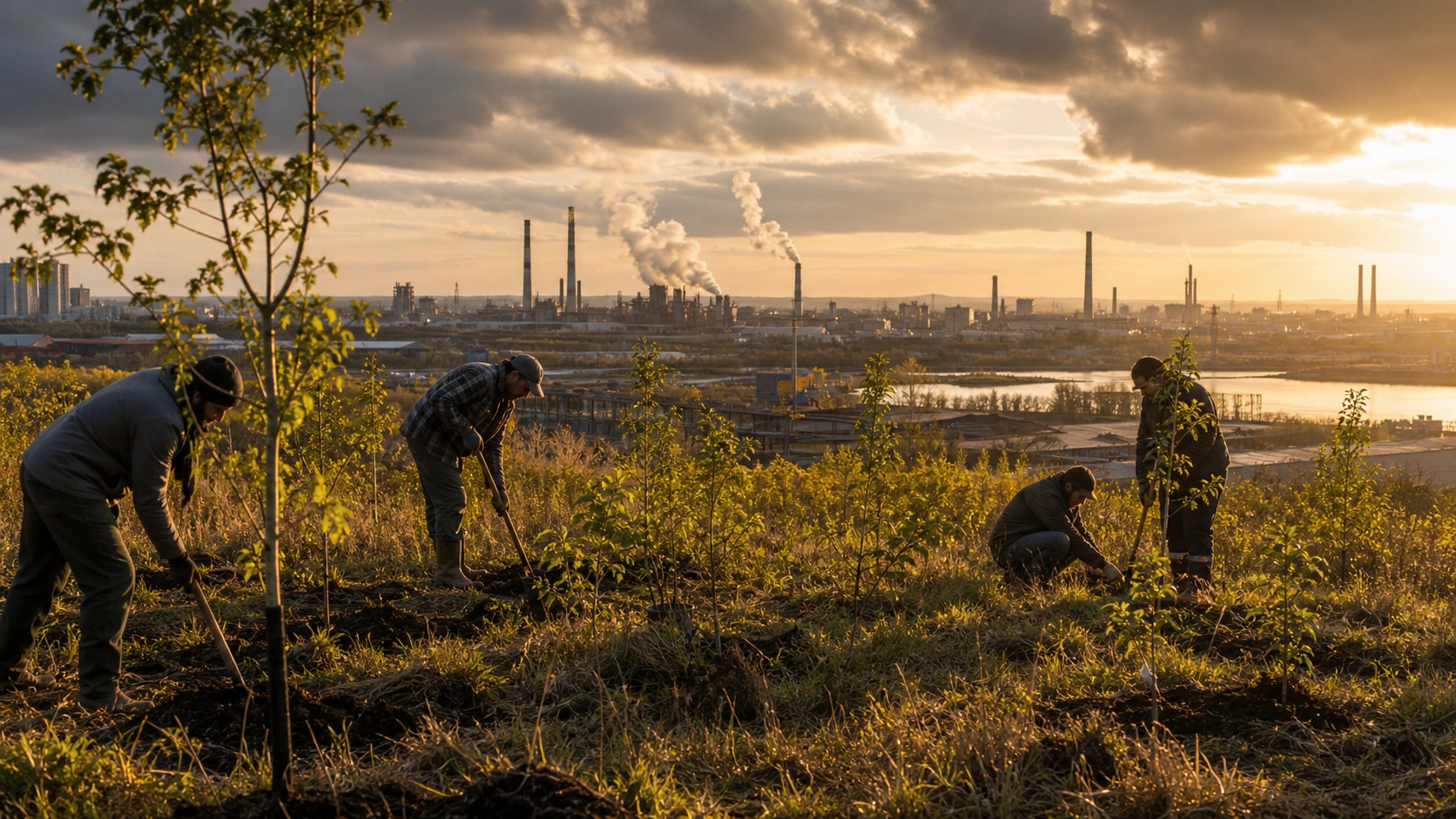
What Is Eco-Socialism? A Complete Beginner’s Guide
The world faces a growing list of environmental challenges. Climate change, deforestation, biodiversity loss, pollution, water shortages, and resource depletion are no longer distant concerns discussed only by scientists and policymakers. They have become everyday realities affecting communities across the globe. At the same time, many societies continue to grapple with economic inequality, rising living costs, housing shortages, and debates about the distribution of wealth and power. For some political thinkers and activists, these two sets of problems are deeply connected. Their proposed solution is a political and economic philosophy known as eco-socialism.
Eco-socialism is a relatively modern political ideology that combines environmentalism with socialist principles. It argues that ecological sustainability and social justice cannot be separated. According to eco-socialists, many environmental crises stem from economic systems that prioritize profit, growth, and resource extraction over ecological balance and human well-being. Rather than treating environmental problems as isolated technical challenges, eco-socialists believe they must be understood within the broader context of economics, politics, and social organization.
Although eco-socialism has gained increasing attention in recent years due to concerns about climate change, it remains unfamiliar to many people. Some view it as a radical alternative to capitalism, while others see it as an attempt to modernize socialist ideas for an age of environmental crisis. Supporters argue that it offers a pathway toward a more sustainable and equitable future, while critics question its practicality and economic feasibility. Regardless of where one stands politically, understanding eco-socialism provides valuable insight into some of the most important debates shaping the future of humanity.
This beginner’s guide explores what eco-socialism is, where it came from, how it differs from other ideologies, and why it has become a significant force in contemporary political discussions. By examining its core principles, goals, and criticisms, readers can gain a deeper understanding of how environmentalism and socialism intersect in the modern world.
A: Eco-socialism is a political theory that combines environmental protection with socialist ideas about equality, democracy, public ownership, and economic planning.
A: It argues that capitalism often prioritizes profit, growth, and extraction over ecological limits and public well-being.
A: No. It also addresses pollution, biodiversity, labor, housing, food systems, transportation, water, and environmental justice.
A: A just transition means moving away from fossil fuels while protecting workers, wages, communities, and public services.
A: No. It supports useful clean technology but argues it should serve public need rather than profit alone.
A: Not exactly. Environmentalism is broad, while eco-socialism specifically links ecological crisis to economic power and inequality.
A: It means essential systems like energy, water, transit, or housing may be owned or controlled democratically for public benefit.
A: Because climate policy affects jobs, industries, wages, communities, and the future of work.
A: Yes. Local versions can include public transit, community energy, cooperatives, conservation, local farming, and green housing.
A: The goal is to build an economy that meets human needs while protecting ecosystems and respecting planetary limits.
Defining Eco-Socialism
Eco-socialism is a political and economic philosophy that combines ecological sustainability with socialist ideas about economic organization and social equality. It argues that environmental problems cannot be solved effectively without addressing the economic systems that contribute to them. In other words, eco-socialists believe that protecting nature and creating a fair society are interconnected goals that must be pursued together.
The philosophy emerged from the belief that traditional environmental movements often focused too narrowly on conservation and pollution control without addressing broader economic structures. At the same time, eco-socialists argued that many socialist movements historically prioritized industrial development and economic production while paying insufficient attention to environmental consequences.
Eco-socialism attempts to bridge these perspectives by creating a framework that emphasizes both ecological responsibility and social justice. It advocates an economy organized around sustainability, democratic participation, and human needs rather than continuous profit maximization and unrestricted growth.
Supporters argue that natural resources should be managed for the collective benefit of society rather than treated primarily as commodities. They also believe that environmental decisions should involve democratic participation and long-term planning rather than being driven solely by market forces. While eco-socialist proposals vary, the central idea remains consistent: a sustainable future requires both environmental stewardship and economic transformation.
The Origins of Eco-Socialist Thought
The roots of eco-socialism can be found in both environmental and socialist traditions. Environmental movements gained significant momentum during the twentieth century as scientific research revealed growing ecological problems. Concerns about pollution, species extinction, deforestation, and resource depletion encouraged activists to question prevailing models of industrial development.
Meanwhile, socialist thinkers were also reassessing economic systems. Traditional socialist theories often focused on class conflict, wealth distribution, and ownership of productive resources. While these issues remained important, some socialists began recognizing that environmental sustainability deserved greater attention. They observed that environmental degradation occurred not only in capitalist societies but also in some state-controlled economies that emphasized rapid industrialization.
During the 1970s and 1980s, a new generation of thinkers sought to integrate ecological concerns into socialist theory. They argued that environmental crises could not be fully understood without examining economic incentives, ownership structures, and patterns of resource use. These ideas gradually evolved into what became known as eco-socialism.
The rise of climate change as a global concern further increased interest in eco-socialist ideas. As evidence mounted regarding the environmental consequences of fossil fuel consumption and industrial growth, many activists began exploring alternatives to existing economic systems. Eco-socialism emerged as one of the most influential frameworks for connecting environmental sustainability with broader social and economic reforms.
Why Eco-Socialists Criticize Capitalism
One of the defining characteristics of eco-socialism is its critique of capitalism. Eco-socialists argue that many environmental problems are closely linked to the incentives and structures of capitalist economies. According to this perspective, businesses operating within competitive markets are often encouraged to prioritize profits, expansion, and shareholder returns.
While these incentives can promote innovation and economic growth, eco-socialists contend that they may also encourage environmentally harmful practices. Companies may exploit natural resources, generate pollution, or resist environmental regulations if doing so improves profitability. In many cases, environmental costs are not fully reflected in market prices, allowing businesses to transfer those costs to society and future generations.
Eco-socialists also criticize what they describe as the growth imperative of capitalism. Modern economies frequently rely on continuous expansion to generate employment, attract investment, and maintain rising living standards. Eco-socialists question whether endless economic growth is compatible with a planet that contains finite resources and ecological limits.
This criticism does not necessarily imply that every business or market activity is environmentally destructive. Rather, eco-socialists argue that systemic pressures within capitalist economies make sustainability difficult to achieve on a large scale. They believe environmental protection requires more fundamental changes than regulation alone can provide.
The Concept of Ecological Limits
A key principle of eco-socialism is the recognition that Earth has ecological boundaries. Natural systems can only absorb limited amounts of pollution, regenerate resources at finite rates, and support certain levels of human activity. Ignoring these limits, eco-socialists argue, risks undermining the environmental foundations upon which societies depend.
Many modern economic models assume that growth can continue indefinitely through technological innovation and increased productivity. Eco-socialists challenge this assumption by emphasizing the physical realities of ecosystems and resource availability. They argue that economic activity must ultimately operate within environmental constraints.
Climate change provides a clear example of this perspective. The atmosphere can absorb only a limited amount of greenhouse gases before significant climatic disruptions occur. Similarly, forests can only regenerate at certain rates, freshwater resources have finite capacities, and biodiversity losses may become irreversible if ecosystems are pushed beyond critical thresholds.
Eco-socialists believe that acknowledging ecological limits should fundamentally reshape economic priorities. Rather than pursuing maximum growth, societies should focus on sustainability, resilience, and long-term well-being. This shift would require evaluating success according to environmental health and quality of life rather than economic output alone.
Social Justice as an Environmental Issue
Eco-socialism emphasizes that environmental challenges are also social challenges. Environmental harms often affect different groups in unequal ways. Wealthier communities may have greater resources to adapt to climate change, relocate from polluted areas, or recover from environmental disasters. Poorer communities frequently face greater exposure to environmental risks while possessing fewer resources to respond.
This connection between environmental conditions and social inequality is central to eco-socialist thinking. Supporters argue that environmental policies should not only protect ecosystems but also promote fairness and improve living standards for vulnerable populations.
For example, transitions toward renewable energy can create new jobs, improve public health, and reduce energy costs when implemented effectively. Investments in public transportation can lower emissions while expanding mobility and economic opportunities. Sustainable housing projects can reduce environmental impacts while addressing affordability concerns.
Eco-socialists contend that environmental sustainability and social justice reinforce one another. They believe that policies addressing both simultaneously are more likely to gain public support and produce lasting positive outcomes.
Public Ownership and Democratic Control
Another important component of eco-socialism involves democratic control over key resources and industries. Eco-socialists often argue that sectors such as energy, transportation, water, and natural resource management should be guided by public interests rather than solely by private profit motives.
The reasoning behind this position is that environmental decisions affect entire societies and future generations. Because these consequences extend beyond individual businesses, eco-socialists believe broader democratic participation is necessary. Public ownership or democratic governance can, in their view, help ensure that long-term sustainability receives appropriate consideration.
This does not necessarily mean that eco-socialists advocate centralized control over every aspect of economic life. Many support decentralized decision-making, local participation, and community ownership models. What unites these approaches is the belief that citizens should have greater influence over environmental and economic decisions that shape their futures.
Supporters argue that democratic control can facilitate large-scale investments in renewable energy, conservation efforts, and sustainable infrastructure. Critics, however, question whether public institutions can consistently allocate resources efficiently and encourage innovation.
Climate Change and the Eco-Socialist Response
Climate change occupies a central position within eco-socialist thought. Rising global temperatures, extreme weather events, and increasing greenhouse gas concentrations are viewed as evidence that existing economic systems are placing unsustainable pressures on the environment.
Eco-socialists argue that climate change requires more than incremental policy adjustments. While technological advances such as solar panels, wind turbines, and electric vehicles are welcomed, they believe broader economic transformations are necessary. This includes reducing dependence on fossil fuels, redesigning transportation systems, promoting sustainable agriculture, and rethinking patterns of consumption.
Many eco-socialists advocate substantial public investments in renewable energy infrastructure and climate adaptation measures. They often support policies that create jobs while reducing emissions, ensuring that environmental transitions do not disproportionately harm workers and communities.
The eco-socialist approach to climate policy seeks to integrate environmental and social goals rather than treating them as separate concerns. Supporters believe this strategy offers a more comprehensive response to the climate crisis.
How Eco-Socialism Differs from Traditional Environmentalism
Although eco-socialism shares many goals with environmental movements, important differences exist. Traditional environmentalism often focuses on conservation, pollution reduction, wildlife protection, and environmental regulation. These efforts are frequently pursued within existing economic frameworks.
Eco-socialism goes further by questioning the economic systems that contribute to environmental degradation. Rather than viewing environmental problems primarily as technical or regulatory challenges, eco-socialists emphasize the role of ownership structures, economic incentives, and political power.
This distinction leads to different policy priorities. Traditional environmentalists may support carbon pricing, conservation programs, and corporate sustainability initiatives. Eco-socialists often advocate more extensive changes involving public ownership, democratic planning, and economic restructuring.
Despite these differences, there is considerable overlap between the two approaches. Many environmental activists and organizations draw inspiration from both traditions, combining practical environmental initiatives with broader concerns about social and economic justice.
Criticisms of Eco-Socialism
Eco-socialism has attracted criticism from multiple perspectives. Supporters of capitalism argue that markets remain the most effective mechanism for allocating resources and encouraging innovation. They contend that economic growth has historically improved living standards and generated technologies capable of addressing environmental challenges.
Critics also question whether large-scale economic planning can operate efficiently. They argue that governments and public institutions may struggle to manage complex economies or respond quickly to changing conditions. Some fear that excessive regulation or public ownership could reduce productivity and innovation.
Others contend that environmental sustainability can be achieved through market reforms rather than systemic transformation. Carbon taxes, renewable energy incentives, environmental regulations, and technological advancements are often presented as alternatives to eco-socialist proposals.
Eco-socialists respond that decades of market-based reforms have not fully addressed environmental crises. They maintain that deeper structural changes are necessary to align economic activity with ecological sustainability and social justice.
The Future of Eco-Socialism
Interest in eco-socialism has grown significantly as environmental concerns become more urgent. Climate change, resource depletion, and rising inequality have encouraged many people to reconsider traditional assumptions about economic growth and development.
Younger generations, in particular, have shown increased interest in political movements that connect environmental protection with social justice. As a result, eco-socialist ideas are influencing discussions about energy policy, transportation, housing, agriculture, and economic planning in many countries.
Whether eco-socialism becomes a dominant political force remains uncertain. However, its influence on contemporary debates is already evident. Concepts such as environmental justice, sustainable development, and democratic control of resources reflect themes that eco-socialists have emphasized for decades.
Regardless of future political outcomes, eco-socialism has succeeded in raising important questions about the relationship between economic systems and ecological sustainability.
Conclusion
Eco-socialism is a political philosophy that seeks to unite environmental sustainability with social and economic justice. It argues that ecological crises and social inequalities are interconnected problems requiring integrated solutions. By combining insights from environmentalism and socialism, eco-socialists challenge conventional assumptions about growth, profit, ownership, and resource use.
Supporters believe that a sustainable future depends on recognizing ecological limits, promoting democratic participation, reducing inequality, and prioritizing human well-being over endless economic expansion. Critics question whether eco-socialist proposals can deliver innovation, efficiency, and prosperity at the scale required by modern societies.
For beginners, the most important insight is that eco-socialism is not simply about protecting nature. It is about reimagining the relationship between people, economies, and the environment. As climate change and sustainability continue shaping global politics, eco-socialism will remain an influential perspective in debates about how humanity can build a future that is both environmentally responsible and socially just.