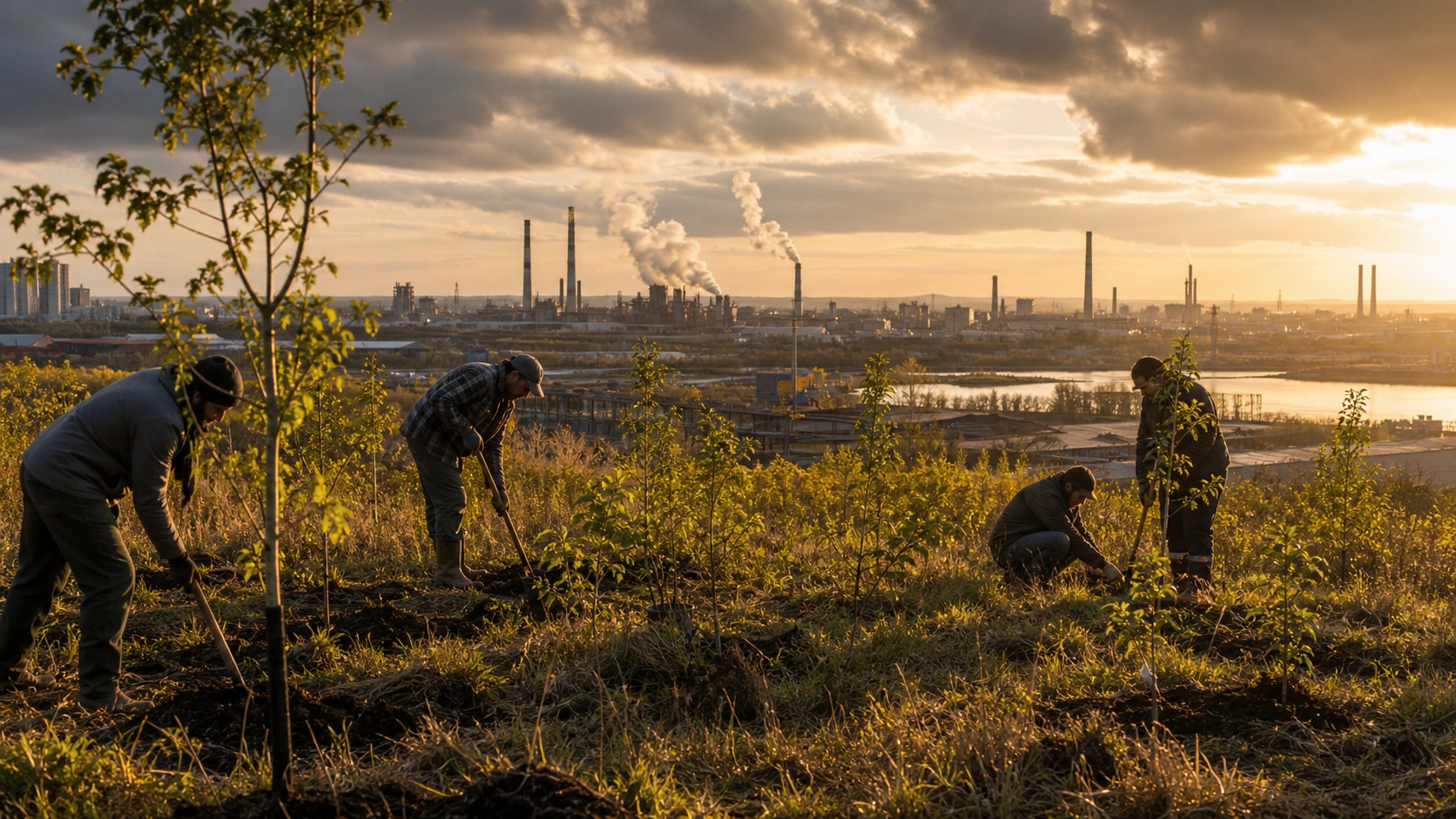
Eco-Socialism vs Capitalism: Can the Planet Survive the Free Market?
Few political and economic debates are as urgent in the twenty-first century as the question of environmental sustainability. Rising global temperatures, biodiversity loss, deforestation, pollution, resource depletion, and increasingly severe weather events have forced governments, businesses, and citizens to confront a difficult reality: human economic activity is having a profound impact on the natural world. While there is widespread disagreement about the best solutions, many observers agree that environmental challenges are among the defining issues of our time.
At the center of this debate lies a larger question about economic systems. Can capitalism, particularly free-market capitalism, adapt to environmental limits and deliver a sustainable future? Or does the pursuit of endless economic growth inevitably conflict with the ecological boundaries of a finite planet? This question has fueled growing interest in eco-socialism, a political and economic philosophy that combines environmental concerns with socialist critiques of capitalism. Eco-socialists argue that environmental destruction is not simply the result of poor policies or corporate mistakes but is deeply connected to the structure of capitalist economies themselves.
Supporters of capitalism often reject this conclusion. They argue that free markets, private property, innovation, and competition provide the most effective tools for solving environmental problems. According to this perspective, economic growth generates the wealth and technological advances needed to develop cleaner energy sources, improve efficiency, and reduce humanity’s ecological footprint. Rather than abandoning capitalism, proponents believe societies should harness market forces to create greener outcomes.
The debate between eco-socialism and capitalism is therefore about much more than economics. It is a discussion about the future of civilization, the limits of growth, the role of technology, the meaning of sustainability, and humanity’s relationship with nature. Understanding both perspectives offers valuable insight into one of the most important political questions of the modern era: can the planet survive the free market, or is a fundamentally different economic system required?
A: Eco-socialism is a political theory that combines environmental protection with socialist ideas about equality, public ownership, democracy, and economic planning.
A: It argues that capitalism often prioritizes profit, growth, and extraction over ecological limits and long-term public survival.
A: Capitalist approaches often focus on markets, innovation, competition, carbon pricing, private investment, and cleaner technology.
A: A market failure happens when markets do not account for social or environmental costs, such as pollution, climate damage, or biodiversity loss.
A: A just transition means moving away from fossil fuels while protecting workers, communities, wages, public services, and local economies.
A: No. Eco-socialists often support clean technology but argue it should be guided by public need and ecological limits instead of profit alone.
A: Not exactly. Environmentalism can include many political views, while eco-socialism specifically links ecological crisis to capitalism and economic power.
A: Because endless growth can require rising extraction, consumption, waste, and energy use on a planet with limited resources.
A: Supporters say yes through innovation and regulation, while eco-socialists argue capitalism’s growth and profit pressures make true sustainability difficult.
A: The main question is whether ecological survival can be achieved through markets alone or whether deeper economic transformation is necessary.
What Is Capitalism?
Capitalism is an economic system based on private ownership of property, voluntary exchange, market competition, and profit-seeking enterprise. In capitalist economies, individuals and businesses largely determine what goods and services are produced, how they are distributed, and what prices consumers pay. Markets coordinate economic activity through supply and demand rather than through centralized planning.
Supporters of capitalism argue that it has generated unprecedented levels of prosperity, innovation, and technological advancement. Since the Industrial Revolution, capitalist economies have contributed to rising living standards, increased life expectancy, expanded consumer choice, and significant reductions in extreme poverty across many regions of the world. The incentives created by competition encourage entrepreneurs to develop new products, improve efficiency, and respond to consumer needs.
However, capitalism’s success has also brought environmental challenges. Industrial expansion, fossil fuel consumption, mass production, and resource extraction have contributed to pollution, habitat destruction, and climate change. Critics argue that because businesses are often rewarded for maximizing profits, environmental costs can be shifted onto society rather than reflected in market prices. This phenomenon, commonly known as an externality, lies at the heart of many environmental debates.
The question for environmentalists is whether capitalism’s strengths can be redirected toward sustainability or whether the system’s core incentives make ecological crises inevitable.
Understanding Eco-Socialism
Eco-socialism is a political and economic philosophy that combines environmental concerns with socialist critiques of capitalism. Eco-socialists argue that ecological problems cannot be fully understood without examining economic systems and power structures. In their view, environmental degradation is not merely the result of poor choices or inadequate regulations but a predictable outcome of an economy organized around profit and continuous growth.
Unlike traditional socialism, which often focused primarily on class inequality and economic ownership, eco-socialism places environmental sustainability at the center of its analysis. Eco-socialists contend that natural ecosystems have limits that cannot be ignored indefinitely. They argue that economies should prioritize ecological balance, democratic control of resources, social equity, and long-term sustainability rather than maximizing profits and consumption.
Many eco-socialists advocate public ownership or democratic management of key industries, particularly those related to energy, transportation, and natural resources. They believe that collective decision-making allows societies to prioritize environmental goals that private markets may neglect. Rather than measuring success through economic growth alone, eco-socialists often emphasize indicators such as environmental health, social well-being, and quality of life.
At its core, eco-socialism challenges the assumption that endless economic expansion is compatible with ecological sustainability. It asks whether a planet with finite resources can support an economic system that continually seeks greater production and consumption.
The Growth Debate: Infinite Expansion on a Finite Planet
Perhaps the most important disagreement between eco-socialists and supporters of capitalism concerns economic growth. Capitalist economies generally depend on growth to create jobs, generate profits, attract investment, and maintain rising living standards. Governments frequently use growth rates as indicators of economic success, and businesses often pursue expansion as a central objective.
Eco-socialists argue that this growth imperative creates fundamental ecological problems. The Earth contains finite supplies of land, minerals, fresh water, forests, and other natural resources. If economies continue expanding indefinitely, they contend, environmental pressures will eventually exceed planetary limits. From this perspective, climate change, biodiversity loss, and resource depletion are not accidental side effects but symptoms of a deeper systemic problem.
Supporters of capitalism counter that economic growth does not necessarily require proportional increases in resource consumption. Technological innovation can improve efficiency, allowing economies to produce more value while using fewer resources. Renewable energy, advanced manufacturing, recycling technologies, and digital services may help decouple growth from environmental impact.
This disagreement remains one of the central fault lines in contemporary environmental politics. Eco-socialists question whether sufficient decoupling is possible at the scale required, while capitalists argue that innovation provides the best path toward sustainability.
Profit Motives and Environmental Costs
Eco-socialists frequently argue that the profit motive encourages environmentally harmful behavior. Businesses operate within competitive markets where success often depends on reducing costs and maximizing returns. If environmental protections increase expenses, firms may face incentives to minimize or avoid those costs whenever possible.
Examples of this dynamic can be seen throughout industrial history. Factories have discharged pollutants into rivers, companies have cleared forests for development, and industries have emitted greenhouse gases without paying the full social cost of environmental damage. In many cases, communities and ecosystems bear consequences that are not reflected in market transactions.
Eco-socialists contend that these outcomes are not isolated failures but structural features of capitalist economies. As long as profits remain the primary objective, environmental concerns may be subordinated to financial considerations.
Capitalist defenders acknowledge these challenges but argue that they can be addressed through effective regulation, property rights, carbon pricing, and environmental laws. Rather than abandoning markets, they advocate creating incentives that encourage businesses to internalize environmental costs and develop sustainable practices.
This debate reflects broader disagreements about whether markets can effectively manage environmental resources or whether democratic planning is necessary to protect ecological systems.
Technology: Savior or False Hope?
Technology occupies a central role in discussions about environmental sustainability. Many supporters of capitalism view innovation as humanity’s most powerful tool for solving ecological challenges. Advances in solar power, wind energy, electric vehicles, battery storage, carbon capture, precision agriculture, and energy efficiency demonstrate how technological progress can reduce environmental impacts while supporting economic growth.
Market advocates argue that capitalism’s competitive nature encourages innovation. Entrepreneurs seeking profits invest in research and development, creating new technologies that improve productivity and address emerging problems. According to this view, environmental challenges should inspire further innovation rather than economic transformation.
Eco-socialists are often more skeptical. While many welcome technological advances, they argue that technology alone cannot solve environmental problems rooted in consumption patterns and economic structures. Increased efficiency may reduce resource use per unit of production, but overall consumption can continue rising if economies keep expanding.
This phenomenon, sometimes referred to as the rebound effect, raises concerns that technological solutions may be insufficient without broader changes in economic priorities. Eco-socialists often argue that societies must address both production methods and consumption levels if they hope to achieve long-term sustainability.
Climate Change and Competing Solutions
Climate change represents perhaps the most significant test of both economic systems. Rising greenhouse gas emissions, increasing global temperatures, and more frequent extreme weather events have intensified calls for action across the political spectrum.
Capitalist approaches to climate policy often emphasize market-based mechanisms. Carbon taxes, emissions trading systems, green investment incentives, and private-sector innovation are commonly proposed solutions. Advocates believe these tools can reduce emissions while preserving economic growth and consumer choice.
Eco-socialists generally support more extensive intervention. They argue that the scale and urgency of climate change require coordinated public action, large-scale investment, and democratic control over key sectors such as energy and transportation. Many advocate rapid transitions away from fossil fuels, expanded public ownership of renewable energy infrastructure, and stronger environmental regulations.
The climate debate illustrates how both sides recognize the seriousness of environmental challenges but disagree fundamentally about the mechanisms needed to address them. One side places greater trust in markets and innovation, while the other emphasizes planning, public control, and structural change.
Social Justice and Environmental Sustainability
Another defining feature of eco-socialism is its emphasis on social justice. Eco-socialists argue that environmental degradation and economic inequality are closely connected. Communities with fewer resources often face greater exposure to pollution, environmental hazards, and climate-related risks.
From this perspective, sustainability cannot be separated from questions of fairness and economic distribution. Eco-socialists advocate policies designed to reduce inequality while promoting ecological goals. These may include investments in public transportation, affordable housing, renewable energy jobs, and universal access to essential services.
Capitalist supporters often agree that environmental policies should consider social impacts but argue that economic growth remains the most effective tool for improving living standards. Wealthier societies generally possess greater resources for environmental protection and climate adaptation. Therefore, maintaining growth may help fund sustainability efforts rather than hinder them.
The relationship between environmental protection and social justice continues to shape political debates around the world, influencing discussions about energy policy, economic development, and climate adaptation.
Can Green Capitalism Work?
One of the most important developments in recent decades has been the emergence of green capitalism. This approach seeks to align market incentives with environmental goals, encouraging businesses to pursue sustainability while remaining profitable.
Green capitalism includes initiatives such as renewable energy investment, sustainable finance, carbon markets, environmentally responsible supply chains, and corporate sustainability programs. Many major companies now promote environmental commitments as part of their business strategies.
Supporters argue that green capitalism demonstrates the adaptability of market systems. Consumer demand for sustainable products, investor interest in environmental performance, and government incentives can encourage businesses to adopt greener practices. Rather than abandoning capitalism, proponents believe it can evolve to meet environmental challenges.
Eco-socialists remain cautious. They argue that many green initiatives address symptoms rather than underlying causes. While cleaner technologies and corporate sustainability programs may reduce certain impacts, they may not eliminate pressures associated with continuous growth and consumption. Critics also question whether profit-driven firms can consistently prioritize environmental goals when those goals conflict with financial interests.
The success or failure of green capitalism may ultimately determine whether capitalism can maintain legitimacy in an era increasingly defined by ecological concerns.
The Strengths and Weaknesses of Both Perspectives
Both eco-socialism and capitalism offer valuable insights into environmental challenges. Eco-socialism highlights the importance of ecological limits, collective responsibility, and long-term planning. It draws attention to systemic issues that may be overlooked when environmental problems are viewed solely through the lens of individual behavior or technological innovation.
At the same time, capitalism has demonstrated remarkable capacity for adaptation, innovation, and wealth creation. Market economies have generated technologies and resources that can contribute significantly to environmental solutions. The flexibility and creativity encouraged by competition remain powerful forces for change.
The weaknesses of each system are equally important to consider. Critics of eco-socialism question whether large-scale planning can efficiently allocate resources or encourage innovation. Critics of capitalism argue that market incentives may continue rewarding environmentally harmful behavior despite regulatory efforts.
As environmental challenges become increasingly urgent, societies may draw elements from both traditions, combining market mechanisms with stronger public oversight and sustainability goals.
Conclusion
The debate between eco-socialism and capitalism is ultimately a debate about humanity’s future. Both perspectives recognize that environmental challenges demand serious attention, yet they offer fundamentally different explanations and solutions. Eco-socialists argue that ecological crises are deeply rooted in an economic system driven by profit and growth, while supporters of capitalism contend that innovation, markets, and entrepreneurship provide the best tools for solving environmental problems.
The question of whether the planet can survive the free market remains unresolved. Capitalism has delivered extraordinary prosperity and technological advancement, but it has also contributed to environmental pressures that threaten long-term sustainability. Eco-socialism offers a powerful critique of these problems but faces questions about practicality, efficiency, and implementation.
As societies confront climate change, resource scarcity, and ecological degradation, the conversation between these competing visions will continue to shape public policy and political debate. Whether the future belongs to greener forms of capitalism, eco-socialist alternatives, or a hybrid approach combining elements of both, one reality remains clear: the relationship between economic systems and environmental sustainability will be one of the defining challenges of the twenty-first century.