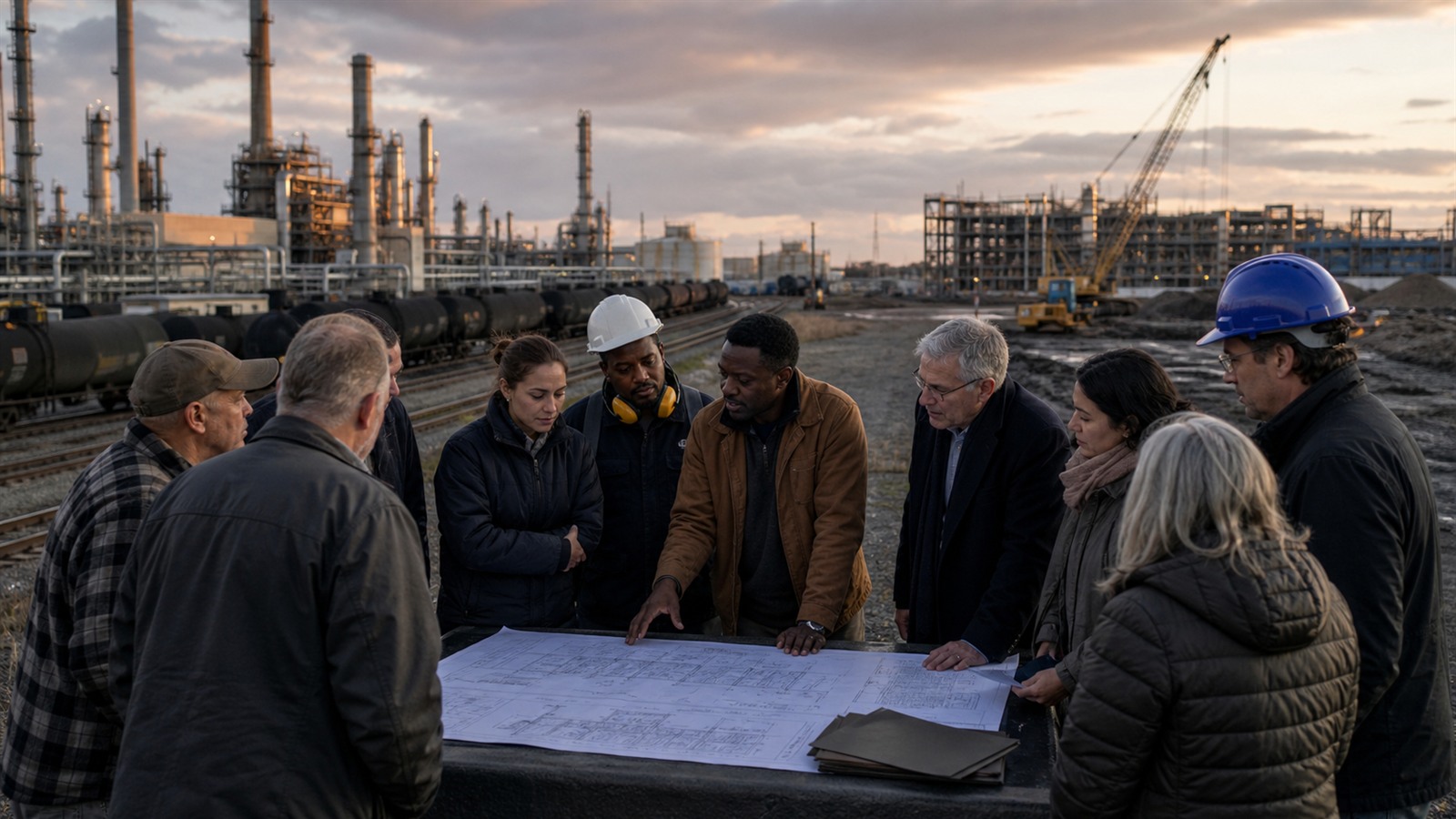
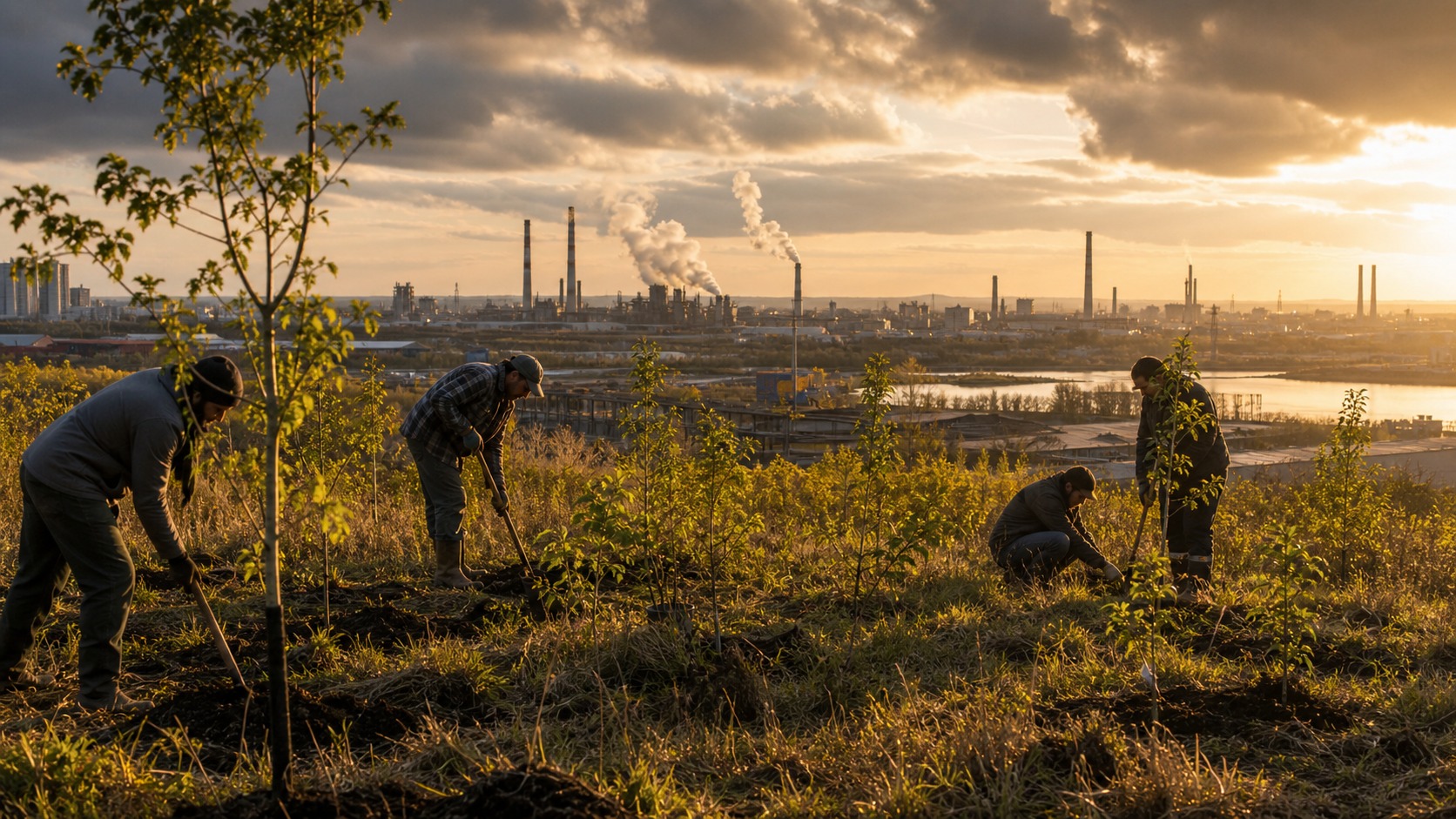
Green capitalism seeks to make investment, technology, prices, and enterprise compatible with ecological goals. Eco-socialism argues that greening products is insufficient while private owners retain control of production and profit depends on continued accumulation. The dispute is not about whether solar panels or efficient factories are useful. It is about who decides the transition and how its gains and burdens are distributed.
Real policy mixes both approaches. Public subsidies can create private clean industries; carbon prices can operate under binding plans; state-owned grids can buy from commercial producers. The contrast becomes clearer by following ownership, finance, labor, growth, and global supply chains.
A: It seeks ecological improvement through cleaner markets, technologies, investment, prices, regulation, and profitable enterprise.
A: Private control of investment and pressure for accumulation can override ecological limits and democratic priorities.
A: Yes. They differ over ownership, finance, access, labor power, material demand, and who governs deployment.
A: Yes, as a supporting tool under binding plans and equitable provision rather than the sole coordinating mechanism.
A: Green capitalism expects cleaner growth, while eco-socialists question total throughput and distinguish useful expansion from luxury or waste.
A: Green capitalism may promise jobs; eco-socialism emphasizes unions and worker authority over the transition itself.
A: Views vary, but many allow limited firms and markets within strong social ownership, planning, rights, and ecological boundaries.
A: Exclusive rights can reward invention but also slow affordable global deployment of essential technologies.
A: It can drive important technology and investment, but critics question speed, rebound, inequality, and fossil incumbents' continued power.
A: Green capitalism governs ecology through accumulation; eco-socialism aims to govern production democratically within ecological limits.
The Two Approaches Share a Physical Task
Both approaches need clean electricity, efficient buildings, low-carbon transport, transformed industry, resilient agriculture, and restored ecosystems. Neither can succeed through labels. Steel, cement, minerals, grids, skills, land, and time constrain the transition.
The disagreement concerns governing logic. Green capitalism tries to align returns with ecological outcomes so private investment accelerates change. Eco-socialism uses democratic ownership, planning, and provision to make ecological and social goals authoritative even when they conflict with profit.
Green Capitalism Changes Incentives
Carbon prices, tax credits, standards, disclosure, procurement, and green finance alter the expected return on technologies. High-emission assets become costly, clean alternatives gain markets, and entrepreneurs search for lower-cost solutions. The model values decentralized experimentation and large pools of private capital.
Eco-Socialism Changes Decision Rights
Incentives leave owners deciding whether, where, and when to invest. Eco-socialism transfers more authority to public bodies, workers, communities, cooperatives, and Indigenous governments. It asks not only how to make a clean project profitable, but whether society can build it as a public priority.
Decision rights matter when a necessary service has weak revenue or an incumbent earns more from delay. Ownership can permit direct sequencing and retain returns for common use, though public managers need strong accountability.
Carbon Markets Illustrate the Divide
A carbon price creates a common signal and can discover cheaper reductions. Yet households have unequal ability to respond, firms may pass costs onward, and offsets can preserve local pollution. Price levels also face political pressure and may not coordinate infrastructure.
Planning Addresses Physical Dependencies
Eco-socialists emphasize plans because grids, rail, housing, factories, and workforces require linked timelines. A plan can guarantee demand, allocate scarce materials, and build alternatives before banning an old system. It can also become rigid or captured if information and challenge are weak.
Green-capitalist policy also plans through subsidies and standards, though it may avoid the term. The relevant distinction is whether public goals bind investment or remain opportunities owners accept when returns are sufficient.
Ownership Determines Who Receives Green Wealth
Clean infrastructure creates land appreciation, utility revenue, intellectual property, and long-term cash flows. Private ownership concentrates those gains even when public money reduced the risk. Public stakes, cooperatives, and community ownership can distribute wealth and retain strategic control.
Labor Is a Benefit or a Governing Actor
Green-capitalist programs celebrate job creation and may attach wage conditions. Eco-socialism gives workers independent power through unions, boards, bargaining, and ownership. Workers help decide technology, safety, training, sourcing, closure, and the use of surplus.
This distinction affects political durability. A worker promised an abstract future job remains vulnerable; an organized workforce with enforceable transition rights can negotiate change without depending on employer goodwill.
Growth Means Different Things
Green capitalism expects innovation and efficiency to decouple economic growth from environmental damage. Eco-socialists doubt that relative efficiency reliably reduces total energy and material use when production keeps expanding. Rebound and outsourced extraction can erase gains.
Sufficiency Separates Needs From Luxury
Eco-socialism supports expanding housing, energy access, care, and infrastructure where needs are unmet while reducing private jets, oversized vehicles, waste, and planned obsolescence. Prosperity comes through services, time, health, and shared goods as well as products.
Sufficiency requires democratic legitimacy. Austerity imposed on ordinary households while wealth remains carbon-intensive will fail morally and politically. Universal low-carbon alternatives must precede many restrictions.
Innovation Can Be Proprietary or Shared
Patents and investor returns can finance experimentation, but public research already underlies many technologies. Exclusive control can raise prices and slow diffusion. Eco-socialists favor open standards, public laboratories, technology sharing, and mission-driven research alongside accountable incentives.
Global Supply Chains Test Green Claims
A clean product may rely on mining, water, labor, and pollution elsewhere. Green capitalism uses certification and supplier standards but retains purchasing relationships driven by margin. Eco-socialism seeks binding labor and environmental duties, producer-country authority, technology transfer, and reduced material demand.
Wealthy states also possess greater fiscal room to subsidize domestic industries. Without international finance and fair trade rules, green competition can widen global inequality while poorer countries service debt and export raw materials.
Corporate Power Can Redirect the Transition
Fossil and industrial firms lobby for favorable subsidies, slow rules, acquire clean competitors, and frame asset protection as energy security. Green capitalism expects policy to redirect these firms or allow new entrants to displace them. Eco-socialists see concentrated ownership itself as the obstacle.
Public Power Has Its Own Risks
State enterprises can pollute, displace, hide costs, or pursue production for geopolitical prestige. Eco-socialism requires rights, worker organization, transparent planning, community authority, and independent ecological review. Public purpose cannot be inferred from legal title.
The comparison is therefore not virtuous government against corrupt business. It concerns which structures make each actor answerable and whether citizens can change investment without first satisfying private return.
Compare the Two Approaches Through a Solar Factory
A green-capitalist strategy may offer tax credits, research support, accelerated permits, and public procurement so private firms build domestic solar manufacturing. Competition is expected to reduce prices and improve technology. Investors accept construction risk in return for ownership and future profit, while environmental standards regulate production impacts.
An eco-socialist strategy asks who owns the factory, patents, supply contracts, and surplus. Public support may be conditioned on worker representation, public equity, price obligations, open licensing, recycling, and community benefits. A public or cooperative producer might be created where private capital will not serve a region or where strategic control matters.
Labor reveals the difference. Green capitalism treats good jobs as a desirable co-benefit that subsidies or training can encourage. Eco-socialism treats worker power as part of the transition’s governing structure. Unions participate in technology, safety, scheduling, sourcing, and closure decisions, not only wages after investment choices are settled.
The material chain extends beyond the plant. Mining, refining, shipping, energy use, product life, repair, and recycling determine ecological performance. Certification may improve private supply chains, but lead firms can shift risk through contracts. Eco-socialist planning uses binding duties, public purchasing, international agreements, and reduced material demand alongside cleaner extraction.
Pricing raises another divergence. A private manufacturer may charge what the market will bear or prioritize customers offering the highest return. Public finance can lower costs, but ownership determines who captures scarcity rents. Public stakes, price conditions, and capacity planning can ensure that a publicly created industry serves rapid deployment instead of deliberate shortage.
Innovation remains necessary under either model. Green capitalism rewards patents, venture returns, and competitive advantage. Eco-socialism emphasizes public research, open standards, shared knowledge, and mission-driven engineering. It may still use prizes or temporary incentives, but seeks to prevent intellectual property from delaying worldwide diffusion of essential climate technology.
The factory does not provide a universal verdict. Private firms may build quickly and public enterprises may fail. The comparison identifies accountability. If targets are missed, can citizens redirect investment, replace managers, protect workers, and share technology, or must policy continually negotiate with owners whose legal duty centers on their enterprise? That question separates green production from democratic ecological transformation. Finance can pull a project toward either vision. Green bonds and climate funds attract private capital by offering risk-adjusted returns, often with public guarantees. This can mobilize resources quickly, but profitable assets receive priority and governments may absorb downside risk. Eco-socialist finance uses public banks, budgets, pension governance, and social wealth funds to allocate capital according to a plan, with transparent accounting and democratic review. Neither arrangement eliminates mistakes; they distribute authority and loss differently. The approaches also disagree about demand. Green capitalism often expects clean substitutes to preserve patterns of mobility, consumption, and corporate growth. Eco-socialism distinguishes needs from luxury and asks when shared transit, repair, durable design, or shorter supply chains can reduce total throughput. It supports expanding clean capacity where deprivation exists while reducing wasteful production in affluent sectors. Political coalitions follow these choices. Green capitalism can unite governments, investors, manufacturers, and consumers around new markets, but incumbents may seek subsidies without accepting binding decline of fossil assets. Eco-socialism builds around workers, public institutions, tenants, Indigenous nations, and communities, yet can lack capital and administrative capacity. A serious transition may use entrepreneurial production while placing hard ecological limits, social guarantees, and investment direction beyond private veto. The dividing line is not the presence of profit in one transaction. It is whether profitability governs the pace, composition, and social terms of the transition. Green capitalism makes ecological goals compatible with accumulation; eco-socialism makes economic activity subordinate to democratically chosen ecological and social goals. Lifecycle accounting can clarify the argument but also become a political hiding place. Analysts can compare emissions and materials from extraction through disposal, yet system boundaries and future assumptions decide the result. Companies may publish favorable product footprints while total sales rise. Public standards need consistent methods, independent data, and absolute sector targets so efficiency does not substitute for decline where decline is required. Risk is another dividing issue. Green capitalism often uses loan guarantees and contracts to make projects investable, transferring construction or market risk to the public. This may be justified for urgent infrastructure, but the return should be reciprocal. Public equity, profit sharing, price limits, open knowledge, or ownership after contract expiration prevents taxpayers from absorbing losses while paying again as customers. Eco-socialist enterprises face investment discipline of their own. Projects still consume scarce labor, materials, land, and foreign exchange. Democratic approval cannot make every proposal feasible. Transparent cost accounting, technical review, staged pilots, and comparison with demand reduction protect public finance from politically attractive but physically weak plans. Community institutions can also become incumbents guarding local benefits. Regional and national goals must represent future users and neighboring places affected by land, water, or transmission. Nested democracy is harder than either corporate command or one public authority, but it prevents local control from becoming ecological fragmentation. The comparison is strongest when both approaches face equivalent questions about failure. Who loses if forecasts are wrong? Who can change the plan? Which information is public? What protects workers and users during bankruptcy or administrative breakdown? Answers reveal the governing system beneath the green label.
A Transition May Combine Tools but Not Logics
Governments can use firms, prices, procurement, public ownership, planning, and universal services together. Practical mixtures are inevitable. Conflict appears when a binding ecological or justice goal lowers returns: does the goal govern, or is it weakened until investors participate?
Green capitalism can deliver important emissions reductions and productive capacity. Eco-socialism argues that a complete transition must also redistribute ownership, power, time, and security while reducing material pressure. The difference is not the color of the technology. It is who controls the economy being made green.