The Long Struggle for Fair Work
The history of labor unions is one of the most dramatic and influential stories in modern economic and social development. It is a story of workers standing together against difficult conditions, demanding fair treatment, and reshaping the relationship between labor and management. The rights that many employees take for granted today—including safer workplaces, reasonable working hours, paid leave, overtime pay, and protections against unfair treatment—did not emerge automatically. They were often won through decades of organizing, negotiation, protest, and sacrifice by workers who believed that economic progress should benefit employees as well as business owners.
The rise of labor unions transformed societies across the world. As industries expanded during the Industrial Revolution, millions of people left farms and small workshops to work in factories, mines, railroads, and urban manufacturing centers. While industrialization created wealth and innovation, it also introduced new forms of hardship. Long hours, dangerous conditions, child labor, low wages, and limited legal protections became common realities for many workers. Labor unions emerged as a response to these challenges, offering workers a collective voice in a rapidly changing economic landscape.
Throughout their history, unions have been praised as champions of fairness and criticized as obstacles to economic flexibility. They have been celebrated for improving working conditions and blamed for contributing to labor disputes. Yet regardless of where one stands in modern debates about organized labor, the influence of unions on workplace rights and economic policy is impossible to ignore. Understanding the history of labor unions provides valuable insight into how modern workplaces evolved and why worker representation remains a significant issue in the twenty-first century.
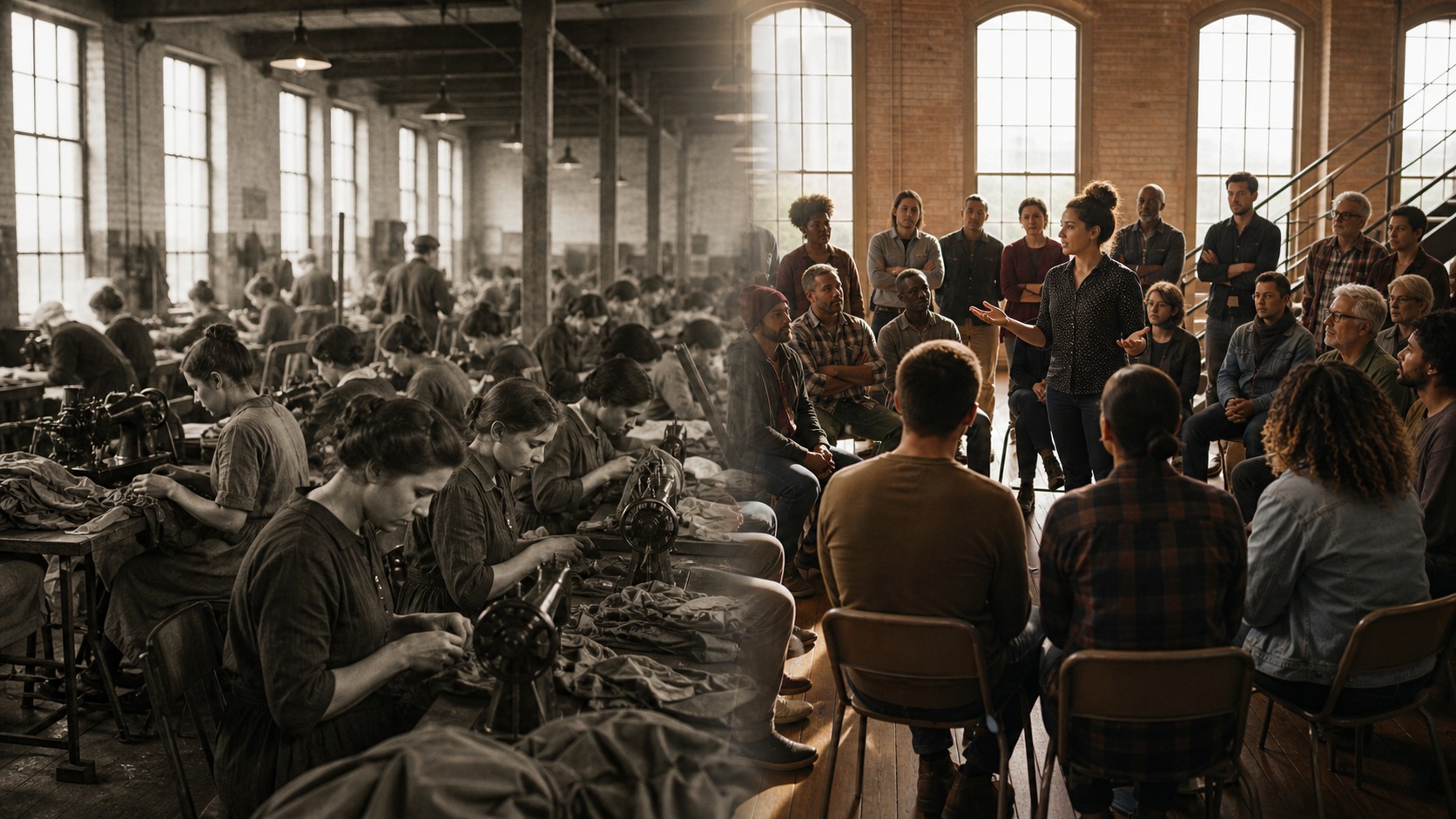
The journey from crowded sweatshops to organized worker power is not merely a story about economics. It is a story about human dignity, collective action, political reform, and the ongoing effort to balance economic growth with social justice. It is one of the defining narratives of modern labor history.
A: Workers organized to fight low wages, long hours, unsafe workplaces, and unfair treatment.
A: Sweatshops were workplaces known for poor pay, long hours, cramped spaces, and unsafe conditions.
A: Unions helped push for better wages, shorter hours, safer workplaces, weekends, benefits, and grievance rights.
A: A strike is when workers collectively stop working to pressure an employer to meet demands.
A: It is the process where workers, through their union, negotiate a contract with their employer.
A: No. Workers often faced arrests, firings, blacklists, violence, and hostile courts before stronger labor protections developed.
A: It became a powerful labor demand for a healthier balance between work, rest, and personal life.
A: No. Unions have represented workers in mining, transport, education, healthcare, government, media, food service, and more.
A: Major reasons include deindustrialization, globalization, legal barriers, employer opposition, and changes in the economy.
A: It is the history of workers joining together to turn workplace hardship into bargaining power.
Before Unions: Life in the Early Industrial Workplace
To understand why labor unions emerged, it is important to examine the conditions that existed before organized labor became widespread. During the early stages of industrialization in the late eighteenth and nineteenth centuries, economic growth often outpaced social protections. Factories appeared throughout Europe and North America, creating employment opportunities but also exposing workers to harsh and frequently dangerous environments.
Many factory employees worked twelve to sixteen hours per day, six or seven days a week. Industrial machinery lacked modern safety features, leading to frequent injuries and fatalities. Ventilation was poor, sanitation standards were minimal, and workplace accidents were often treated as unavoidable costs of production. Employees who became injured or ill typically received little assistance, and losing a job could mean losing the ability to support an entire family.
Children were commonly employed in factories, mines, and textile mills. Employers valued child labor because young workers could be paid less and were often assigned dangerous tasks in confined spaces. Women also faced significant challenges, frequently earning lower wages than men while working equally demanding schedules. Labor laws were either weak or nonexistent, leaving workers with few avenues for legal protection.
In this environment, employers generally possessed overwhelming power. Individual workers had limited leverage because replacement labor was often readily available. If employees complained about conditions or attempted to negotiate better treatment, they could be dismissed with little consequence. These circumstances created fertile ground for collective organizing and laid the foundation for the labor union movement.
The Birth of Organized Labor
The earliest labor organizations emerged as workers began recognizing that collective action offered greater bargaining power than individual negotiations. While one worker could be easily ignored or replaced, groups of workers acting together had a better chance of influencing employers and attracting public attention.
Early labor movements often began informally. Workers met in local communities, taverns, churches, and meeting halls to discuss common concerns and coordinate responses to workplace issues. These gatherings gradually evolved into more structured organizations dedicated to advocating for wages, working conditions, and employee rights.
The initial growth of labor unions faced significant obstacles. In many countries, governments viewed worker organizations with suspicion and sometimes outright hostility. Laws were often designed to prevent workers from organizing, and strikes were frequently treated as illegal conspiracies. Employers hired private security forces, sought court injunctions, and used other tactics to suppress organizing efforts.
Despite these challenges, labor organizations continued to expand. Skilled tradespeople such as printers, carpenters, and machinists often led early union efforts because their specialized knowledge made them somewhat more difficult to replace. Over time, union organizing spread to larger segments of the workforce, creating broader labor movements that transcended individual trades and industries.
These early unions represented more than workplace organizations. They became symbols of a growing belief that workers deserved a voice in shaping the conditions under which they labored. Their emergence marked the beginning of a new chapter in industrial society.
Sweatshops, Strikes, and the Fight for Recognition
The late nineteenth and early twentieth centuries witnessed some of the most intense labor struggles in modern history. Rapid industrial growth created enormous fortunes for business owners and investors, but many workers continued to face difficult conditions. Sweatshops became emblematic of the era’s labor problems, particularly in industries such as garment manufacturing.
Sweatshops often involved crowded workspaces, poor ventilation, long hours, and extremely low pay. Workers labored under intense pressure to meet production targets while lacking basic safety protections. Immigrant communities frequently supplied much of the labor force, making them particularly vulnerable to exploitation and discrimination.
As dissatisfaction grew, strikes became increasingly common. Workers organized work stoppages to demand higher wages, shorter hours, and safer conditions. Some strikes remained peaceful, while others escalated into confrontations involving employers, private security forces, police, and military units. Labor disputes sometimes turned violent, highlighting the deep tensions between workers and management during the industrial age.
Although many strikes ended unsuccessfully, others produced important victories. Public awareness of labor conditions grew as journalists, activists, and reformers documented workplace abuses. The willingness of workers to endure financial hardship and personal risk for collective goals gradually strengthened the labor movement and increased pressure for reform.
These struggles helped transform unions from small local organizations into major social and political forces capable of influencing public opinion and government policy.
The Push for the Eight-Hour Workday
Among the most significant goals of early labor unions was the campaign for shorter working hours. During the nineteenth century, twelve-hour and fourteen-hour shifts were common in many industries. Workers often spent the majority of their waking lives at work, leaving little time for family, education, recreation, or civic participation.
Labor activists argued that excessive working hours harmed both physical health and social well-being. The slogan “Eight Hours for Work, Eight Hours for Rest, Eight Hours for What We Will” became a rallying cry for workers seeking a more balanced life. This simple message captured the broader labor movement’s belief that economic progress should improve quality of life rather than merely increase production.
The fight for the eight-hour workday was neither quick nor easy. Employers frequently resisted changes, arguing that shorter hours would reduce productivity and increase costs. Workers organized demonstrations, strikes, and public campaigns to build support for reform. In some cases, labor disputes surrounding working hours became defining moments in labor history.
Over time, public attitudes shifted. Reformers, politicians, and even some business leaders began recognizing the benefits of reasonable working hours. Gradually, labor laws and union contracts incorporated shorter workdays and workweeks. What once seemed like a radical demand eventually became a standard expectation across much of the industrialized world.
Labor Unions and Workplace Safety
Workplace safety emerged as another central concern for labor unions. Early industrial workplaces were often dangerous environments where accidents occurred frequently. Factories lacked protective equipment, machinery exposed workers to serious risks, and safety training was minimal or nonexistent.
Mining operations presented especially severe hazards. Cave-ins, explosions, toxic gases, and inadequate ventilation claimed thousands of lives. Manufacturing facilities also experienced high injury rates due to unsafe machinery and overcrowded conditions. In many industries, employers viewed accidents as unfortunate but unavoidable aspects of production.
Labor unions challenged this mindset by arguing that worker safety should be a priority rather than an afterthought. Unions collected data, publicized workplace hazards, and pressured employers to adopt safer practices. They negotiated contract provisions addressing equipment maintenance, protective gear, emergency procedures, and safety inspections.
One of the most influential moments in workplace safety history came after tragic industrial disasters exposed dangerous conditions to the broader public. Such events strengthened demands for regulatory oversight and reinforced the labor movement’s argument that workers deserved protection from preventable harm.
The safety standards common in modern workplaces owe much to decades of union advocacy and broader labor reform efforts that emphasized the value of human life over short-term productivity gains.
The Rise of Mass Unionism
The early twentieth century saw the emergence of mass unionism, a period during which labor organizations expanded beyond skilled trades to include large numbers of industrial workers. Manufacturing plants, steel mills, automobile factories, and transportation networks employed thousands of workers whose collective strength created new opportunities for organizing.
Mass unionism reflected changes in the economy. Large corporations employed increasingly centralized workforces, making collective action more feasible and potentially more impactful. Organizers recognized that uniting workers across occupations and skill levels could strengthen bargaining power and create broader labor solidarity.
This period also witnessed the development of national labor federations that coordinated activities across industries and regions. These organizations provided resources, leadership, and strategic direction while helping local unions address challenges posed by large employers.
As union membership grew, labor organizations became important political actors. They supported legislation related to workplace rights, social welfare programs, and economic regulation. Labor issues increasingly entered mainstream political debates, influencing elections and public policy decisions.
Mass unionism transformed organized labor from a collection of localized groups into a significant force capable of shaping national conversations about work, wages, and economic justice.
Labor Unions in the Mid-Twentieth Century
The mid-twentieth century is often considered the peak era of labor union influence in many industrialized countries. Union membership expanded significantly, and collective bargaining became a standard feature of employment relationships across numerous industries.
Postwar economic growth created favorable conditions for labor organizations. Strong demand for goods and services supported rising wages, while expanding industries provided opportunities for union organizing. Collective bargaining agreements increasingly addressed not only wages but also healthcare benefits, retirement plans, paid leave, and job security.
During this period, unions played an important role in helping create and sustain the middle class. Negotiated wage increases allowed many workers to achieve higher living standards and greater economic stability. Homeownership, education, and retirement security became more attainable for millions of families.
At the same time, unions continued advocating for broader social reforms. Labor organizations often supported civil rights initiatives, anti-discrimination measures, workplace equality efforts, and public investments in education and infrastructure. Their influence extended beyond workplaces into wider discussions about social and economic policy.
This era demonstrated how organized labor could function not only as a bargaining institution but also as a significant participant in democratic governance and public life.
Challenges and Decline in the Late Twentieth Century
Beginning in the latter half of the twentieth century, labor unions faced significant challenges that contributed to declining membership in many countries. Economic globalization increased competition as companies gained greater ability to relocate production to regions with lower labor costs. Manufacturing employment declined in some traditional union strongholds, reducing opportunities for organizing.
Technological advancements also altered workplace structures. Automation reduced demand for certain categories of labor, while the growth of service industries introduced new organizing challenges. Smaller workplaces and more fragmented employment arrangements often proved more difficult to unionize than large industrial facilities.
Political and legal changes further influenced labor relations. Some policymakers and business leaders argued that unions reduced competitiveness and flexibility, leading to reforms that limited union influence in certain sectors. Public attitudes toward organized labor became more divided, reflecting broader ideological debates about markets, regulation, and economic policy.
Despite these challenges, unions continued representing millions of workers and remained active in industries such as education, healthcare, transportation, and public services. Although membership declined in some areas, labor organizations adapted by exploring new strategies and expanding organizing efforts into emerging sectors.
Worker Power in the Twenty-First Century
The twenty-first century has introduced new opportunities and challenges for organized labor. The rise of the gig economy, remote work, digital platforms, and artificial intelligence has transformed traditional employment relationships. These changes have prompted renewed discussions about worker representation, economic security, and labor rights.
Many modern workers face concerns that differ from those of earlier generations. Issues such as job stability, healthcare access, student debt, workplace surveillance, and algorithmic management have become increasingly prominent. Labor organizations have responded by adapting their priorities and exploring innovative forms of representation.
Recent years have witnessed renewed interest in unionization among workers in industries that historically lacked strong labor traditions. Employees in technology companies, retail chains, logistics networks, and digital media organizations have launched organizing campaigns aimed at securing greater influence over workplace decisions.
These developments suggest that while the labor movement continues to evolve, its underlying purpose remains consistent. Workers continue seeking mechanisms to collectively address workplace concerns and participate more meaningfully in decisions that affect their economic lives.
Conclusion: A Legacy That Continues to Shape Work
The history of labor unions is a story of transformation. What began as small groups of workers resisting dangerous conditions and economic exploitation evolved into a global movement that reshaped workplaces, influenced public policy, and expanded the rights of millions of people. From sweatshops and child labor to collective bargaining and workplace protections, labor unions helped redefine expectations about fairness, dignity, and opportunity in modern employment.
The achievements of organized labor are woven into everyday life. Standard workweeks, workplace safety regulations, overtime protections, employer-sponsored benefits, and grievance procedures all reflect, at least in part, the legacy of labor activism. These developments remind us that workplace standards are not static; they are the product of historical struggles and ongoing negotiations.
At the same time, the story of labor unions remains unfinished. New technologies, economic structures, and employment models continue to reshape the nature of work. As societies confront challenges related to automation, globalization, and economic inequality, questions about worker representation and collective power remain highly relevant.
Understanding the history of labor unions provides more than a lesson about the past. It offers insight into how social change occurs, how workers have organized to improve their lives, and how collective action can influence economic institutions. From the crowded factories of the Industrial Revolution to the evolving workplaces of the digital age, the journey from sweatshops to worker power remains one of the most important chapters in modern social and economic history.