Second-wave feminism is a broad label for movements that gained momentum from the 1960s through the 1980s, with different timelines around the world. Building on earlier legal and political gains, activists examined why inequality persisted inside work, family, sexuality, reproduction, media, and daily life. Political theory changed with them. Patriarchy, consciousness-raising, social reproduction, bodily autonomy, sexual politics, and the claim that the personal is political gave new language to forms of power that formal citizenship alone had not resolved. The era contained movements rather than one organization, and its internal disputes produced lasting theory. Liberal, radical, socialist, Black, lesbian, anticolonial, Indigenous, labor, and other feminisms disagreed over causes and strategy while forcing one another to confront excluded experience. Understanding the wave requires both its institutional gains and the critiques that reshaped the meaning of liberation. Its legacy is therefore neither a completed program nor a simple cautionary tale. It is an archive of concepts, organizations, victories, failures, and arguments that continue to structure contemporary democratic feminist politics worldwide today.
A: The label commonly refers to activism from the 1960s through the 1980s, with timing and relevance varying across countries.
A: It built on civil and voting rights while emphasizing everyday power in work, care, sexuality, reproduction, violence, and culture.
A: Repeated personal experiences can be produced by public institutions, economic arrangements, and shared gender norms.
A: Small groups compared experiences to identify structural patterns, develop concepts, and organize political action.
A: It is a system of institutions and norms that privileges male authority and organizes gendered hierarchy, though theories differ on its causes.
A: It sustains workers and society while shaping women's time, income, dependence, and political participation.
A: No. Liberal, radical, socialist, Black, lesbian, Indigenous, anticolonial, and other feminists disagreed sharply.
A: Dominant organizations often marginalized women by race, class, sexuality, disability, nationality, and other differences.
A: No. It used services, culture, scholarship, direct action, organizing, and alternative institutions alongside legal reform.
A: It revealed that formal equality cannot succeed without transforming care, bodies, work, intimate power, culture, and knowledge.
The Second Wave Inherited Unfinished Equality
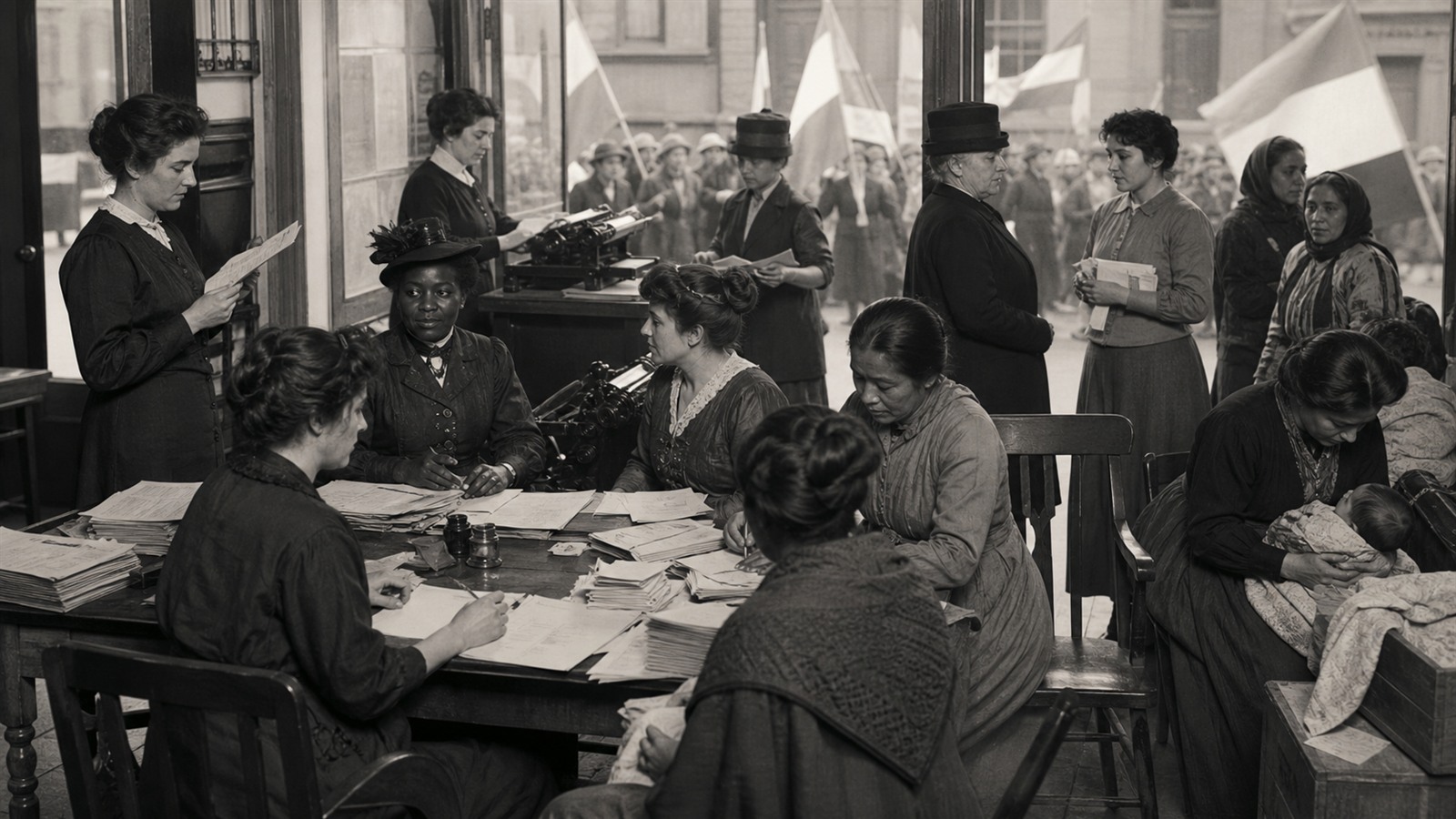
Voting, education, property, and formal employment access had expanded, yet women remained concentrated in lower-paid work and responsible for most care. Violence and reproductive control were often treated as private matters.
The contradiction between formal status and lived inequality became the wave’s starting problem.
The Personal Became Political Evidence
Experiences inside marriage, sexuality, work, and the body were not automatically public policy questions. Feminists showed how law, markets, medicine, culture, and social norms organized them. Naming the pattern made collective action possible.
Patriarchy Named a System
The concept described more than individual prejudice. It located male authority and gender hierarchy across households, states, workplaces, religion, and culture. Different feminisms debated whether patriarchy’s roots lay in reproduction, violence, sexuality, capitalism, psychology, or several structures together.
The disagreement made patriarchy a field of theory rather than a single settled mechanism.
Consciousness-Raising Produced Knowledge
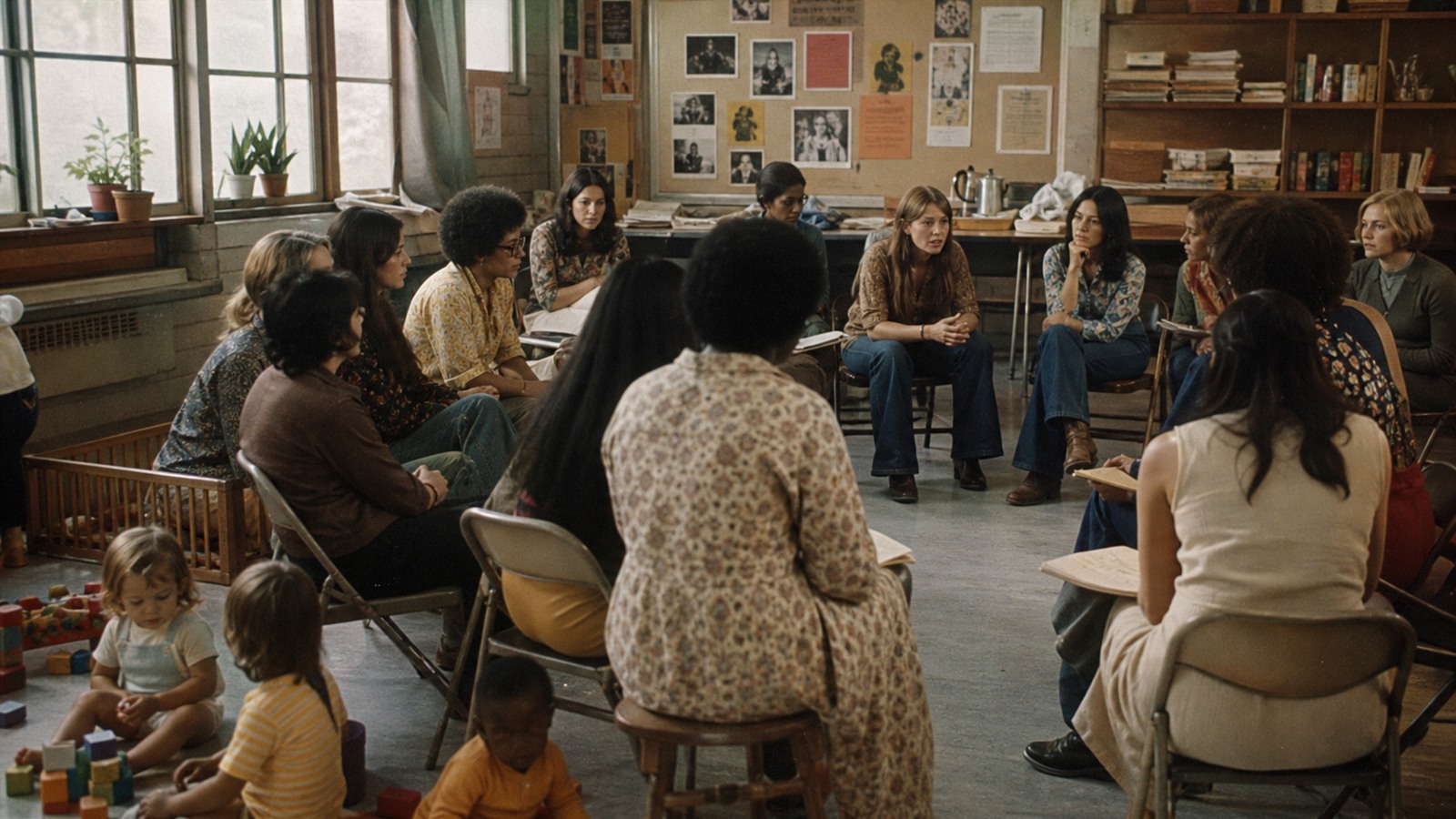
Small groups compared lives and questioned explanations based on personal failure. Repetition revealed institutional patterns. The practice treated participants as thinkers capable of generating concepts from experience.
Care and Housework Entered Political Economy
Paid production depended on cooking, cleaning, childrearing, emotional support, and daily renewal of workers. Much of this labor was unpaid and assigned to women. Socialist feminists debated wages for housework, public services, shared labor, and capitalism’s dependence on social reproduction.
Care became an economic foundation and a relationship requiring quality, voice, and fair distribution.
Workplace Equality Reached Beyond Hiring
Occupational segregation, pay, promotion, harassment, pregnancy, appearance, and scheduling shaped women’s employment. Legal access to a job did not transform workplaces designed around workers without visible care duties.
Bodily Autonomy Became a Democratic Principle
Contraception, abortion, childbirth, sterilization, sexual violence, and medical authority connected bodies to citizenship. Reproductive freedom included the right not to have children and, for reproductive-justice movements, the conditions to raise children safely.
Race, disability, class, and colonial histories complicated any account centered only on access to contraception or abortion.
Violence Crossed the Private Boundary
Activists established shelters, hotlines, crisis centers, research, and legal reforms. They reframed domestic and sexual violence as patterned constraints on freedom rather than private misfortune.
Sexuality Became a Site of Liberation and Dispute
Feminists challenged compulsory roles, double standards, and silence around desire. Debates emerged over pornography, sex work, heterosexuality, lesbian politics, censorship, pleasure, and coercion.
The conflicts were intense because sexuality could be both a domain of freedom and a mechanism of domination.
Culture Became Political Terrain
Advertising, film, literature, language, beauty, and popular media shaped aspirations and normalized hierarchy. Cultural criticism expanded politics beyond legislation while raising questions about interpretation and speech.
Alternative Institutions Joined Critique to Care
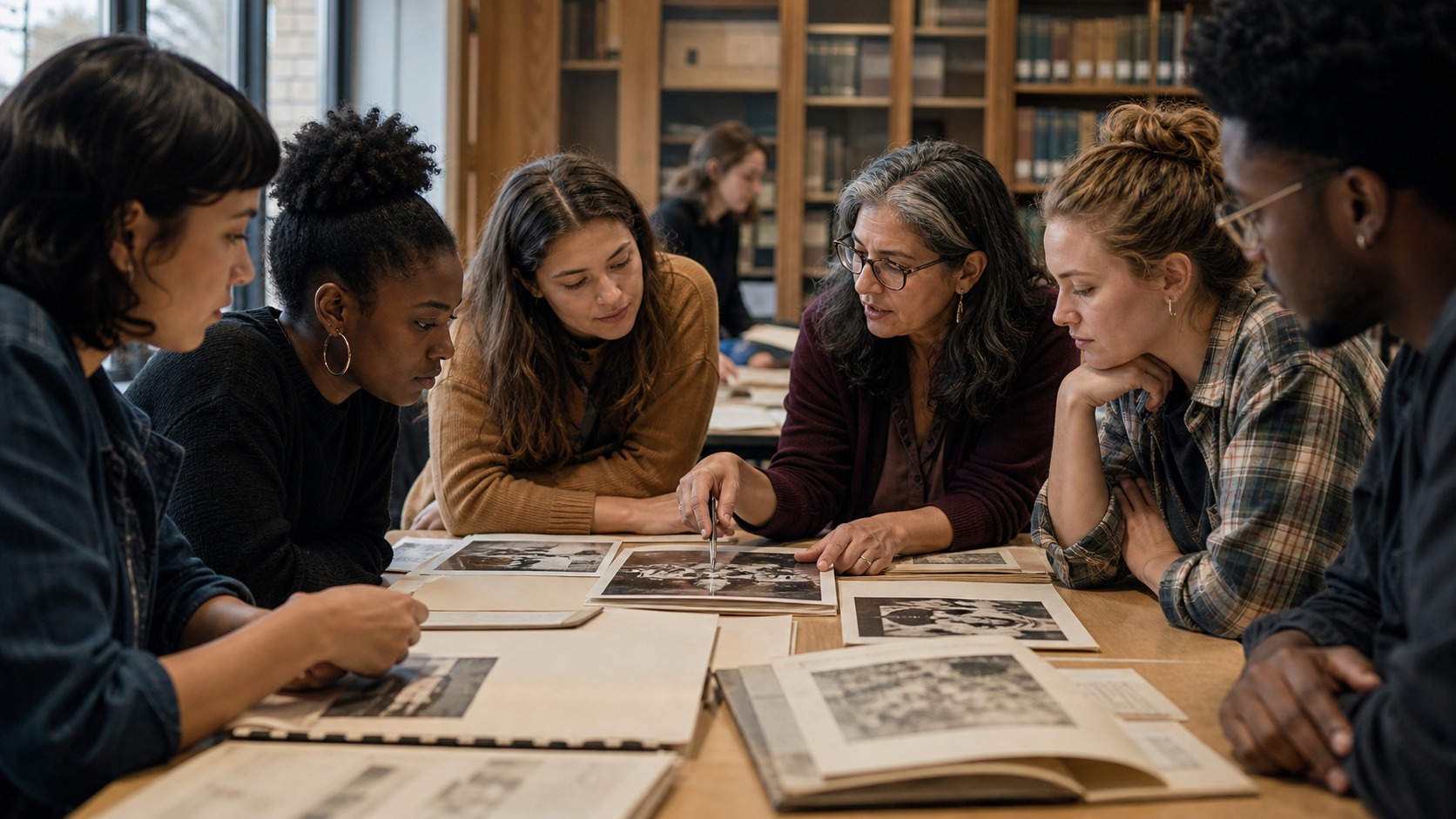
Feminist presses, clinics, shelters, bookstores, schools, art spaces, and legal projects gave movements infrastructure. They served people and tested different ways of sharing authority.
Funding, burnout, professionalization, and internal conflict showed that good intentions do not eliminate organizational power.
Liberal Feminism Pursued Institutional Access
Equal rights, employment law, education, credit, and representation were central liberal strategies. These reforms achieved durable change. Critics argued that access could reward relatively privileged women without transforming care, class, or institutional purpose.
Radical Feminism Sought the Roots of Gender Power
Radical approaches emphasized sexuality, reproduction, violence, and patriarchal control.
Their willingness to politicize intimate life reshaped theory, while universal claims about women sometimes neglected race, class, culture, disability, and sexual diversity.
Socialist Feminism Connected Production and Reproduction
Socialist feminists argued that capitalism and patriarchy interacted. Women’s low-paid and unpaid labor supported accumulation, while economic dependence sustained household power. The framework linked workplace struggle to care services, welfare, housing, and ownership.
Black Feminism Challenged the Wave’s Center
Black feminists analyzed race, class, gender, and sexuality together and rejected demands to choose one axis of oppression.
Their work exposed how dominant feminism could universalize white experience and how antiracist movements could reproduce sexism.
Global Movements Resisted One Timeline
Women organized under dictatorship, colonial legacies, socialism, conflict, and development regimes. Their priorities included land, national liberation, labor, peace, food, and state violence alongside family and bodily autonomy. These histories complicate a wave model built around Western movement cycles.
Internal Critique Became Theoretical Progress
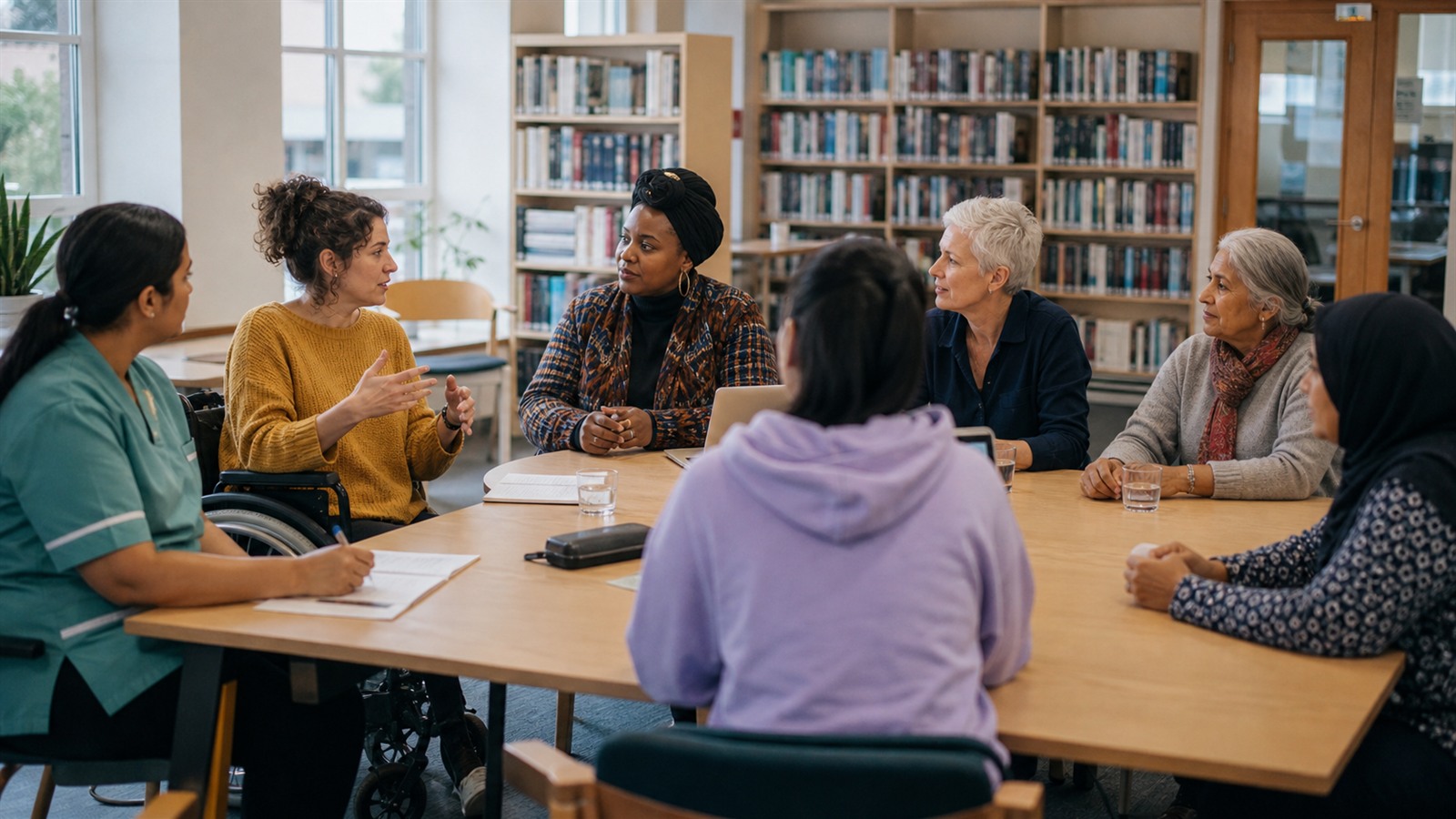
Lesbian, working-class, Indigenous, disability, postcolonial, and other feminisms challenged exclusion.
The critiques did not merely divide the movement; they produced more accurate theories of difference, coalition, and institutional power.
See Consciousness-Raising as Political Method
A small group began with personal accounts rather than an official expert lecture. Participants described household labor, employment, marriage, sexuality, health care, fear, and expectations that often seemed like individual failures.
Comparison revealed repetition. If many women encountered the same promotion barrier or carried the same invisible care burden, private explanations became less convincing. Shared experience generated a hypothesis about institutions and norms.
The group could then connect stories to law, labor markets, medicine, property, and culture. Personal knowledge did not end inquiry; it opened questions that dominant categories had failed to ask.
This method also had limits. Groups could treat white, middle-class, heterosexual, nondisabled experience as universal or pressure members toward a preferred interpretation. Black, lesbian, working-class, socialist, disability, and other feminists challenged those exclusions.
At its best, consciousness-raising joined experience, criticism, research, and action. Participants produced pamphlets, services, campaigns, protests, organizations, scholarship, and new concepts.
The method’s theoretical legacy is epistemic and democratic: people living a structure can identify patterns experts miss, but movement knowledge must remain plural, contestable, and accountable to differences within the group. Second-wave institutional reforms also altered the meaning of privacy. Privacy rights could defend contraception, intimate association, and freedom from state intrusion. Yet privacy had historically shielded domestic violence and marital authority. Feminists therefore distinguished privacy for persons from privacy for hierarchical institutions. A person needs confidential decisions and protected intimacy; a household or employer should not receive immunity when it violates another person’s rights. The distinction remains central to data, medicine, family, and digital life. The wave’s organizational experiments raised a related question about leadership. Many groups sought horizontality to avoid reproducing hierarchy, but informal influence could become difficult to name or challenge. Clear roles, rotation, transparent decisions, conflict procedures, and accountability sometimes protect equality better than denying leadership exists. Feminist democratic theory learned that structure is unavoidable; the task is to make it visible, limited, participatory, and revisable. This insight connects small-group practice to the design of larger institutions. The second wave also transformed institutions by building alternatives. Feminist health centers, shelters, rape-crisis services, legal projects, presses, bookstores, academic programs, childcare initiatives, art spaces, and workplace groups met needs while creating knowledge. These projects demonstrated that criticism and provision can reinforce one another. A shelter, for example, revealed the importance of housing, income, immigration status, custody, and police response. Yet alternative institutions faced funding pressure, professionalization, burnout, and conflict over governance. Their experience became political theory about how movements maintain care and accountability without recreating hierarchy. The period cannot be reduced to the United States or Western Europe. Feminist organizing intersected with anticolonial liberation, dictatorship, socialism, development policy, labor migration, race, land, and national independence across regions. The term second wave may fit these histories imperfectly because it follows a timeline built elsewhere. Transnational study reveals both circulation and unequal power: activists borrowed tactics and concepts while contesting claims that one model of family, sexuality, work, or emancipation represented all women. This debate helped prepare postcolonial and transnational feminist theory. Law was an important arena even for feminists skeptical of formal equality. Litigation and legislation opened employment, education, credit, contraception, divorce, and public accommodation while establishing that harassment and discrimination were not merely personal misunderstandings. Implementation then revealed law’s limits. A worker needed evidence, time, protection from retaliation, and an institution willing to enforce the standard. A survivor could face police or courts shaped by racial and class inequality. Second-wave theory learned to connect rights with services, organizing, cultural change, and material independence. The period’s debates about equality and difference also remain important. Treating women exactly like men could open institutions, but those institutions were organized around bodies and life patterns coded male. Pregnancy illustrated the problem: ignoring it could produce exclusion, while defining women through reproduction could reinforce stereotype. Feminists developed competing approaches through accommodation, universal leave, sex equality, and transformed workplace design. Contemporary policy continues to work through these questions. Environmental and peace politics formed another strand. Women organized against nuclear weapons, pollution, militarism, and development projects, sometimes grounding activism in motherhood or a proposed affinity between women and nature. Ecofeminists exposed connections among exploitation of women, colonized peoples, animals, and ecosystems. Critics warned that claims of natural feminine peacefulness or ecological care essentialized gender. The debate pushed theory toward institutional and material explanations of who performs care and bears environmental harm. The sex wars of the late second-wave period revealed persistent tension between protection and freedom. Feminists disagreed over pornography, sexual representation, sadomasochism, sex work, censorship, and the meaning of consent under unequal conditions. Some emphasized industries and images as structures of violence; others feared that state censorship and sexual regulation would target women and queer communities. The conflict cannot be reduced to prudishness against liberation. It concerned how desire is socially formed, how markets use bodies, what legal power should do, and whether restrictions silence the people they claim to defend. The period also transformed masculinity and men’s roles, though this aspect received less consistent attention. If women were to share paid work and public authority, men needed to share care, emotional labor, and vulnerability. Feminist theory criticized dominant masculinity as a standard that grants power while disciplining men who depart from it. This did not erase structural male advantage; it showed that gender hierarchy organizes identities and relationships across the whole society. Second-wave feminism remains instructive because it built concepts, rights, and institutions while generating the critiques that later movements used to revise it.
The Second Wave Changed the Meaning of Equality
Its lasting claim is that citizenship cannot be equal while everyday institutions allocate care, bodily authority, violence, work, and credibility unequally.
The wave’s achievements and conflicts remain relevant together. It expanded the political world and taught later feminisms to ask continually whose personal experience becomes the movement’s public theory.