Eco-socialism offers a powerful answer to climate collapse because it connects physical limits to ownership, inequality, and democratic planning. It explains why profitable fossil assets continue operating, why adaptation follows wealth, and why consumer choice cannot coordinate a rapid transformation of energy, buildings, transport, industry, land, and care.
Calling it the answer is still too simple. No doctrine supplies crews, transmission lines, legitimate authority, or perfect information. Eco-socialism should be judged as an institutional program: can it cut harm at necessary speed, preserve pluralism, protect livelihoods, build capacity, and correct public power when urgency invites coercion?
A: It means cascading disruption to ecosystems, infrastructure, health, food, housing, economies, and political institutions, not one instant endpoint.
A: It combines binding ecological limits with planning, public capacity, social guarantees, and attention to ownership and inequality.
A: Some transfers can be rapid, but capacity and legitimacy take time; immediate regulation and investment must proceed alongside structural change.
A: Coordination is necessary, but distributed knowledge, legal rights, and independent oversight remain essential to effectiveness and legitimacy.
A: Building physical and administrative capacity while retiring harmful systems without abandoning people who depend on them.
A: Yes, if urgency insulates planners or executives from rights, evidence, elections, workers, communities, and appeal.
A: No. Prices and firms can aid allocation and production, but guarantees and public direction are needed where scarcity threatens rights.
A: According to ability, responsibility, need, and democratic legitimacy, with luxury use constrained before essentials.
A: Lower ecological danger, protected well-being, fairer power, capable services, and institutions that remain democratic under stress.
A: No. It is one comprehensive framework whose proposals should be compared with other credible, rights-respecting transition programs.
Climate Collapse Is a Cascade, Not a Date
Warming intensifies heat, flooding, fire, sea-level rise, ecosystem loss, food stress, disease, migration, and infrastructure failure. These effects interact with debt, inequality, conflict, and weak public systems. Collapse describes cascading loss of capacity, not a single moment after which politics ends.
This matters because prevention and adaptation remain valuable at every level of harm. Fatalism can excuse continued extraction as readily as complacency. An answer must cut future danger while protecting people through damage already unavoidable.
Eco-Socialism Names the Investment Problem
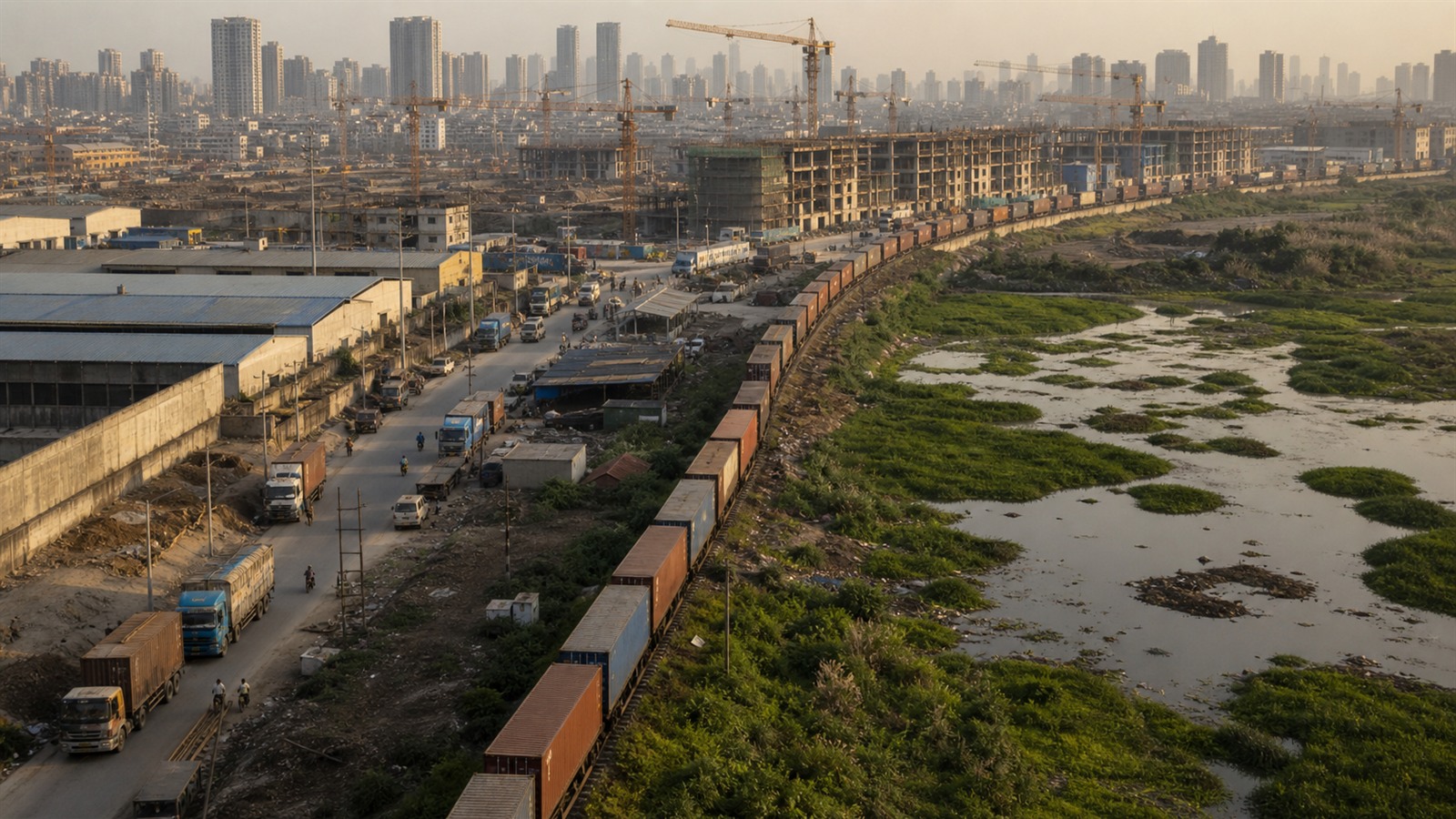
Fossil infrastructure persists because owners expect returns and societies depend on its services. Market signals can redirect investment but also reward delay, lobbying, and scarcity. Eco-socialism gives public institutions authority to close assets, build alternatives, and socialize the costs and gains of transition.
Planning Matches the Scale of Physical Systems
Electricity, transport, housing, industry, agriculture, water, and care need coordinated timelines. A vehicle rule fails without charging and transit; coal closure fails without replacement power and regional jobs. Plans make dependencies explicit and direct finance toward bottlenecks.
Planning is not foresight without error. Scenarios, milestones, public data, professional skill, local knowledge, and revision are required. A plan that cannot admit delay or redesign will conceal problems until they become crises.
Universal Services Create Resilience
Healthcare, housing, food support, water, transit, education, communications, and income security help people survive shocks and move through economic change. They reduce the leverage of employers and prices during emergency and keep one disaster from cascading into every part of household life.
Ownership Can Keep Essentials Operating
Private providers may withdraw from unprofitable insurance markets, neighborhoods, or infrastructure. Public and cooperative ownership can maintain service according to need and plan redundancy. It can also become underfunded or unresponsive, so governance and capacity matter as much as title.
Workers and users should hold formal voice, accounts should remain public, and leaders should face removal. Essential providers need stable finance and professional autonomy within democratic mandates.
Justice Is an Operational Priority
People with the least wealth often live in riskier housing, hold exposed jobs, and possess fewer recovery options. Directing adaptation by property value reproduces inequality. Eco-socialist justice uses vulnerability, historical harm, and essential need to sequence investment.
A Just Transition Protects Social Continuity
Closing high-carbon activity affects wages, pensions, suppliers, tax revenue, identity, and place. Compensation after closure is insufficient. Workers and regions need bargaining power, replacement institutions, public services, cleanup work, and investment before the old employer exits.
Visible security also builds political support for faster action. Owners lose the ability to use workers as a shield for preserving profitable assets when livelihoods no longer depend on continued extraction.
Sufficiency Can Reduce the Scale of Replacement
Replacing every high-carbon product one for one may require enormous energy, minerals, and land. Shared transit, durable goods, repair, efficient housing, and reduced luxury consumption lower the physical burden while improving access. Sufficiency is expansion for unmet needs and contraction of waste.
Public Power Does Not Guarantee Ecology
States have pursued extraction, megaprojects, displacement, and pollution for revenue and geopolitical power.
A government can value production growth as strongly as a corporation.
Eco-socialism needs independent environmental standards, transparent science, community rights, and plural institutions capable of resisting public managers.
Urgency Can Threaten Democracy
Climate emergency invites executive action, accelerated permits, rationing, relocation, and surveillance. Some speed is necessary, but extraordinary authority can target weak groups and become permanent. Rights, sunset clauses, legislative renewal, judicial review, and free organization should be designed before crisis.
Democratic procedure must also be capable of decisions. Participation cannot mean an unlimited local veto over regional survival or equal access. Legitimate planning balances voice, rights, evidence, and responsibility across scales.
Capacity Is More Important Than Ideological Purity
Transforming society requires engineers, nurses, teachers, construction workers, planners, administrators, supply chains, records, and maintenance. Renaming ownership without building those capacities will not stop collapse. Public institutions must recruit, train, learn, and procure at unprecedented scale.
Markets May Remain Supporting Tools
Prices can conserve scarce resources and firms can manufacture useful equipment. Eco-socialist approaches differ on their scope. The decisive issue is whether markets operate under guarantees and plans or whether investment participation becomes a veto over ecological goals.
Multiple tools can coexist: standards for certainty, prices for flexible adjustment, public provision for universal access, and social ownership for strategic control. Institutions should fit the function.
International Cooperation Is Nonnegotiable
Climate systems ignore borders, while responsibility, wealth, technology, and vulnerability differ. A wealthy-country transition that hoards finance, restricts migration, and imports harmful extraction is not a solution. Debt relief, grants, shared technology, labor standards, and lawful mobility are central.
Evaluate the Answer Against a Collapse Scenario
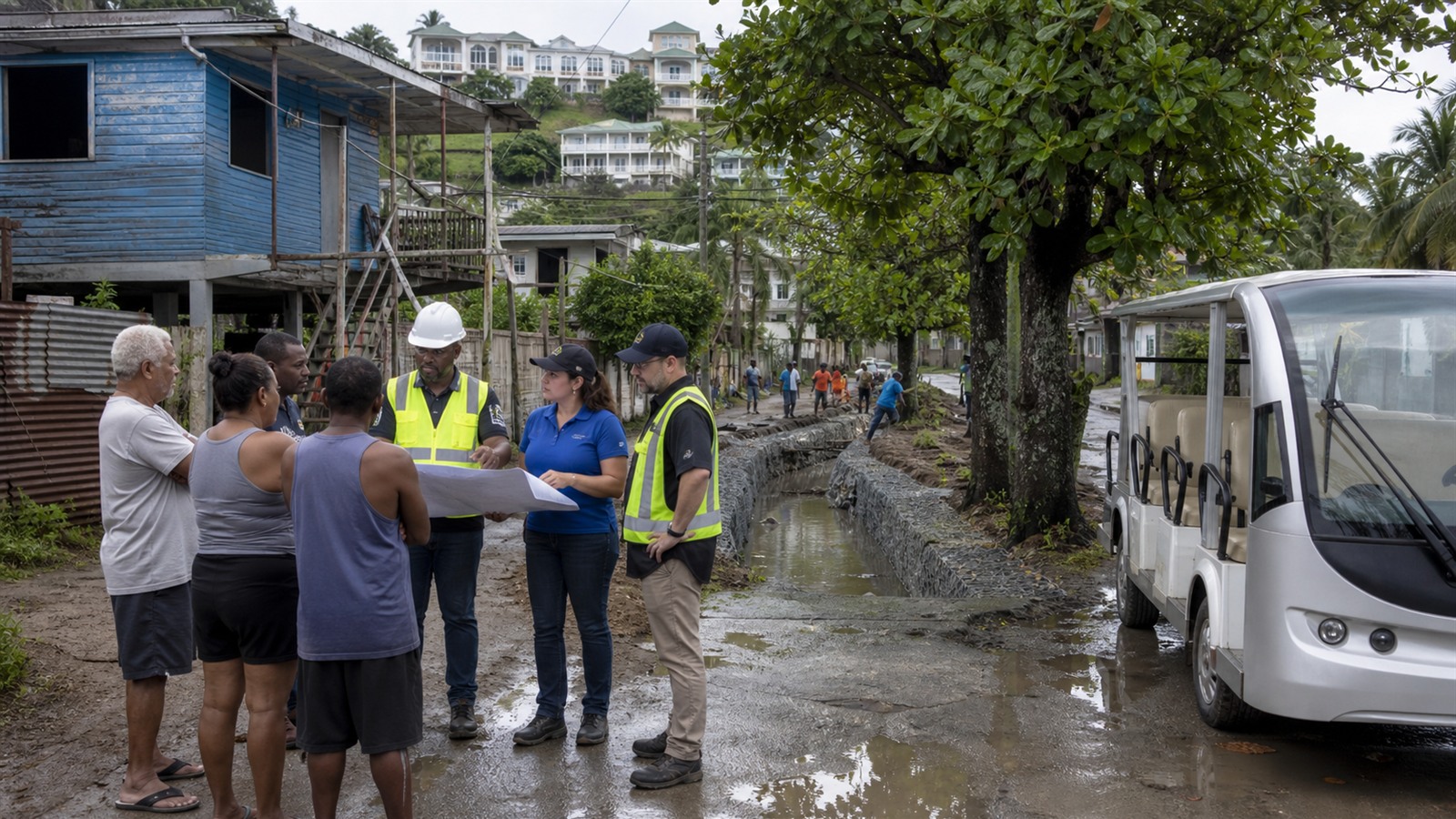
Imagine a coastal region facing repeated floods, heat, insurance withdrawal, damaged water systems, and migration. Emergency response alone will not preserve ordinary life. Officials must decide which defenses to build, which land to restore, which neighborhoods to relocate, how to maintain work and care, and who receives compensation. Markets price growing risk but may simply abandon residents unable to move.
Eco-socialist institutions offer several advantages. Public ownership can keep water, power, and transit operating when returns deteriorate. Universal services support people independent of damaged employment markets. Regional planning coordinates housing, evacuation, watersheds, hospitals, and infrastructure. Community and worker power can expose needs that property-value models overlook.
The same scenario reveals democratic danger. Relocation may be necessary, but a planning authority can become dispossessive. Emergency rules can silence opposition, seize land, ration goods, or expand surveillance. Historically marginalized communities may distrust agencies with good reason. Consent cannot be absolute when one locality’s decision increases regional danger, yet participation cannot be a ceremonial meeting after the plan is fixed.
A legitimate process establishes rights before crisis. Residents need legal representation, transparent risk data, comparable alternatives, relocation choices, compensation sufficient to rebuild social life, and independent appeal. Indigenous sovereignty and treaty obligations cannot be converted into consultation. Emergency authority should be narrow, reviewable, and temporary, with legislatures and courts functioning throughout.
Material capacity sets another test. Public title to a utility cannot replace transformers, crews, mutual-aid agreements, inventories, or trained managers. A serious eco-socialist program invests in maintenance and redundant systems during ordinary years. It creates institutions able to procure rapidly without making secrecy and favoritism normal.
Migration expands solidarity beyond current residents. Newcomers need housing, schools, healthcare, work rights, and political inclusion, while receiving communities need finance and infrastructure. Scarcity can produce nationalist closure even under a green government. Eco-socialist internationalism must become enforceable burden sharing rather than moral language.
The scenario suggests a qualified conclusion. Eco-socialism provides a strong framework for preventing private abandonment and distributing adaptation democratically. It succeeds only if planning remains rights-bound, administration is competent, and communities possess genuine counterpower. Collapse does not make democracy expendable. It makes trusted, capable, and contestable institutions even more necessary. Speed should be assessed through sequences rather than declarations. Some actions can begin immediately: end new high-carbon approvals, strengthen heat and disaster protections, expand transit operations, fund efficiency, and secure workers. Other changes require years of construction and training. A credible plan publishes dependencies so urgency does not produce bans before alternatives or endless preparation without closure. Political durability is part of speed. A program that collapses after one election may achieve less than a staged policy with organized beneficiaries and visible gains. Universal improvements in bills, housing, health, work, and mobility can build consent for deeper change. Where restrictions are unavoidable, transparent necessity and progressive burden sharing matter. Eco-socialism must also use knowledge outside its own tradition. Engineers, Indigenous stewards, farmers, public-health specialists, logistics workers, entrepreneurs, and local officials hold distinct expertise. Democratic planning is strongest when it coordinates plural sources rather than imposing a complete theory from one center. Dissent can identify physical errors as well as political injustice. Finally, success includes prevention. If mitigation works, the avoided catastrophe is invisible and opponents may call preparation wasteful. Institutions need public evidence, scenario comparison, and memory to preserve support without exaggerating certainty. Eco-socialism is most convincing not as a promise to control every outcome, but as a structure for acting collectively under uncertainty while protecting equality and ecological survival. Democratic emergency law can be prepared before crisis rather than improvised during panic. Statutes can define thresholds, permitted measures, compensation, data limits, procurement rules, reporting intervals, and automatic review. Standing citizen, worker, scientific, and judicial bodies can scrutinize action quickly without recreating ordinary delay. Prepared legality makes speed more predictable and reduces incentives to rule through exception. Resource rationing may become necessary during acute shortages. An equal system guarantees essential amounts, recognizes medical and disability needs, and constrains luxury use before household basics. Tradable access can improve flexibility but risks allowing wealth to purchase exemption. Public rules should publish allocation principles and create rapid appeals, while investments reduce the duration of scarcity. Security institutions also enter collapse scenarios. Military logistics may provide transport and engineering, but coercive organizations are poorly suited to ordinary civilian governance. Borders, protests, and disaster zones can become sites of rights abuse. Civilian authority, narrow missions, transparency, and independent monitoring must remain intact. Eco-socialism cannot treat security power as neutral simply because the government claims an ecological purpose. Psychological and cultural resilience matter alongside infrastructure. Repeated loss produces grief, fear, conflict, and attachment to threatened places. Public planning should support mental health, rituals of memory, archives, and community continuity during relocation. Treating people as movable units damages trust and can make technically sound adaptation politically impossible. An answer to collapse must help societies mourn and change without converting loss into authoritarian nostalgia. These requirements make the program demanding, but the alternative is not institution-free adaptation. Private wealth, emergency markets, and unmanaged retreat also allocate life and loss. The real comparison is among governing systems under stress. Eco-socialism earns its claim when it makes collective capacity more equal and more accountable than those defaults. That comparison should continue through implementation, when ideal models meet scarcity, conflict, fatigue, and institutional memory. Accountability must endure through each stage.
Eco-Socialism Is a Framework, Not a Guarantee
Its strengths are substantial: it identifies private investment power, connects mitigation to equality, values public capacity, and treats workers and communities as decision-makers. It can explain why a technically clean economy might remain unjust and politically fragile.
Its risks are also real: centralized authority, administrative weakness, production bias, romanticized participation, and timelines that defer immediate action until structural transformation. Eco-socialism is an answer to the extent it builds effective, rights-bound, plural democracy capable of acting now. It is not an answer merely because its diagnosis is morally comprehensive.