Conventional accounts often describe wealth as money, property, and financial claims owned by individuals or firms. Eco-socialism broadens the frame. A person is wealthy in a meaningful sense when they can live safely, learn, travel, care, participate, and rest without degrading the systems other people need. That definition makes clean water, public institutions, free time, collective knowledge, and ecological resilience forms of wealth—and asks how resources can sustain them fairly.
A: Generally no. It distinguishes personal use from ownership that controls essential systems, extracts rent, or directs large-scale production.
A: Time enables rest, care, relationships, learning, creativity, and democratic participation, all central parts of a flourishing life.
A: It includes shared institutions, infrastructure, knowledge, land, and funds that reliably provide broad benefits.
A: They sustain life, regulate climate and water, hold cultural meaning, and preserve future options that money cannot automatically recreate.
A: Not necessarily; many eco-socialists retain limited markets while placing essential systems and ecological limits under democratic governance.
A: It is a guaranteed minimum of housing, care, energy, food, mobility, education, income, and participation needed for dignity.
A: It is a binding limit on aggregate pressures such as emissions, extraction, land conversion, pollution, and habitat destruction.
A: Neglected public assets transfer costs and reduced capability to workers, users, and future generations.
A: Yes, when durable goods, shared systems, shorter work, and public services deliver more security and freedom with less throughput.
A: Resources are means; real wealth is the fair and lasting capability they make possible within ecological limits.
Money Is a Claim, Not the Thing Claimed
Money allows its holder to command labor, land, energy, and goods. Financial wealth matters because these claims shape security and power. But an account balance cannot create a vacant home during a housing shortage, clean a contaminated aquifer, or restore a lost species.
Eco-socialism asks what stands behind the claim. If financial assets multiply while public systems and ecosystems deteriorate, society may be richer on paper and poorer in usable possibilities.
Capability Offers a Different Starting Point
A capability is a real opportunity to do or be something: remain healthy, move safely, obtain knowledge, care for another person, participate in decisions, or enjoy rest. Income can support these freedoms, but public services, accessible design, social relationships, and time also determine whether they exist.
Private Luxury Can Coexist With Public Poverty
A city may contain expensive apartments, cars, clinics, and schools while ordinary residents face weak transit, unaffordable care, and overcrowded housing. Aggregate asset value conceals the absence of shared provision. People buy private substitutes because public systems fail, and those purchases are then counted as prosperity.
This pattern uses more resources than universal systems while delivering unequal security. Eco-socialism treats the repair of common provision as wealth creation.
Access Can Matter More Than Possession
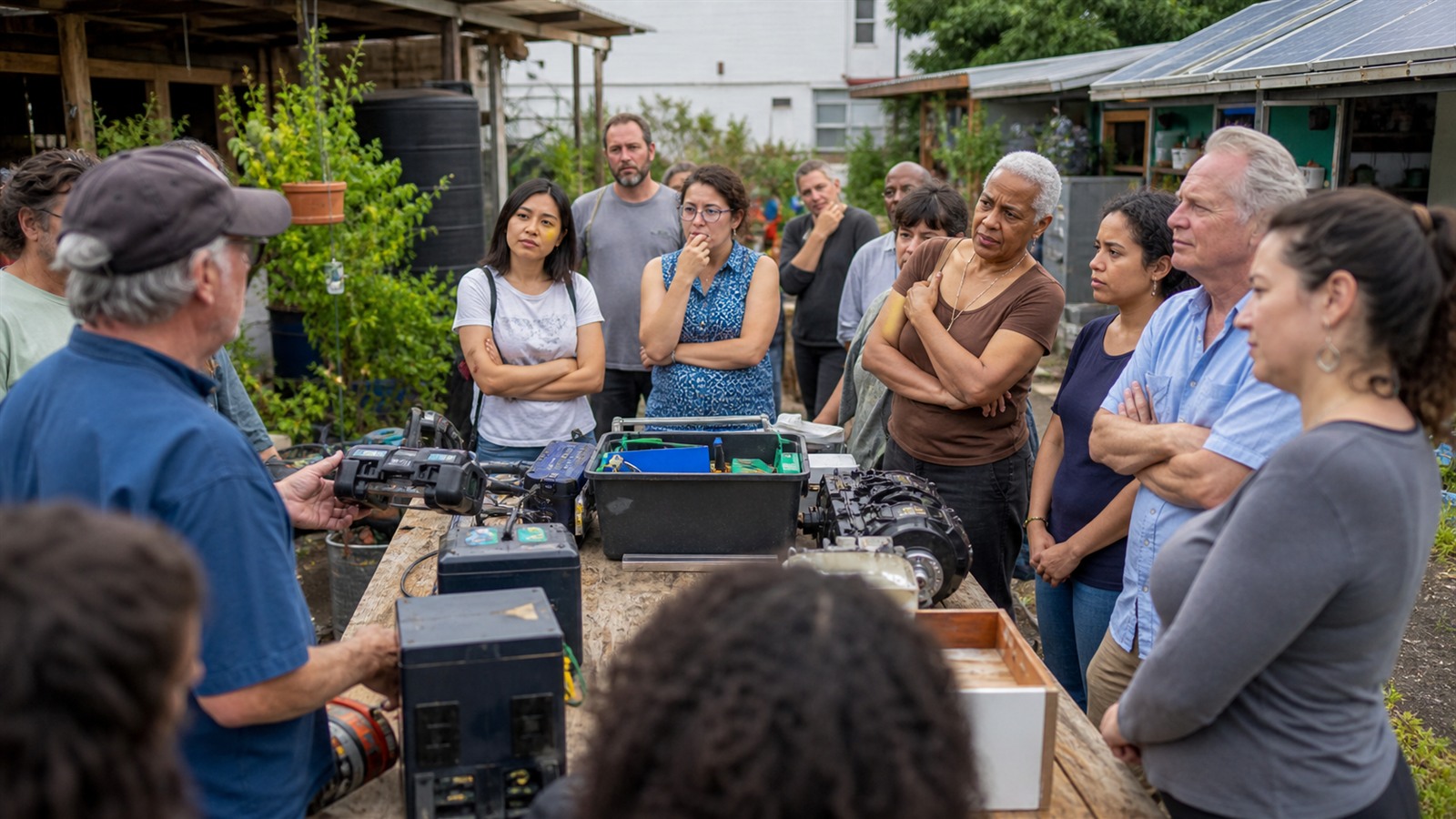
Most people want mobility, not a vehicle sitting unused for most of the day. They want a comfortable home, not maximum energy sales. Libraries, transit, parks, tool shares, and public broadband provide capabilities through pooled assets. Sharing is not automatically superior, but well-designed access can reduce duplication and household expense.
A Social Floor Makes Limits Fair
Ecological policy fails ethically when it asks people already lacking essentials to consume less. Universal guarantees establish adequate housing, nutrition, care, energy, mobility, education, and income. Once that floor is credible, society can constrain excess without confusing equality with uniform deprivation.
The floor is physical as well as monetary. A cash payment cannot solve a shortage of clinics, buses, insulated homes, or clean electricity.
An Ecological Ceiling Governs Totals
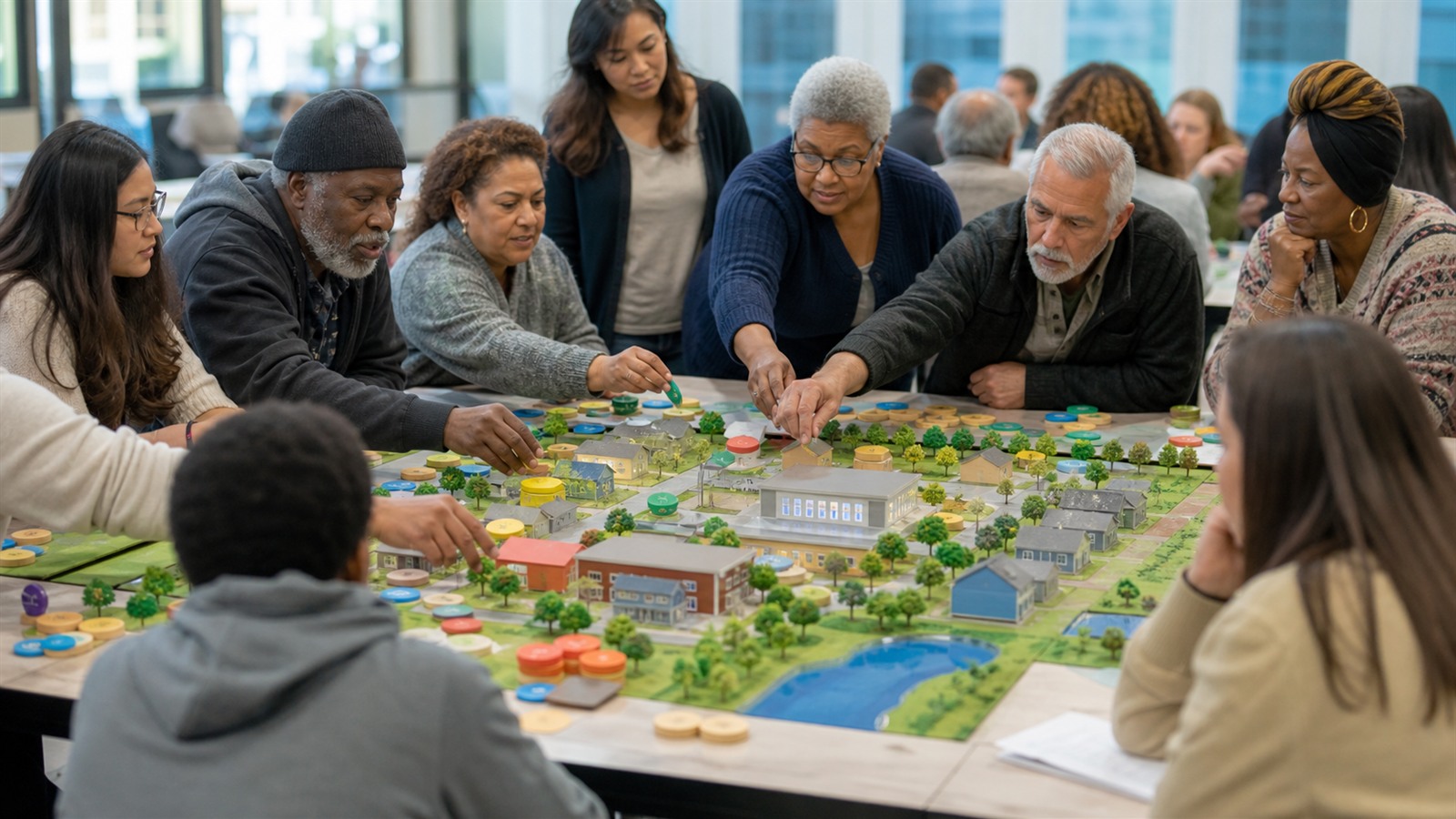
Fair distribution alone does not ensure sustainability if aggregate extraction and pollution keep rising. Carbon budgets, material limits, habitat protections, and restoration duties set the ceiling. Public planning then connects the floor to the ceiling by deciding which forms of production have priority.
Time Reveals Hidden Affluence and Poverty
A worker with adequate pay may still be time-poor because of long hours, unpredictable schedules, commutes, and unpaid care. A wealthy household can purchase other people’s time. Shorter working weeks, care services, close amenities, and schedule control redistribute a resource every person receives in finite quantity.
Time policy also lowers material pressure when productivity gains become leisure rather than a mandate to produce and sell more.
Care Sustains Every Other Economy
Children, ill people, disabled people, and older adults need care, while all workers depend on daily and generational support. Much of this labor is unpaid or underpaid and assigned unequally by gender and race. Conventional accounts treat it as a background resource.
Commons Join Rights With Responsibilities
A commons is not simply an unowned resource open to anyone. It is a governed relationship in which a community defines access, duties, monitoring, and repair. Fisheries, forests, irrigation, knowledge, and shared spaces can all use commons institutions suited to their circumstances.
Eco-socialism values commons because they make stewardship and participation visible. They also resist the false choice between private property and distant bureaucracy.
Ownership Determines Who Sets Priorities
Owners can decide whether land becomes housing or speculation, whether a patent is shared, and whether a utility invests in reliability or dividends. Social ownership places strategic assets under public, cooperative, municipal, or community authority. Its purpose is not ownership for its own sake but control over the conditions of collective life.
Public Wealth Requires Democratic Quality
A public service can be inaccessible, punitive, opaque, or poorly maintained. Legal ownership alone does not create shared wealth. Users and workers need voice, information, appeals, and enforceable standards. Universal systems earn legitimacy through the quality and dignity of their provision.
Participation also improves practical knowledge. Frontline workers and users often see failures before central managers or elected officials do.
Maintenance Is Productive Work
Economies celebrate new buildings and products while treating maintenance as overhead. Yet a bridge, clinic, wetland, or software system remains valuable only through continuing care. Deferred maintenance consumes inherited wealth and leaves future users a larger bill.
Knowledge Grows Through Sharing
Unlike a barrel of oil, an idea can be used by one person without preventing another from using it. Patents and paywalls may encourage some innovation, but they also create artificial scarcity. Public research, open standards, and shared technical knowledge can increase capability widely at modest marginal cost.
Physical infrastructure still supports knowledge, so it is not impact-free. The distinction is that access need not depend on exclusive possession of the idea itself.
Prices Cannot Represent Every Obligation
A market price reflects purchasing power, current rules, and what can be traded. It does not automatically include sacred relationships, irreversible loss, unpaid labor, or the interests of future generations. Democratic prohibitions and duties are appropriate when some values should not be available to the highest bidder.
Stewardship Extends the Political Horizon
Resource decisions often reward immediate revenue and postpone maintenance or ecological risk. Stewardship asks whether the underlying system will remain capable of renewal. It assigns responsibility before damage becomes an emergency and keeps monitoring active after profits end.
Future people cannot vote in today’s budget, but durable institutions, legal protections, and conservative ecological thresholds can represent their stake.
Prosperity Becomes a Design Problem
Eco-socialism does not promise abundance without choices. It proposes designing systems so essential capabilities use fewer materials and are available to everyone. Compact communities, durable goods, preventive care, renewable energy, and shared infrastructure make equality compatible with limits.
Compare Two Neighborhood Balance Sheets
Imagine one neighborhood where every household must purchase a car, private cooling, backup power, recreation, and individual tools. Property values are high, so conventional accounts record substantial wealth. Yet families carry debt, spend hours commuting, and remain vulnerable to fuel prices and outages.
A second neighborhood has reliable transit, shaded streets, efficient apartments, a public library, a tool cooperative, clinics, parks, and a resilient local grid. Households may own fewer expensive assets, but they can reach work, remain comfortable, obtain care, and enjoy leisure with lower recurring costs.
The comparison does not prove that all private ownership is wasteful. It shows that access can be more important than possession. Shared systems often deliver the same capability with fewer materials because vehicles, rooms, equipment, and infrastructure serve many users.
A complete balance sheet would record maintenance backlogs, unpaid care, pollution exposure, travel time, accessibility, debt, and ecological condition. It would also ask how benefits are distributed within each neighborhood. A beautiful park that some residents cannot safely enter is incomplete public wealth.
This accounting changes investment priorities. Repairing buses or insulating rental homes may create less marketable property than a luxury development, yet it can increase usable time, health, security, and energy resilience for far more people.
Eco-socialism treats this broader balance sheet as politically actionable. Budgets, planning rules, ownership structures, and ecological limits should preserve the capabilities on which shared prosperity depends, even when they produce no private asset that can be sold. Resource stewardship adds duties across time. A forest is not only standing timber or stored carbon; it holds habitat, water cycles, cultural relationships, knowledge, and options for people who have not yet been born. Decisions should therefore include renewal rates, uncertainty, irreversibility, and the authority of communities with continuing obligations to the place. Similar reasoning applies to housing, transit, grids, schools, and digital infrastructure. Letting these systems deteriorate is consumption of inherited public wealth even when current budgets appear balanced. Maintenance is an ethical and economic commitment to pass on functioning capabilities. By making stewardship visible, eco-socialism challenges the habit of celebrating new construction while ignoring the care required to keep shared assets useful. The broader definition of wealth also changes taxation. Taxes are not only a way to collect money for programs; they shape which claims over real resources can be exercised. Progressive taxes on income, land appreciation, inheritance, pollution, and excessive luxury demand reduce the ability of a small group to command scarce labor, energy, and space. Public spending then activates resources for collectively chosen uses. This view explains why taxing concentrated wealth can matter even when a government issues its own currency: the policy reduces unequal power and frees physical capacity, not merely digits in an account. Measurement must follow the new objective. Alongside income and output, governments can report healthy life expectancy, housing security, travel access, unpaid care, discretionary time, ecosystem condition, material footprints, and exposure to pollution. Distribution should appear inside every measure because a good average can conceal severe exclusion. Public dashboards will not replace democratic judgment, but they reveal whether an investment actually expands capability within limits. Finally, reimagined wealth changes the emotional promise of politics. Ecological restraint is often presented as a future of personal loss, while consumer culture equates success with exclusive possession. Shared abundance offers another experience: beautiful public spaces, dependable services, less fear, useful work, more time, durable objects, and living landscapes. These goods can feel plentiful precisely because they are not withheld to create status. Eco-socialism is persuasive when it makes this practical richness visible and treats sacrifice as a question of unequal power rather than a universal virtue imposed on everyone alike. This framework leaves room for plural values. Communities may disagree about landscape, technology, comfort, risk, and the good life. A democratic ecological economy should not compress those differences into one official happiness score. It can guarantee rights, publish constraints, and give people meaningful local and workplace choices while preventing any preference from consuming the conditions others require. Freedom then means agency inside a just material settlement, not unlimited purchasing power. The settlement remains revisable as science, culture, and technology change. What stays constant is the obligation to protect equal capability and the living foundations on which every form of wealth depends. In practice, that obligation turns budgets into public choices about what to maintain, what to share, what to limit, and which inherited harms deserve repair. Wealth becomes dependable provision instead of a contest to accumulate the largest private claim.
Wealth Is What a Society Can Reliably Sustain
A useful definition of wealth joins capability, distribution, ecology, time, and power. It asks whether people can lead dignified lives, whether the conditions are broadly shared, and whether the supporting systems can endure.
Resources remain necessary, but accumulation stops being the final objective. They become carefully governed means for producing security, freedom, knowledge, relationship, and a living future.