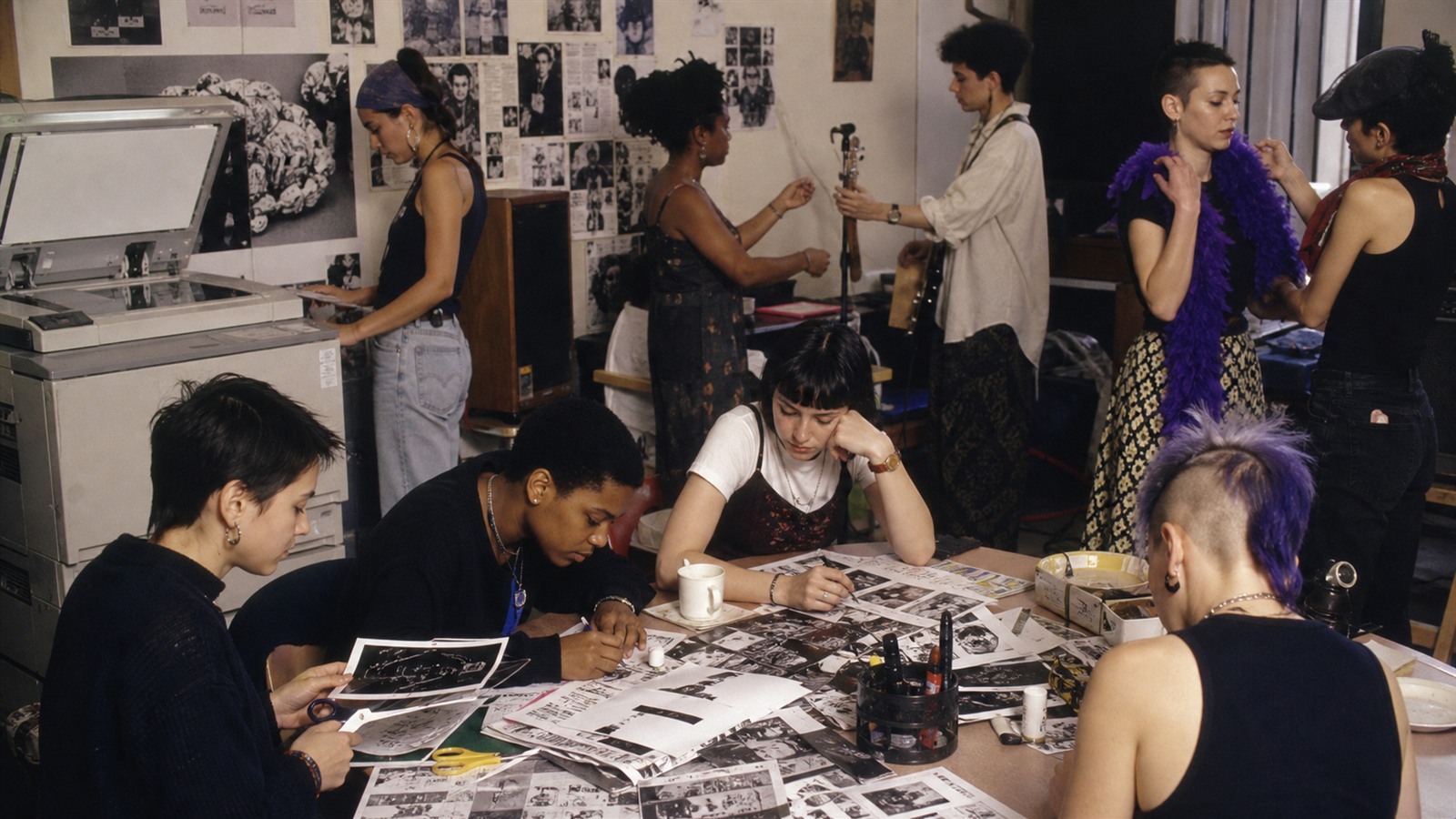
Feminist political theory is the study of how gender shapes power and how society could become freer and more equal. It examines familiar political subjects such as law, voting, rights, citizenship, and government. It also brings care, family life, bodies, work, safety, culture, and everyday relationships into the discussion. In simple terms, it asks who gets to decide, who does the supporting work, who is believed, and whether everyone has a genuine chance to act. The approach makes abstract ideas easier to test because ordinary schedules, services, relationships, and rules reveal whether equal citizenship works beyond paper in the places where people spend their time and depend on others.
A: It studies gendered power across public and private life and develops ideas for equality, freedom, care, safety, and democratic voice.
A: No. It studies women, men, gender-diverse people, masculinity, institutions, and how gender combines with other structures.
A: Families distribute work, money, care, authority, and vulnerability within legal and economic rules.
A: No. Equality can respect difference while opposing hierarchies that turn difference into exclusion or domination.
A: It is a social expectation about behavior, work, appearance, emotion, or responsibility associated with gender.
A: It sustains people and the economy while affecting caregivers' income, health, time, and public participation.
A: It shows how gender combines with race, class, disability, sexuality, and other structures in distinct ways.
A: No. Its target is gendered domination, and its reforms can free people of every gender from restrictive roles and unequal power.
A: No. Liberal, socialist, radical, Black, Indigenous, queer, postcolonial, disability, and other feminisms disagree on analysis and strategy.
A: Take an ordinary institution, trace who decides and who supports it, then compare formal equality with people's actual options.
Begin With the Word Political
Politics is about collective rules, power, resources, membership, and conflict. It includes elections and laws, but it also includes the institutions that determine whether people can use their rights.
Feminist theory widens politics because gendered power is not confined to government buildings. It appears in homes, workplaces, schools, clinics, streets, media, and digital systems.
Gender Is Socially Organized
People have varied bodies and identities, yet societies attach expectations, opportunities, and penalties to gender. Those patterns change across history and place, which means they are open to political explanation and change rather than fixed destiny.
Equality Means More Than the Same Rule
A rule can use identical words for everyone and still have unequal effects. A workplace that expects unlimited availability disadvantages people assigned most care. A public meeting at night affects someone fearing street harassment differently from someone who travels safely.
Feminist theorists compare formal equality with substantive equality: the real distribution of options, burdens, security, and voice.
Freedom Needs Practical Conditions
A person may possess a legal freedom but lack the income, housing, transport, health, or information required to exercise it. Feminist analysis calls attention to these conditions without treating people as passive. Supporting agency means making choices real, not choosing on another person’s behalf.
The Personal Can Reveal a Public Pattern
When many people experience the same private difficulty—domestic violence, workplace harassment, unpaid care overload, reproductive coercion—the repetition suggests institutional causes. Law, labor markets, property, policing, health systems, and social norms shape the experience.
The phrase that the personal is political invites collective explanation. It does not mean every personal disagreement should be governed by the state.
Care Makes Independence Possible
No one is entirely self-made. Children need intensive support, and adults rely on food, health, education, emotional connection, and periods of care. Feminist theory makes this interdependence visible and asks why care is distributed and valued unequally.
Work Includes More Than a Paycheck
Cooking, cleaning, emotional support, scheduling, and caring for relatives are productive activities even when unpaid. Paid jobs can also contain invisible relational labor expected from some workers. Ignoring this work makes households and organizations appear more self-sufficient than they are.
Policies such as paid leave, childcare, labor rights, shorter hours, and social insurance redistribute both the work and its consequences.
Bodily Autonomy Is Political Freedom
People need authority over health, sexuality, reproduction, identity, and bodily integrity. Access to care, freedom from violence, informed consent, and respectful treatment give autonomy practical meaning. Feminist debates also ask how institutions can protect people without using protection to justify control.
Safety Should Expand Rather Than Restrict Life
Responses to danger sometimes tell women and marginalized people where not to go, what not to wear, or how not to behave. That advice transfers the burden to potential targets. A feminist approach seeks prevention, accountable institutions, safe infrastructure, economic options, and cultural change.
It also takes due process seriously because fair procedures protect everyone against arbitrary authority. The challenge is to combine fairness with informed understanding of power and trauma.
Voice Depends on Being Heard
Speaking is not the same as influencing a decision. People can be interrupted, stereotyped, disbelieved, or invited only after the plan is fixed. Feminist theory studies credibility and agenda-setting: who defines the issue before the formal debate begins.
Representation Has Several Meanings
Descriptive representation asks whether institutions include people from different groups. Substantive representation asks whether decisions address their interests and freedom. Symbolic representation asks what inclusion communicates about belonging and authority.
All three can matter, but none guarantees the others. A diverse institution still needs accountable power and responsive policy.
Intersectionality Prevents a Single Story
There is no universal experience shared identically by all women. Race, class, disability, sexuality, nationality, caste, religion, and age shape gendered life. Intersectionality examines how systems combine rather than assuming one group’s experience represents everyone.
Different Feminisms Emphasize Different Causes
Liberal feminists often focus on equal rights and access. Socialist feminists connect gender to capitalism and labor. Radical feminists emphasize patriarchy, sexuality, and violence. Black, Indigenous, postcolonial, queer, and disability feminisms expose exclusions in dominant accounts and develop other starting points.
These traditions overlap and argue. Their disagreement is evidence of a living field, not a reason to pretend that any one voice speaks for all feminism.
Power Can Enable as Well as Dominate
Power can mean control over another person, but it can also mean the ability to act or to cooperate. Organizing, education, income security, public services, and supportive relationships build capacity. Feminist politics therefore seeks not a world without power, but one with less domination and more shared agency.
Institutions Can Be Redesigned
Rights, services, workplace democracy, accessible planning, care infrastructure, anti-violence work, health reform, and fair representation are institutional responses. Each should be tested for actual outcomes and for differences within gender groups.
Feminist political theory supplies the questions that guide redesign: Whose experience defined the problem? Who performs the hidden labor? Can people refuse without disaster? Who can appeal? What would equal freedom require in practice?
Follow One Day to See the Theory
A person’s morning begins with housing, water, energy, food, and care. If one adult prepares everyone else for the day without pay, that time affects their sleep, earnings, and political participation. Feminist theory notices the distribution before calling the household a purely personal arrangement.
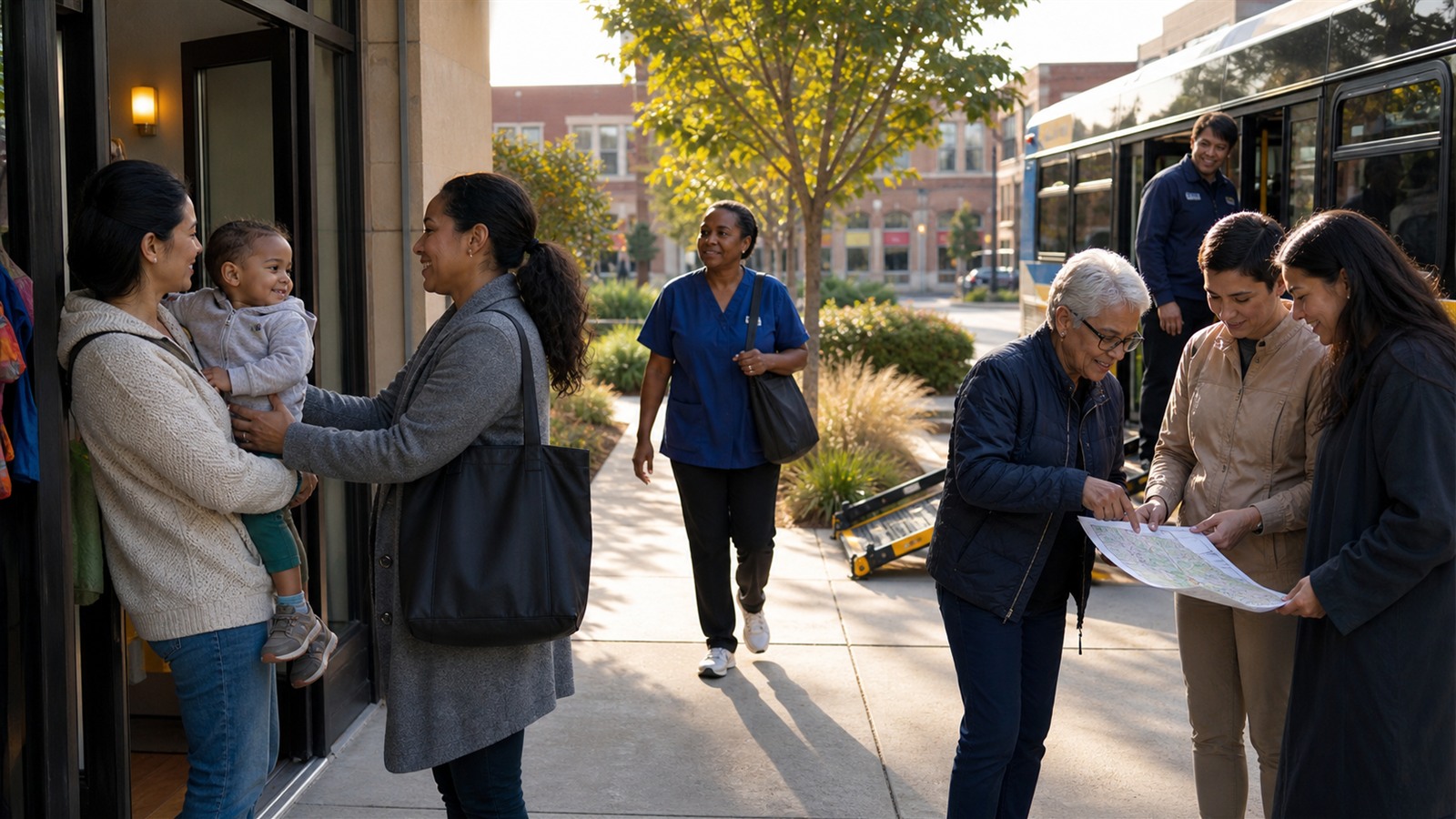
The trip to work raises questions about safe streets, accessible transit, harassment, disability, and who travels at what hour. Urban design can expand freedom for one group while making another group dependent on a car, companion, or costly ride.
At work, a written equality policy may coexist with unpredictable scheduling, biased promotion, pregnancy penalties, or uniforms designed around one body. The gap between the official rule and actual experience is a central feminist subject.
A medical appointment shows why credibility matters. A patient needs a clinician’s expertise, while the clinician needs to take the patient’s description seriously. Bias can enter diagnosis when research, training, or communication treats some bodies and voices as the norm.
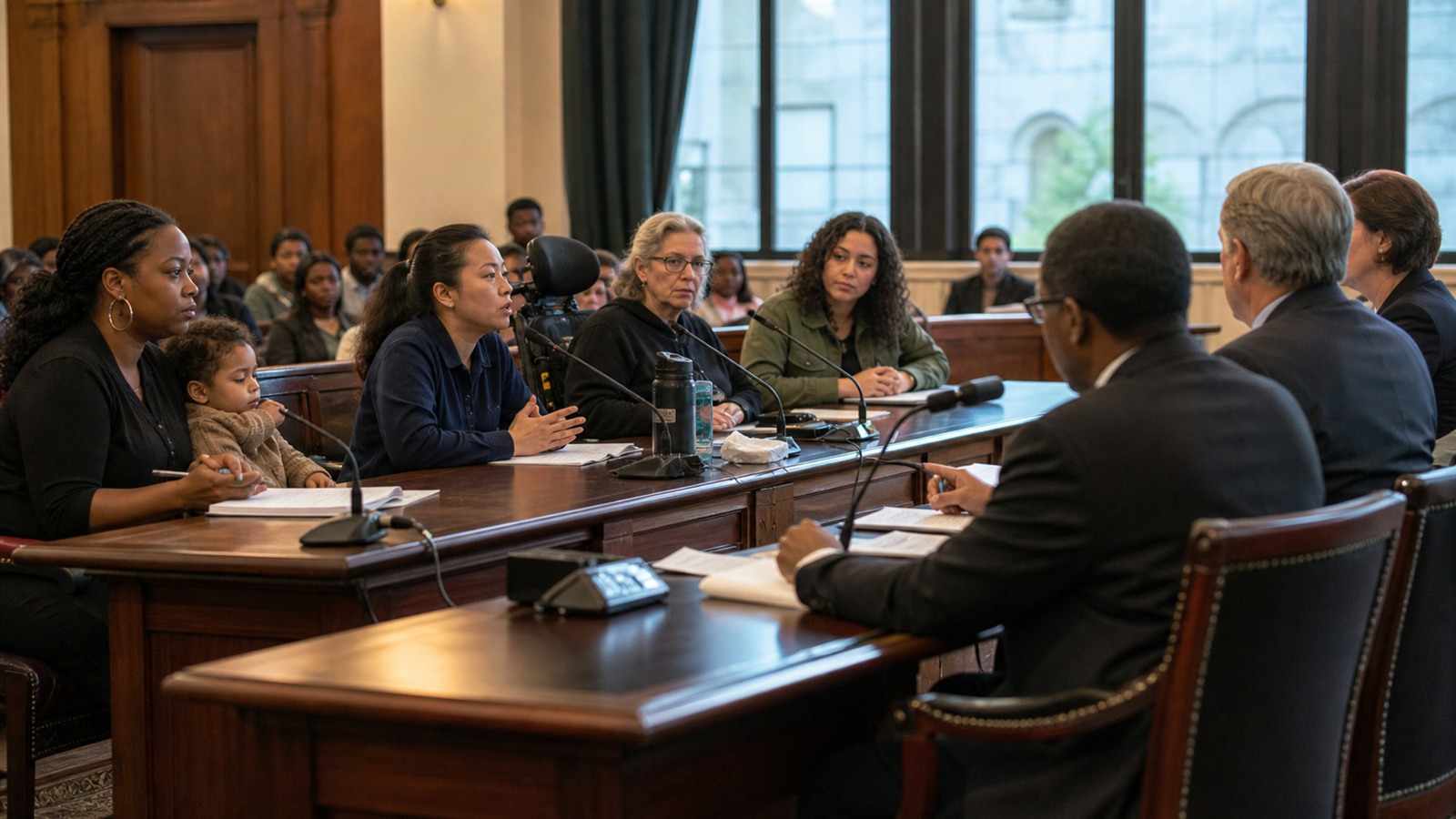
After work, a school meeting or local hearing requires time, transport, confidence, childcare, and accessible information. An open door is not equal participation if the people most affected cannot arrive or risk retaliation for speaking.
None of these moments provides the whole theory. Together they show its method: connect institutions to everyday life, compare formal rights with practical capability, trace invisible support, and ask how the people carrying consequences can share authority. Reading the theory well also means separating a structural claim from a claim about every individual. Saying that care is feminized does not mean every woman provides care or no man does. It means institutions and expectations produce a patterned distribution visible across many cases. Individuals can depart from the pattern while still living within rules shaped by it. This distinction avoids stereotyping and keeps political attention on mechanisms: hiring, wages, school expectations, benefits, family law, violence, and culture. Structural analysis becomes useful when it explains variation as well as the average and shows which changes could alter the pattern without policing anyone’s identity or personal choice. A useful way to avoid confusion is to separate description from prescription. Feminist scholars sometimes describe how a gender hierarchy works without agreeing on one remedy. Some emphasize equal legal treatment, others economic restructuring, freedom from violence, recognition of difference, transformed care, bodily autonomy, or the combined effects of race and class. These priorities can conflict. Treating feminist theory as a single fixed platform hides an active field of argument. Its unity lies less in one answer than in sustained attention to gendered power and to people excluded by supposedly universal models. Men and masculinity also belong inside the analysis. Gender norms can pressure men toward risk, emotional isolation, dominance, breadwinning, or violence, while institutions distribute benefits unevenly among men. Feminist theory examines those patterns without claiming that every person has the same experience or that harms cancel structural advantage. It can support broader care roles, freedom from rigid expectations, and relationships not organized through control. The point is not a contest over who suffers most. It is to understand how a system allocates power and vulnerability, then build institutions in which no gender must perform a narrow role to deserve safety, income, respect, or belonging. A beginner should also know what feminist theory does not assume. It does not require believing that women are naturally more caring, peaceful, or cooperative. Those claims can reinforce the very roles under examination and ignore differences among women. Nor does feminism mean that every unequal outcome has one cause. Choices, institutions, histories, resources, and other hierarchies interact, so explanation requires evidence. The theory supplies questions rather than permission to skip investigation. Disagreement about remedies is normal. A rule against discrimination may help one problem, public provision another, collective bargaining a third, and cultural work a fourth. Some situations need several at once. For example, making childcare affordable does not by itself ensure decent wages for caregivers, accessible services for disabled children, or equal care by fathers. Each layer contains distinct power. Feminist analysis also asks who administers reform. A benefit with humiliating documentation or discretionary interviews can reproduce hierarchy even when its purpose is generous. Clear rights, simple enrollment, privacy, appeals, and respectful service determine whether policy expands agency. Finally, political change occurs beyond legislation. Families renegotiate labor, workers organize, artists change public imagination, researchers revise categories, and communities build support. Law can enable or block these practices. Seeing several sites of change makes the theory practical: people can act where they are while connecting local action to the institutions that set wider conditions. The simplest habit is to ask four linked questions. What rule or expectation operates here? Who has the resources to comply, refuse, or challenge it? Whose work and knowledge keep the arrangement functioning? What institutional change would increase equal agency without creating a new form of control? Repeating those questions turns an abstract vocabulary into a clear political method.
The Simple Idea Is Broad but Concrete
Gendered power reaches from constitutional rules to the organization of a daily schedule. Studying that range does not make every issue only about gender. It prevents a major structure of social life from disappearing behind neutral language.
In simple terms, feminist political theory makes politics answerable to lived freedom. It asks society to recognize dependence, value care, protect bodies, share authority, and ensure that equal rights become options people can actually use.