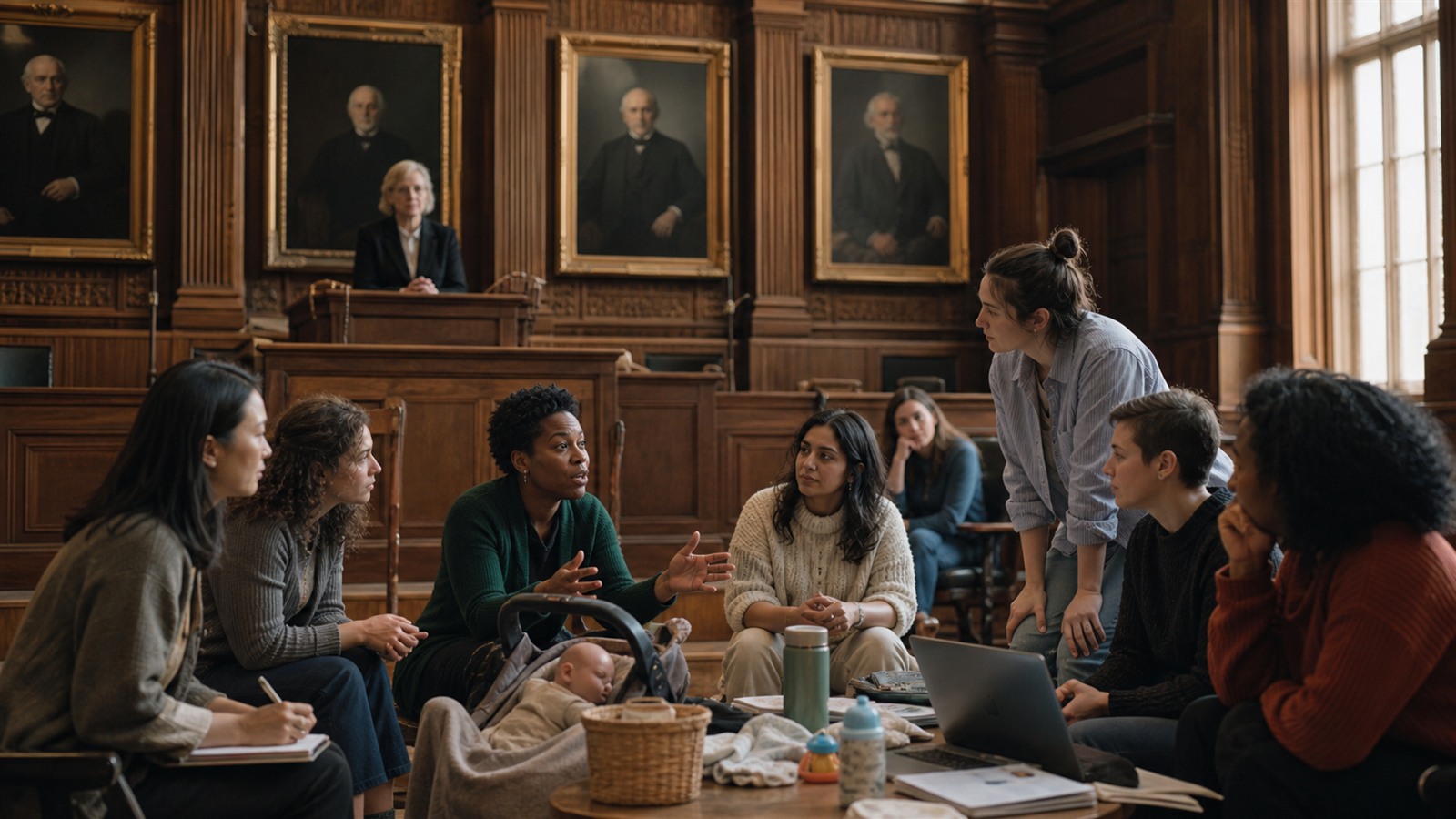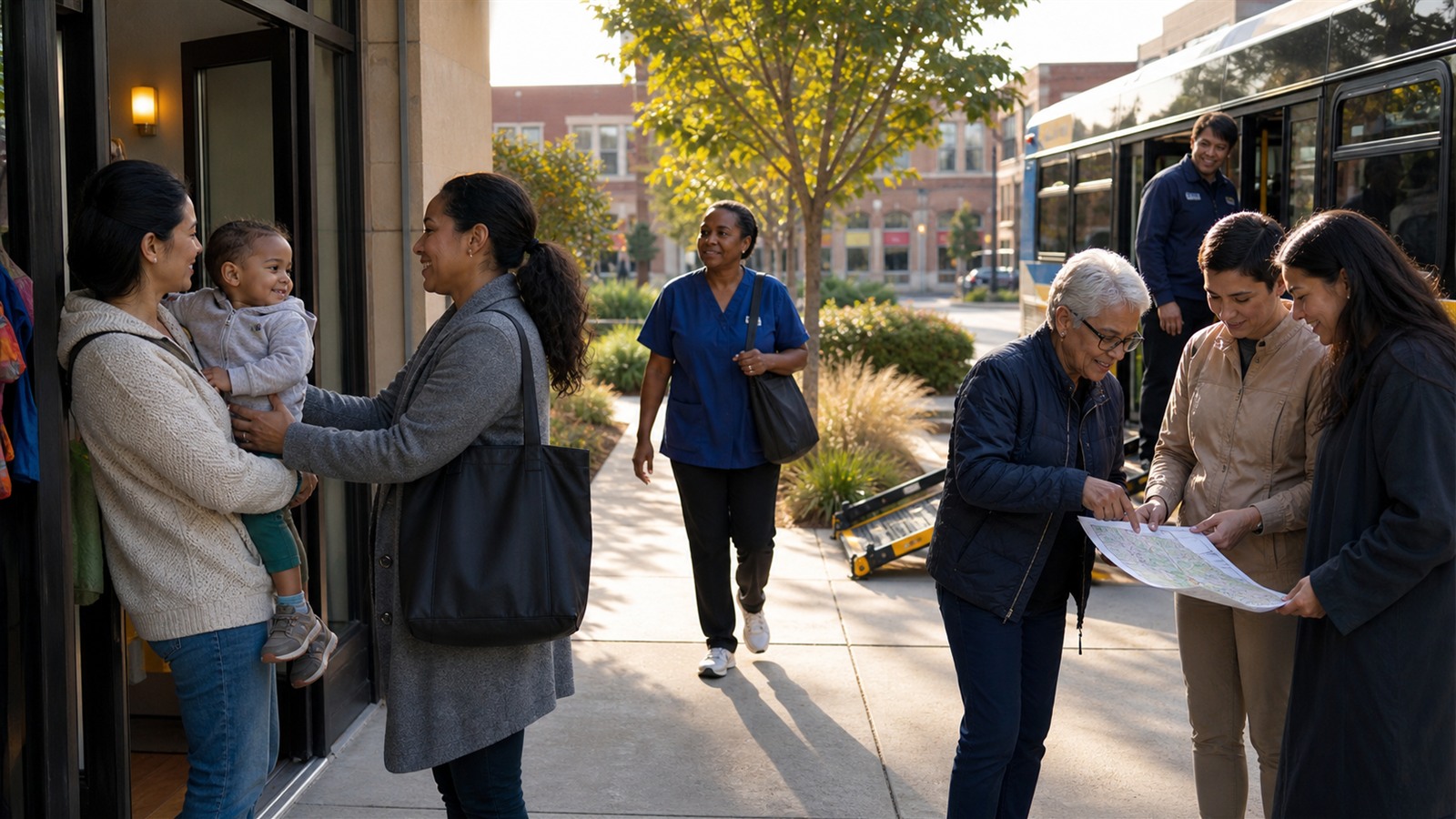
Equality is one of feminism’s oldest demands, but the word contains several political projects. Equal legal status removes explicit exclusion. Equal opportunity asks whether people can enter institutions. Substantive equality examines resources and outcomes, while relational equality challenges domination and ranked social worth. Feminist political theory connects these layers. It explains why identical language can coexist with gendered inequality and why lasting progress requires both enforceable rights and changes to the social conditions in which those rights are used. The fight therefore moves between courts, budgets, workplaces, homes, movements, and culture, testing whether each advance expands agency for people with different histories and resources across public institutions everywhere.
A: It means laws and rules assign the same status, rights, and stated treatment regardless of gender.
A: It examines real options and outcomes, allowing supports or remedies that address unequal conditions.
A: No. Equal worth and freedom can require institutions to recognize relevant differences without turning them into hierarchy.
A: It is a social condition in which people meet as equals rather than as superiors and subordinates.
A: They give everyone material access to care, health, education, housing, and mobility needed to use formal rights.
A: Yes, when they address a demonstrated barrier, respect agency, remain accountable, and pursue genuinely equal capability.
A: Secrecy, segregation, job classification, bargaining power, care penalties, bias, and weak enforcement can preserve it.
A: It is one dimension; agenda control, resources, safety, accountability, and policy outcomes also matter.
A: It redesigns the norms, schedules, authority, ownership, and care assumptions that repeatedly create disadvantage.
A: Through enforcement, transparent outcomes, protected voice, independent review, and revision when new barriers appear.
Equality Began as a Challenge to Status
Women were historically denied or restricted in voting, office, education, property, contracts, professions, and control within marriage. Demands for equal personhood directly confronted legal hierarchy.
Formal equality remains indispensable because an explicit exclusion gives authority a clear license to discriminate. Its achievement should not be minimized merely because it is incomplete.
Neutral Language Can Preserve an Unequal Baseline
Once a rule stops naming gender, inequality can continue through wealth, care, violence, segregation, networks, and institutional design. A staircase treats everyone identically while excluding a wheelchair user; an inflexible schedule treats everyone alike while care remains unequally assigned.
Opportunity Requires a Route to the Door
Equal opportunity is more than permission to apply. Education, nutrition, transport, housing, health, information, and safety shape preparation and access. Feminist theories ask whether the competition itself rests on inherited advantage.
This does not require guaranteeing identical results. It requires scrutinizing the mechanisms that repeatedly sort groups before individual effort can operate fairly.
Substantive Equality Studies Lived Outcomes
Outcome differences are signals, not automatic proof of discrimination. They prompt investigation into rules, culture, resources, and choices formed under social constraint. Good analysis disaggregates data and listens to affected people rather than forcing one explanation.
Relational Equality Opposes Ranked Worth
A society can distribute income more evenly while preserving expectations that some people defer, serve, or remain silent. Relational equality concerns standing: whether people can meet one another without arbitrary domination, stigma, or compulsory dependence.
Respect here is institutional as well as interpersonal. Complaint systems, policing, welfare administration, and workplace authority can communicate equal citizenship or inferior status.
Bodily Integrity Is an Equality Condition
Violence, reproductive coercion, medical bias, and sexual harassment restrict participation and self-direction. Equal opportunity cannot be separated from whether people control their bodies and move through institutions safely.
Care Determines Who Can Compete and Participate
Every worker and citizen depends on care, yet its labor is unequally assigned and undervalued. Without childcare, leave, disability support, eldercare, and reasonable schedules, formal openings are rationed by private support.
Care policy is therefore not a concession to one group. It is infrastructure for equal membership and a fair distribution of necessary work.
Economic Resources Shape the Power to Refuse
A person needs income and housing to challenge a boss, leave abuse, pursue education, or enter politics. Property and welfare rules can create dependence even under equal civil status. Feminist political economy joins antidiscrimination to redistribution, services, and worker power.
Intersectionality Prevents a Privileged Standard
A policy designed for professional, nondisabled, citizen women may fail domestic workers, migrants, poor women, queer families, or disabled people. Intersectionality asks how structures combine in the particular institution.
The goal is not endless categories but a more accurate universal. A common right must be designed so people in different positions can use it.
Representation Opens Institutions but Does Not Finish the Work
Seeing women and gender-diverse people in authority challenges inherited status and can change agendas. Yet representation can remain tokenized or constrained. Equality requires influence over resources, rules, implementation, and the conditions of political work.
Voice Needs Protection From Retaliation
Inviting testimony does little when speaking threatens employment, immigration status, housing, reputation, or safety. Collective organization, confidentiality, whistleblower protection, and independent appeals make participation usable.
Political equality includes agenda-setting. People should help define the problem before officials narrow the alternatives.
Recognition and Redistribution Work Together
Economic reform cannot by itself erase stigma, stereotypes, or cultural exclusion. Recognition alone can celebrate identity while leaving exploitation intact. Feminist equality joins material distribution with changes in status, representation, and institutional meaning.
Protection Can Become Paternalism
Rules sometimes restrict women or marginalized people in the name of safety. Feminist theory asks whether protection supplies resources and accountability or removes agency. Effective measures target the source of danger and preserve the widest possible choice.
Supported autonomy is different from abandonment. Institutions can offer information, services, and safety without claiming permanent authority over the person protected.
Remedies Reveal Whether a Right Is Real
A right needs clear standards, records, accessible filing, timely decisions, enforcement, and compensation or correction. If a case demands years of personal sacrifice, only the well-resourced can use it.
Progress Generates New Frontiers
Technology, climate change, migration, family diversity, and changing work create new equality questions. Algorithms can scale bias; remote work can support care or intensify surveillance; green transitions can redistribute jobs and household costs.
The principle remains stable while its application develops. Equality requires continuing inquiry rather than a declaration that history has ended.
Coalition Makes Equality Broader and Stronger
Gender justice intersects with racial, labor, disability, queer, Indigenous, migrant, and economic struggles. Coalition does not mean pretending all interests are identical. It means negotiating difference without sacrificing the groups with least leverage.
Test an Equal-Pay Reform From Rule to Remedy
A law may require equal pay for equal work. The first implementation question is whether workers can see compensation bands and job criteria. Secrecy prevents comparison and forces individuals to suspect inequality without evidence.
The second question concerns job design. Titles and duties may be divided so work associated with women receives a lower classification even when skill, responsibility, effort, and conditions are comparable. A narrow same-job comparison will miss this form of undervaluation.
Care penalties also enter the analysis. Promotions tied to uninterrupted tenure, evening availability, or discretionary travel may reward a worker whose household support is invisible. Paid leave, predictable schedules, and fair evaluation prevent care from becoming a permanent earnings penalty.
A complaint route must protect against retaliation, provide representation, preserve records, and offer timely correction. A right that depends on one vulnerable worker challenging an employer alone will be underused.
Outcome audits can reveal gaps, but averages require interpretation. Occupation, hours, seniority, race, disability, immigration status, and parenthood may point to different mechanisms. Data should guide investigation rather than explain inequality away automatically.
Finally, workers need voice in the system that defines merit and allocates opportunity. Transparency, bargaining, pay-equity review, care supports, and enforceable remedies turn a formal principle into an institution capable of learning and correction. A final test concerns equality inside families without imposing one family form. Law should recognize varied caregiving relationships and protect every member’s independent status, bodily integrity, property, and exit. Benefits can follow care and dependency rather than privilege marriage alone. Shared household decisions remain private until power becomes coercive or a person’s rights are denied. This balance treats intimate freedom and equality as mutually supporting: people gain room to create relationships because no authorized hierarchy determines who must obey, provide unpaid labor, or remain economically trapped. Public care and income supports make the principle usable rather than merely formal. Transformative equality goes further than placing individuals into an unchanged hierarchy. If leadership assumes permanent availability, competition for scarce mentorship, and care supplied privately by someone else, inclusion may require women to imitate a model built around unequal support. Transformation asks whether authority can be shared, schedules redesigned, evaluation clarified, care socialized, and cooperation valued. The institution’s purpose remains open to scrutiny as well. A more diverse group managing an exploitative service does not make the service just. This standard avoids treating representation as cosmetic while still recognizing the real difference that presence, role models, and agenda access can make. Equality must also survive conflict with other values. Privacy can protect workers while pay transparency exposes patterns. Religious liberty can protect conscience while rules against discrimination protect equal access. Safety measures can reduce violence while surveillance burdens marginalized communities. Feminist reasoning does not assume equality automatically defeats every competing claim. It asks whether a restriction responds to a demonstrated need, uses the least dominating means, preserves human dignity, and distributes costs fairly. Open justification and appeal make compromise accountable. Equality is strongest when it operates as a demanding public principle rather than a slogan used to end argument. Feminist equality also changes the unit used to assess distribution. Household income can suggest adequate resources even when one member controls accounts, property, transport, or decisions. Individual-level data reveal dependence, but people also share goods and care in relationships that cannot be reduced to separate consumers. Policy needs both views. Direct payments, independent benefit entitlements, individual legal status, and joint decision protections can reduce control while preserving voluntary sharing. Similar care is needed with group averages. A pay gap describes a pattern, not the choices or treatment of every woman and man. It helps locate institutions for investigation, then detailed evidence identifies occupation, hours, discrimination, care, seniority, and bargaining power. Structural statistics and individual fairness answer different questions. Neither should erase the other. Education provides a second illustration. Equal admission may coexist with harassment, unequal advising, inaccessible facilities, stereotype threat, financial pressure, or curricula that deny some students intellectual belonging. Completion, learning, debt, safety, field selection, and post-graduation opportunity reveal more than enrollment. Schools can respond through resources and culture without lowering academic standards; clear standards become more credible when unrelated barriers are removed. Finally, equality has a temporal dimension. A reform that opens future competition may leave accumulated property, pension, health, and career gaps untouched. Transitional repair can be justified when past exclusion continues to shape current capability. The remedy should be linked to evidence, designed with affected people, and reviewed for results rather than treated as permanent patronage. Equality looks backward to understand causes and forward to establish institutions that no longer recreate them. International equality raises the same problem at a wider scale. Care chains, supply chains, migration rules, debt, climate damage, and intellectual property can improve options for women in one country while shifting low-paid labor or risk elsewhere. Feminist politics evaluates relationships across borders instead of celebrating a national average alone. Migrant workers need status, labor rights, family unity, and access to services independent of one employer. Producer communities need voice over land and working conditions. Wealthy states bear responsibilities shaped by continuing benefit from unequal systems, not by a vague claim that every person is personally guilty. This transnational lens keeps universal equality from ending at citizenship while respecting movements’ ability to define priorities in their own contexts.
The Fight Moves From Access to Transformation
Opening a door matters. Feminist political theory then asks who built the institution, what it rewards, which lives it presumes, and whether its authority is justified.
Equality becomes a continuing democratic practice: remove explicit barriers, build capabilities, redistribute care and power, protect bodily autonomy, listen across difference, and correct institutions when equal promises produce unequal lives.